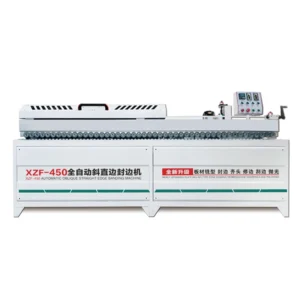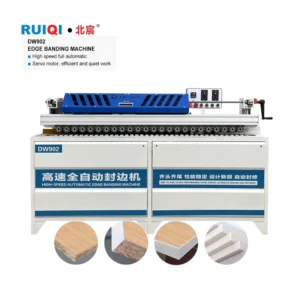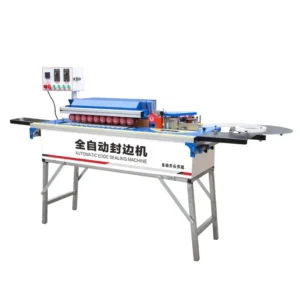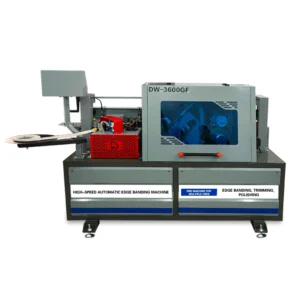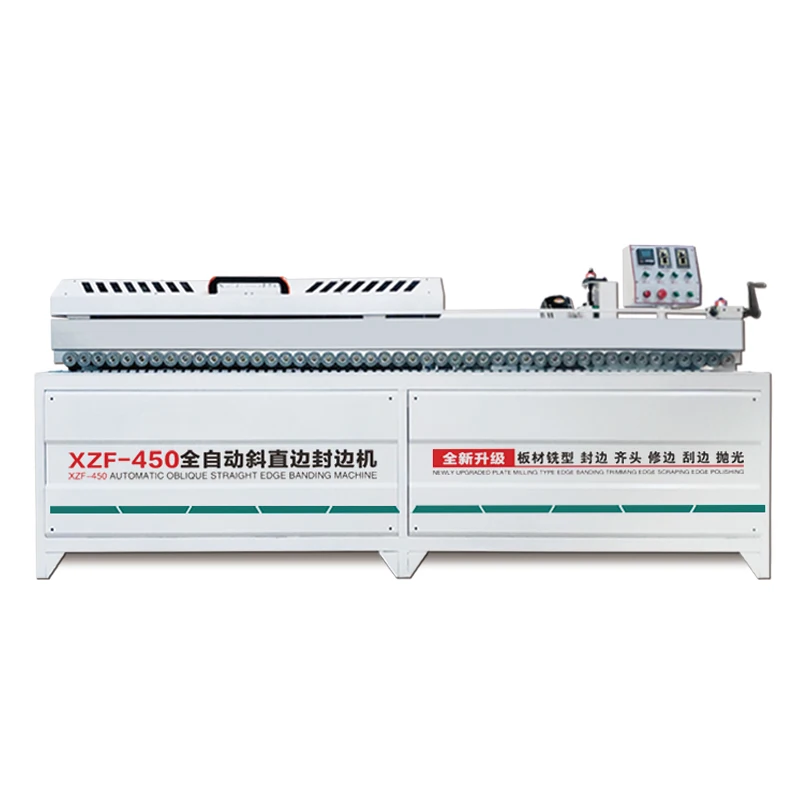
XZF450 Automatic Edge Banding Machine, 380V, 0-12 m/min Feed Speed, 0.3-3 mm Banding Thickness — delivers a 7-station sequence with pre-milling, trimming, scraping and polishing in one footprint. Feed speed and panel thickness range are verified against adjacent stations, ensuring line throughput balance with CNC panel saws and multi-boring machines upstream and downstream.
Engineer-led line configuration with formal quotation within 24 hours, voltage and frequency confirmed before production, and pre-shipment test records validating tolerance against actual panel samples before the machine enters your line.
Verified Line Integration — Feed speed and panel thickness range are confirmed against upstream and downstream station capacities before this edge banding machine production line unit enters your floor plan.
| Parameter | Value |
|---|---|
| Model | XZF450 |
| Product Type | Automatic Edge Banding Machine |
| Total Power | 9.5 kW |
| Voltage | 380V / 415V |
| Feed Speed | 0–12 m/min |
| Pre-milling Motor | 4 kW |
| Trimming Motor | 2.2 kW × 2 |
| Polishing Motor | 0.4 kW × 2 |
| Feed Motor Power | 0.16 kW |
| Transmission Motor Power | 180 W |
| Vacuum Power | 550 W |
| Glue Pot Capacity | 4000 ml |
| Edge Banding Thickness | 0.3–3 mm |
| Edge Banding Height | 0–50 mm |
| Minimum Sheet Length | 300 mm |
| Minimum Sheet Width | 150 mm |
| Air Source Pressure | 0.5–0.7 MPa |
| Overall Dimensions (L×W×H) | 3000 × 650 × 1350 mm |
| Net Weight | 430 kg |
| Standard Functions | Pre-milling, 30°/45°/60° edge banding, end trimming, rough trimming, fine trimming, scraping, polishing, dust extraction |
| Language Options | Chinese, English (other languages configurable) |
| Plug Options | EU, USA, AU, UK |
| Application | Material or Output |
|---|---|
| Cabinet and wardrobe panel edging | MDF, melamine-faced board, particleboard |
| Plywood and blockboard furniture components | Plywood, blockboard, solid wood board |
| Polymer door and interior door production | Polymer composite panels |
| Phased line buildout for medium-to-large furniture factories | Mixed substrate runs across panel sizing and drilling stations |
Confirming your factory’s electrical infrastructure before configuration prevents an edge banding machine production line station from arriving unusable on day one.
I have seen factories receive 380V/50Hz machines in regions running 440V/60Hz, only to discover the motor overheats during continuous production runs. The feed motor stalls under load, the glue pot cannot maintain temperature, and the pre-milling station chatters through panel edges. By the time the electrician rewinds the motor, you have lost two weeks of throughput and burned through a batch of substrates with visible seam lines [NEED_CITE: voltage and frequency standards by export market]. The XZF450 is configurable across standard industrial voltages, but that configuration must be locked in before production begins, not after the crate is opened on your factory floor.
An edge banding machine production line only performs as well as its slowest station. The XZF450 feeds at 0–12 m/min, which allows line planners to balance panel flow from CNC panel saws upstream and multi-boring machines downstream. When a panel saw cuts at a rate that sends boards to the edge bander faster than it can process them, you accumulate buffer stock that warps on the staging racks. When the edge bander outpaces the boring station, operators stand idle watching finished panels queue up. This feed range gives you the adjustment room to synchronize the three core stations without adding conveyor buffers or manual staging areas between them.
Planning a complete panel processing line means deciding which station sits where before the first foundation bolt is drilled. The XZF450 measures 3000 mm in length with a defined material infeed and outfeed direction, so line planners must confirm left-to-right or right-to-left flow during the configuration stage. When a factory phases its investment — starting with panel sizing and edge banding, then adding CNC boring six months later — the physical orientation of this unit determines whether the future station connects without repositioning existing equipment [NEED_CITE: phased capital equipment investment planning for furniture manufacturing]. Getting the flow direction wrong at specification stage means either moving a 430 kg machine later or running panels backward through the line.
The 4 kW pre-milling motor is not a cosmetic addition — it removes saw marks and surface irregularities from the panel edge before the glue roller makes contact. On particleboard with recycled content, the edge surface is often uneven enough that glue adhesion fails without this preparation step, leaving visible seams on finished cabinet doors. The dual 2.2 kW trimming motors handle both rough and fine trimming in sequence: rough trimming cuts the excess banding flush, then fine trimming removes the remaining fraction of a millimeter to achieve a smooth transition between banding and panel face. With edge banding thickness ranging from 0.3 mm to 3 mm, the machine handles thin PVC for budget cabinet runs as well as thicker ABS or wood veneer for premium furniture orders. The 4000 ml glue pot capacity supports sustained production without frequent refill interruptions, though glue type and temperature settings must still be matched to your specific substrate and banding material combination. The dust extraction port connects to your central collection system, keeping trimming debris off the polishing wheels and out of the operator’s breathing zone.
A furniture factory once ordered a pre-milling edge bander based on sample throughput figures, without confirming their particleboard contained high recycled content rather than virgin MDF. The glue adhesion failed on a significant portion of panels, with visible seams appearing after the trimming stage [NEED_CITE: substrate composition effect on hot-melt adhesive bonding in edge banding]. The machine was not at fault — the configuration simply did not account for the actual material running through it. When you skip substrate verification during the quotation stage, you discover the mismatch only after the machine is installed and production panels start failing downstream assembly checks.
Every configuration starts with your factory’s actual panel mix, daily volume, and existing station capacities — not a generic catalog recommendation. The XZF450 is available within a full product family ranging from entry-level to full-function models, so a workshop can scale individual stations without changing supplier or relearning controls. Voltage, control panel language, and plug type are confirmed as part of the standard specification process, preventing the common failure mode of machines arriving incompatible with local infrastructure. Each unit passes a four-stage quality check including pre-shipment verification against your sample panels, so throughput and edge quality are validated before the machine leaves the factory. The engineering team provides formal line configuration proposals with throughput balancing across stations, rather than quoting individual machines in isolation [NEED_CITE: CE machinery directive requirements for industrial woodworking equipment].
To position the XZF450 correctly within your production line, we need to know the substrate types and thickness range you run most frequently, the feed speed and throughput of your upstream panel saw and downstream boring equipment, and the electrical voltage and frequency at your installation site. If you are planning a phased line buildout, share your intended expansion sequence so we can orient the material flow direction accordingly.
Q: How does the XZF450 feed speed synchronize with upstream panel saws and downstream boring machines in a complete line?
A: The 0–12 m/min adjustable feed speed allows line planners to match the output rate of CNC panel saws upstream and multi-boring machines downstream. During configuration, we review the throughput of your adjacent stations and recommend a feed speed setting that prevents buffer accumulation between machines. This balancing is included in the formal line proposal before order confirmation.
Q: What voltage and frequency configurations are available to match our factory’s electrical infrastructure?
A: The XZF450 is standard at 380V/415V, with other voltage options available upon confirmation. We verify your local voltage and frequency during the specification stage and lock the electrical configuration before production begins. The electrical schematic in your documentation package reflects the exact setup shipped, and plug type is matched to your regional standard.
Q: How is the machine’s footprint and material flow direction planned within a phased production line investment?
A: At 3000 × 650 mm, the XZF450 footprint is mapped into your line layout with infeed and outfeed direction confirmed before order. For phased investments, we plan the orientation so future stations — such as CNC boring or slotting — connect without repositioning existing equipment. This is addressed during the engineer-led configuration proposal stage.
Q: Can the control panel language be matched to other machines in the line for operator consistency?
A: Yes. The XZF450 supports Chinese and English as standard, with other languages configurable to match your existing line equipment. We confirm the language requirement during specification so operators can transition between stations without relearning interface terminology. This is documented in the operation manual supplied with the machine.
Q: What pre-shipment line integration testing is performed to verify throughput and edge quality before delivery?
A: Each XZF450 undergoes a four-stage quality check that includes pre-shipment testing on sample panels matching your substrate specification. The factory test record documents edge quality, trimming accuracy, and glue adhesion results on your material before the machine is cleared for dispatch. This record ships with the documentation package.
* Detailed technical specifications vary by model. Contact us for the full parameter sheet and customization options.
Heavy-duty wooden crate with moisture-proof lining and steel strapping. Seaworthy standard for safe ocean freight.
Standard models: 15-20 working days. Custom OEM orders: 25-35 working days from deposit confirmation.
FOB Qingdao / Tianjin. EXW, CIF available. T/T, L/C, Western Union accepted. Flexible payment terms for long-term partners.
We export to 100+ countries across Europe (Germany, Spain, Italy), Americas (USA, Mexico, Brazil, Argentina), Southeast Asia (Vietnam, Indonesia, Thailand), Africa (Nigeria, Egypt, South Africa), and the Middle East. Full customs documentation and export compliance support included.
Your logo on machine body, control panel and packaging. Full white-label production available.
Support 110V/60Hz, 220V/50Hz, 380V/50Hz, 440V/60Hz and other local electrical standards.
Modify table size, motor power, cutting capacity and other parameters per your production requirements.
Control panel available in English, Spanish, French, Arabic, Russian and other languages on request.
Custom paint color, machine casing design and aesthetic modifications to match your brand identity.
Bundled tooling sets, spare parts kits, installation tools and custom accessories for your market needs.
Fill in your requirements and our sales team will respond within 24 hours with a formal quotation and full technical specifications.