EDGE BANDING MACHINE
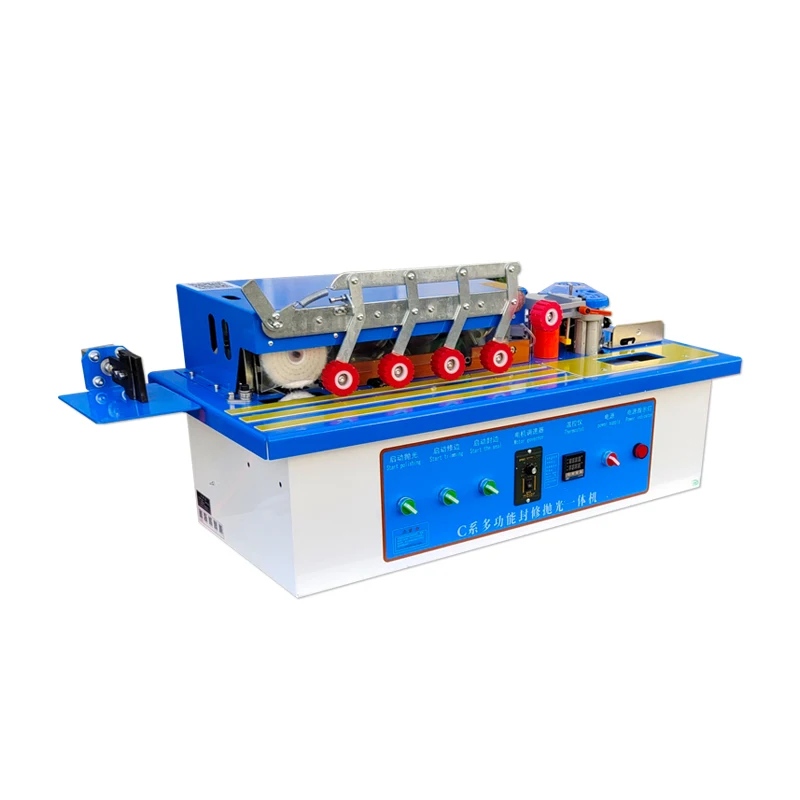
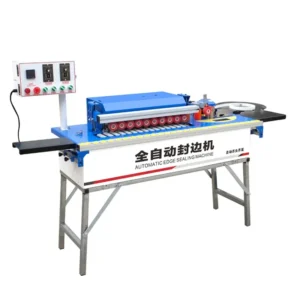
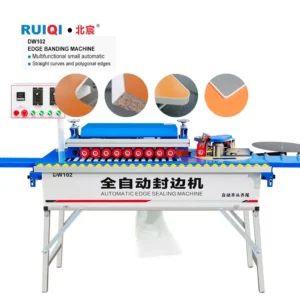
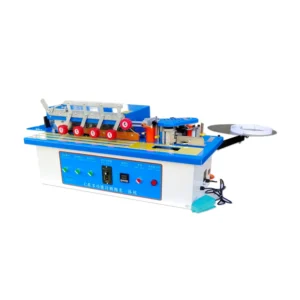
Multifunction Edge Banding Machine, 2500W, 220V/380V — engineered for both curved and straight edge applications within integrated furniture production lines.
Our engineer-led configuration ensures machines match your line throughput, supported by four-stage QC verification before shipment.
Compact Line Integration — this multifunction edge bander occupies a 100×46 cm footprint while handling both curved and straight profiles, letting phased production layouts fit the unit between cutting and assembly stations without re-routing material flow.
| Parameter | Value |
|---|---|
| Product Type | Edge Banding Machine |
| Total Power | 2500 W |
| Trimming Power | 650 W × 2 |
| Polishing Power | 180 W × 2 |
| Edge Feeding Power | 20 W |
| Voltage | 220 V / 380 V / custom |
| Minimum Sheet Length | 250 mm |
| Minimum Sheet Width | 100 mm |
| Edge Banding Height | 0–50 mm |
| Edge Banding Thickness | 0.3–3 mm |
| Glue Pot Capacity | 1000 ml |
| Air Source Pressure | 0.5–0.8 MPa |
| Machine Dimensions | 100 × 46 × 41 cm |
| Machine Weight | 44 kg |
| Key Features | Curved and straight banding, trimming, polishing, manual push plate |
| Application | Material or Output |
|---|---|
| Cabinet door panel edge finishing | MDF and particleboard with PVC or melamine edge strips |
| Home decoration custom joinery | Ecological board and plywood with veneer or ABS banding |
| Small-batch curved furniture parts | Solid wood panels with curved contour edge sealing |
| Prototype and sample production | Mixed substrates requiring quick changeover between straight and curved profiles |
Confirming local voltage and frequency before placing the order prevents a machine that arrives physically intact but electrically dead.
I have seen factories take delivery of edge banding equipment only to discover the motor winding was configured for 50 Hz while the local grid runs at 60 Hz. The machine powers on, but the feed motor runs at the wrong speed, the glue pot cannot maintain stable temperature, and every panel that comes off the line shows visible glue-line irregularity. This multifunction edge banding machine supports configurable voltage from 220 V to 380 V, but the correct configuration must be locked in before the stator is wound [NEED_CITE: voltage and frequency standards by export market]. A two-minute confirmation at the quotation stage avoids weeks of commissioning delay and a transformer that should never have been necessary.
When a factory plans an edge banding machine production line, the bottleneck is rarely the bander itself — it is usually the mismatch between panel output from the saw and the feed capacity of the banding station. This unit processes panels manually via push plate, so the realistic rhythm depends on operator cadence and panel size rather than a fixed conveyor speed. That makes it well-suited as a first automated station in a workshop transitioning from entirely manual edge work, or as a flexible side station for curved pieces that a full-line automatic bander cannot handle.
Most custom furniture workshops do not install a complete line on day one. They start with a sliding table saw, add an edge bander, then introduce boring machines as order volume grows. The compact footprint of this machine — just over one meter long and under half a meter wide — means it can be placed against a wall or between existing benches without relocating other equipment. When volume eventually justifies a fully automatic edge banding machine production line, this unit remains useful as the dedicated curved-edge station that the main line cannot cover.
The 0.3–3 mm edge thickness range covers PVC, ABS, melamine, and thin veneer strips — essentially every banding material a panel furniture shop encounters. The dual 650 W trimming motors provide enough spindle speed to cleanly shear the overhang on both top and bottom edges in a single pass, which matters when running particleboard that tends to chip if the trimmer is underpowered. The glue pot holds 1000 ml, adequate for continuous short-run production but requiring a refill stop during longer batches [NEED_CITE: adhesive open-time requirements for hot-melt edge banding]. The 0.5–0.8 MPa air pressure requirement is standard for pneumatic feed and pressure rollers; factories without a dedicated compressor line should confirm their air supply can sustain this pressure across all stations simultaneously, because a pressure drop at the bander while the saw’s dust collector cycles on will cause the band to lift at the trailing edge.
Buying individual machines from different suppliers without verifying feed height alignment and throughput compatibility leads to a line where panels must be manually lifted or lowered between stations. Operators develop workarounds — tilting panels, stacking shims under machine feet — and those workarounds introduce edge damage and inconsistent glue contact. On curved work especially, a misaligned infeed table causes the panel to twist slightly as it enters the banding zone, producing uneven pressure and visible glue squeeze-out on the finished edge [NEED_CITE: common edge banding defects and root causes in panel processing].
In-house manufacturing with proprietary cutting mechanisms means the trimming and polishing assemblies are built and tested on the same floor where final QC happens, not assembled from third-party sub-contractors. The four-stage inspection process — incoming material, in-process, finished product, and pre-shipment — applies to this compact unit exactly as it does to the full-size automatic banders, because the same tolerance standard governs the product family. Engineer-led configuration review ensures the voltage, control language, and air connection specifications are confirmed in writing before production begins, and a formal quotation is provided within 24 hours of inquiry.
To recommend how this machine fits into your production layout, share the panel materials you run most often, the edge banding type and thickness you use, your local voltage and frequency, and whether the machine will operate as a standalone station or alongside an existing automatic bander. If curved components represent a significant share of your output, provide a sample drawing or photograph of the tightest radius you need to seal.
Q: How does this edge banding machine integrate with upstream cutting and downstream assembly stations?
A: The manual push-plate design means panels are fed by hand, so the machine sits between your saw and your assembly bench without requiring conveyor synchronization. Infeed and outfeed height should be matched to adjacent work surfaces to avoid lifting panels, which causes edge damage on freshly banded workpieces.
Q: What voltage configurations are available for different regional factory standards?
A: The machine supports 220 V, 380 V, or custom voltage to match your facility’s electrical supply. Voltage and frequency must be confirmed before production so the motor winding and glue pot heating element are built to the correct specification, avoiding costly transformer additions on arrival.
Q: Can multiple units be synchronized for higher throughput edge banding machine production line setups?
A: Multiple units can operate in parallel, each handling different panel types or profiles simultaneously. Because feed is manual, throughput scales with operator count rather than a central conveyor speed, giving flexibility to add capacity one station at a time as order volume grows.
Q: What is the recommended maintenance schedule for continuous production operation?
A: The glue pot should be drained and cleaned at intervals determined by your adhesive type and daily run hours. Trimming cutters require inspection and replacement based on cumulative linear meters of edge processed, and polishing wheels should be checked weekly for surface glazing that reduces finish quality.
Q: How do we verify actual edge quality on our specific panel materials before bulk purchase?
A: Submit sample panels and your preferred edge banding material for a factory processing test. The test produces finished samples showing glue-line visibility, trimming accuracy, and polish finish on your actual substrates, documented in a pre-shipment test record before any bulk order is confirmed.
* Detailed technical specifications vary by model. Contact us for the full parameter sheet and customization options.
Heavy-duty wooden crate with moisture-proof lining and steel strapping. Seaworthy standard for safe ocean freight.
Standard models: 15-20 working days. Custom OEM orders: 25-35 working days from deposit confirmation.
FOB Qingdao / Tianjin. EXW, CIF available. T/T, L/C, Western Union accepted. Flexible payment terms for long-term partners.
We export to 100+ countries across Europe (Germany, Spain, Italy), Americas (USA, Mexico, Brazil, Argentina), Southeast Asia (Vietnam, Indonesia, Thailand), Africa (Nigeria, Egypt, South Africa), and the Middle East. Full customs documentation and export compliance support included.
Your logo on machine body, control panel and packaging. Full white-label production available.
Support 110V/60Hz, 220V/50Hz, 380V/50Hz, 440V/60Hz and other local electrical standards.
Modify table size, motor power, cutting capacity and other parameters per your production requirements.
Control panel available in English, Spanish, French, Arabic, Russian and other languages on request.
Custom paint color, machine casing design and aesthetic modifications to match your brand identity.
Bundled tooling sets, spare parts kits, installation tools and custom accessories for your market needs.
Fill in your requirements and our sales team will respond within 24 hours with a formal quotation and full technical specifications.