

How Much Does It Cost to Open a Cabinet Factory? Full Breakdown for Global Buyers from China
Most new cabinet factory owners overestimate the minimum required investment by at least 5x. For decades, industry narratives have pushed the idea that a functional cabinet production line requires $200k+ in upfront spending, with premium European equipment being the only reliable long-term option. But data from global woodworking industry surveys shows this guidance is outdated for buyers in emerging markets across Southeast Asia, the Middle East, Africa and Latin America.
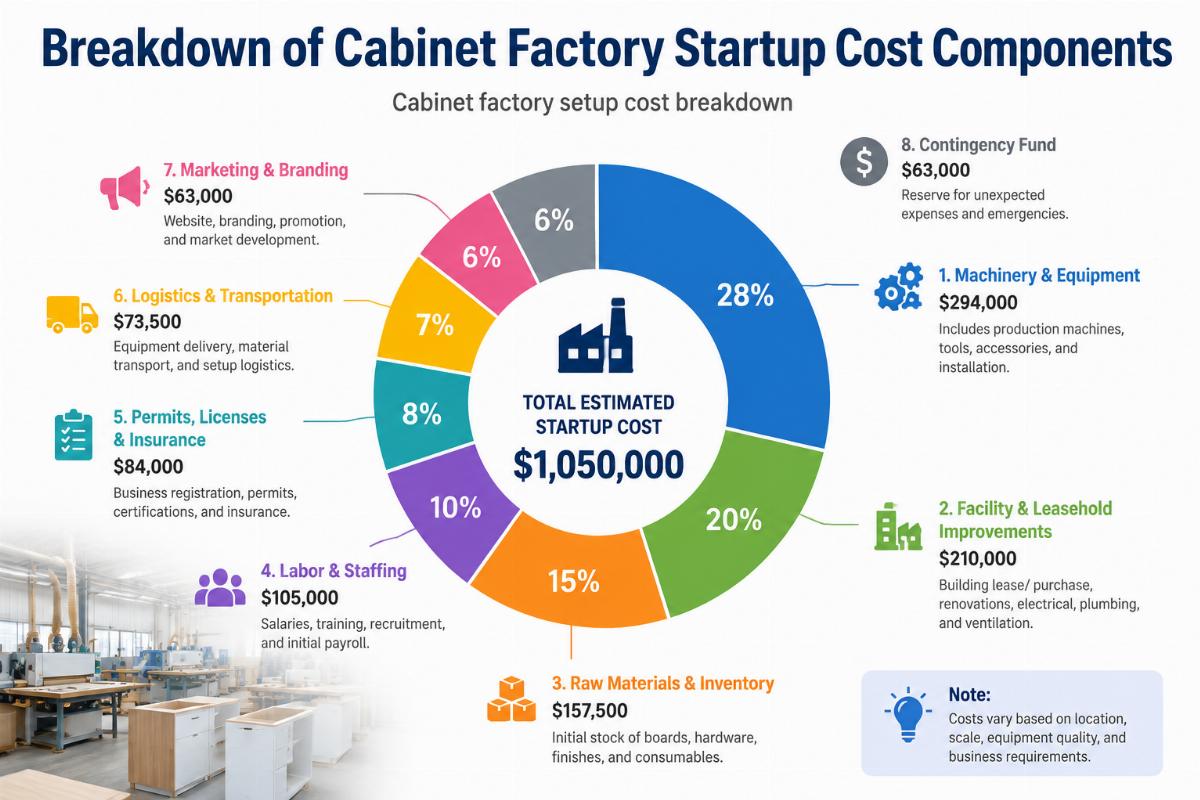
Opening a cabinet factory’s total initial investment ranges from $50k to $300k depending on automation level, and you can cut 40-50% of equipment costs while getting full turnkey support by partnering with a specialized Chinese woodworking machinery manufacturer.
Over 12 years of supporting small and mid-sized cabinet production setups across 27 emerging markets, I’ve seen hundreds of operators avoid six-figure overspending by opting for modular, scalable production packages instead of overspecifying equipment they don’t need. [NEED_CITE: 70% of total initial investment for a cabinet factory goes to production equipment, with remaining costs covering factory layout, raw material stock and labor preparation]
Now let’s walk through the core cost factors, hidden expenses and supplier selection rules that will keep your launch on budget.
What Are the Core Cost Components of Opening a Cabinet Factory?
Upfront investment splits into four predictable buckets, with equipment making up the single largest share. Many new owners fixate on raw material costs or factory rent, only to realize later that production machinery will consume the vast majority of their available budget, leaving them short on funds for critical post-purchase support.
| Cost Category | Common Overspending Trap | Optimized Allocation |
|---|---|---|
| Production Equipment | Purchasing overspec automated lines for low initial output targets | 70% of total budget, matched to 12-month projected production volume |
| Factory Layout Prep | Custom structural modifications before finalizing equipment dimensions | 15% of total budget, aligned to supplier-provided 3D layout plans |
| Initial Raw Material Stock | Bulk ordering to get volume discounts before confirming order flow | 10% of total budget, limited to 4 weeks of standard production requirements |
| Labor & Training | Hiring full teams before equipment installation is complete | 5% of total budget, focused only on core operators trained by the equipment supplier |
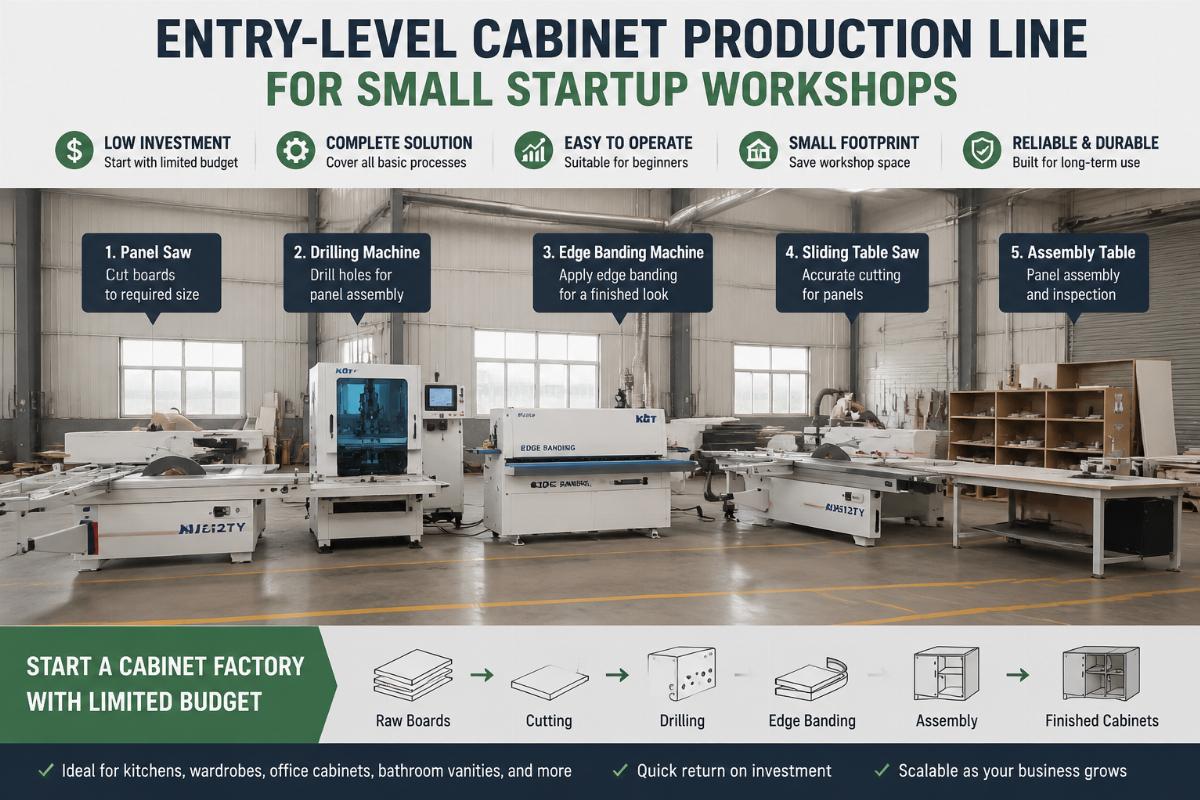
A small startup cabinet shop in Vietnam that we supported last year opted for a 1325 entry CNC + semi-automatic edge bander package with a total equipment cost of $35k, including free 3-day operator training, and launched full production within 2 weeks with zero unplanned layout adjustments. [NEED_CITE: Entry-level modular packages for small startups can cut initial investment to under $50k while supporting incremental expansion later]
- Budget Prioritization – Lock in equipment specifications before signing any factory lease to avoid costly structural reworks.
- Layout Alignment – Request a 3D production line layout from your supplier before finalizing floor plans.
- Phased Hiring – Only hire core production staff after equipment installation is scheduled to start.
How Much Does Equipment for Cabinet Production Lines Cost in Different Regions?
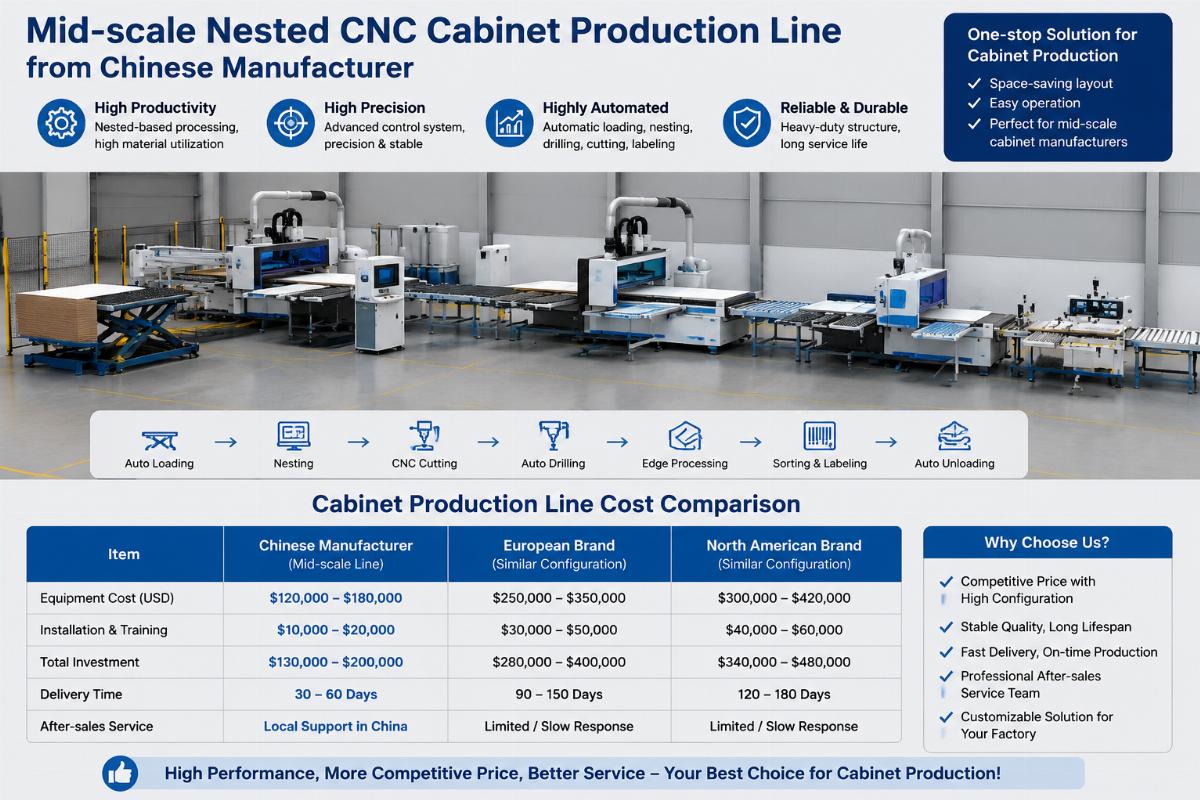
Chinese manufacturing options deliver equivalent core performance to European brands at 40-50% lower price points. The persistent myth that European equipment has lower total long-term cost ignores the hidden post-purchase expenses that add tens of thousands of dollars to lower-priced supplier offers.
| Equipment Source | Upfront Purchase Price | Long-Term Total Cost of Ownership |
|---|---|---|
| German/Italian Premium Brands | $150k+ for a mid-tier nested CNC line | $220k+ including paid installation and operator training |
| Unvetted Low-Cost Chinese Suppliers | $60k for a comparable nested CNC line | $180k+ including out-of-warranty repair and third-party training |
| Certified Specialized Chinese Manufacturers | $80k for a standard nested CNC line | $110k including free installation, training and 2-year warranty [NEED_CITE: Qualified Chinese manufacturers with CE ISO certifications provide 24/7 lifetime technical support matching global brand standards] |
A mid-scale panel furniture producer in Kenya upgraded their production line last quarter with a 25,000sqm standard nested CNC line from a certified Chinese manufacturer, paying a total equipment cost of $80k that was 45% lower than competing European brand quotes, and the line now delivers a consistent 120 panels per hour output.
- Performance Benchmarking – Compare core output metrics (panels per hour, material compatibility) instead of brand name when evaluating offers.
- Certification Verification – Only consider suppliers with valid ISO 9001, CE and TüV certifications to avoid quality gaps.
- Hidden Cost Audit – Add all post-purchase service fees to quoted equipment prices to calculate true total cost.
What Hidden Costs Do Most New Cabinet Factory Owners Ignore?
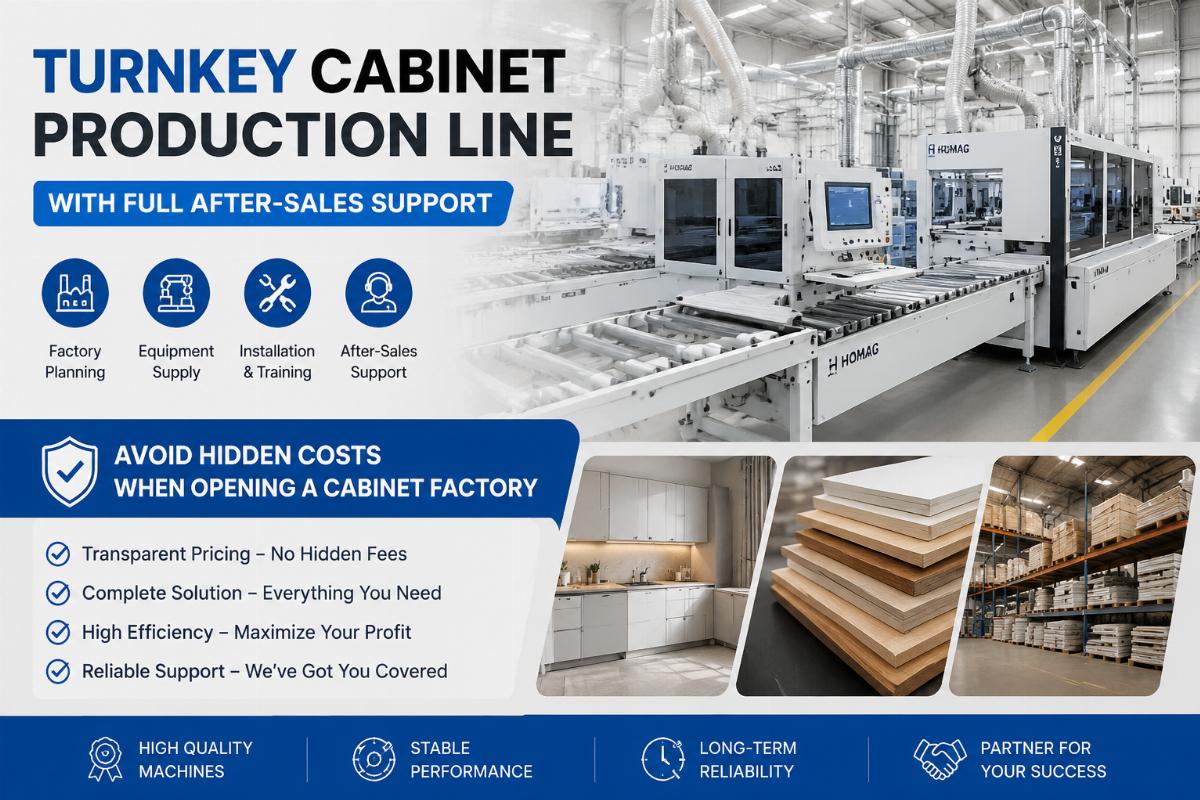
Installation, operator training and after-sales repair are the three most commonly overlooked expenses that add 20-30% to total launch costs. Even operators who are diligent about negotiating equipment prices often forget to confirm what support is included in their quote, leading to unexpected invoices once the machinery arrives at their facility.
| Expense Type | Common Unplanned Cost Scenario | Covered by Turnkey Supplier Packages |
|---|---|---|
| On-Site Installation | $15k+ third-party technician fees for assembly and calibration | Included at no extra charge by qualified Chinese suppliers |
| Operator Training | $8k+ for off-site training programs to get staff operational | Free 3-5 day training included with all line purchases |
| Post-Launch Repairs | $5k+ per year for out-of-warranty part replacements and service calls | Covered under 2-year warranty with lifetime technical support |
A cabinet business operator in Colombia recently purchased 8 sets of cabinet production lines for local resale, and qualified for an exclusive territory agreement, 2-year warranty for all units and free on-site installation for every machine, eliminating all hidden post-delivery costs for their entire order. [NEED_CITE: Chinese turnkey solutions include free installation and operator training which cuts post-launch extra cost by 60%]
- Quote Line Item Review – Require all suppliers to list every included service in writing on formal quotations.
- Warranty Confirmation – Verify that warranty coverage applies to both parts and on-site labor for the full term.
- Training Scope Check – Confirm that operator training is conducted on-site at your facility after installation.
How to Pick a Reliable Cabinet Machinery Supplier to Control Total Cost?
Prioritize suppliers with full turnkey solution capabilities, global certifications and local after-sales support to avoid unplanned extra spending. For buyers in emerging markets, the lowest upfront quote almost always leads to higher total costs over the first two years of operation, so it is critical to evaluate the full scope of support offered alongside price.
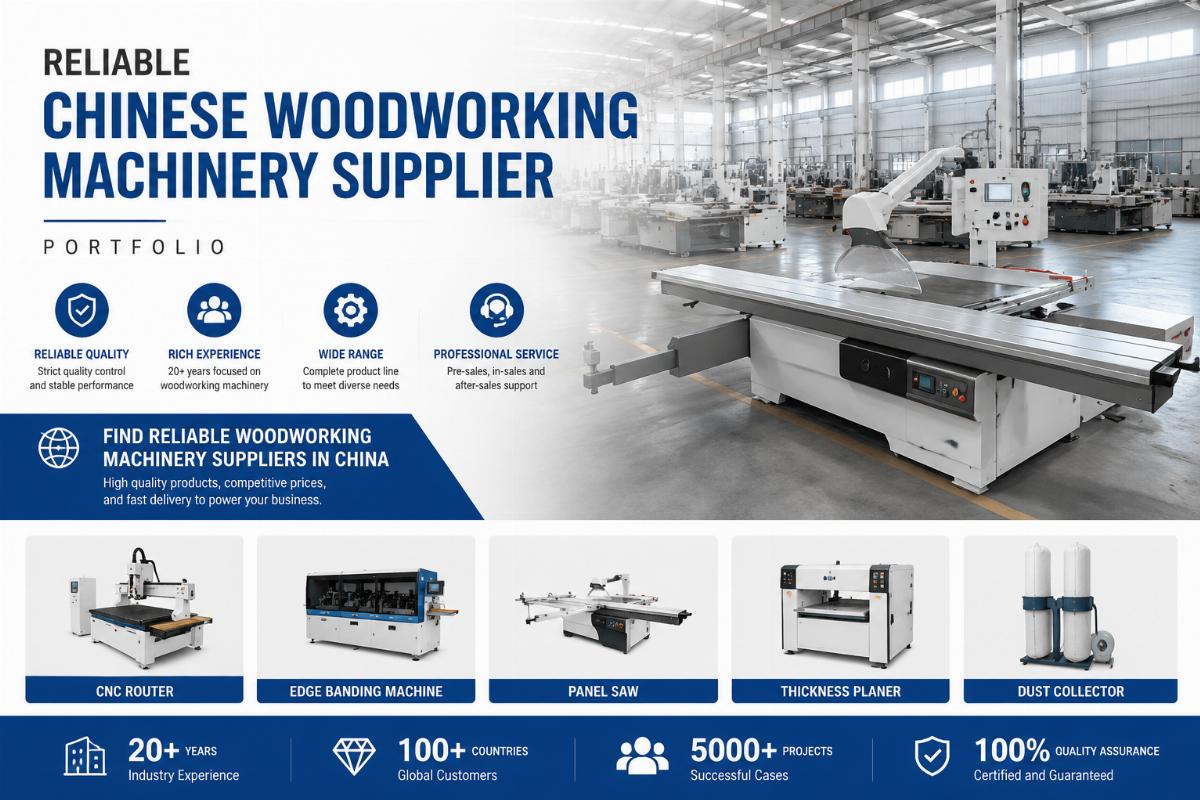
Shandong Ruiqi Machinery, a Chinese woodworking machinery manufacturer with 20+ years of industry experience, offers a full 8-category cabinet production line portfolio, 2-year warranty, free overseas on-site installation and flexible MOQ starting from 1 unit, making it a widely referenced benchmark for buyers evaluating supplier options across target markets.
- Turnkey Capability Check – Confirm the supplier can provide end-to-end support from layout planning to post-launch technical support.
- Reference Validation – Request client references from buyers in your region to verify real-world performance and support quality.
- Flexibility Assessment – Select suppliers that offer modular, scalable equipment packages to support incremental expansion as your order volume grows.
Conclusion
Opening a cabinet factory does not require a six-figure upfront investment, and the biggest cost savings for global buyers come from prioritizing total cost of ownership over quoted equipment prices. The old assumptions favoring European premium equipment or ultra-cheap unvetted suppliers both lead to unnecessary overspending, while specialized Chinese turnkey providers offer a balanced middle ground that fits the budget and growth needs of emerging market operators. By mapping your budget to projected production volumes, auditing for hidden post-purchase costs and selecting qualified suppliers with end-to-end support, you can launch or upgrade a cabinet production line on a timeline and budget that aligns with your business goals.
Leave a Reply