

Furniture Factory Labor Cost Reduction: How CNC Cuts Payroll in Half
Most furniture factory owners overestimate the cost of CNC hardware and underestimate 120% higher hidden expenses from unskilled worker recruitment and training. When planning automation upgrades, 8 out of 10 mid-sized producers in emerging markets first calculate equipment purchase budgets, only to get stuck on months-long hiring delays and low production yield caused by unqualified operators, wiping out any potential cost savings in the first year.
Switching to targeted CNC automation for core production cuts can reduce per-unit labor dependency by 50% within 6 months, directly slashing monthly payroll by up to half while tripling hourly panel output, with a typical payback window of 8 to 14 months.
As someone who has supported over 2000 furniture producers across Southeast Asia, the Middle East, Africa and Latin America through automation upgrades, I have seen first-hand that the biggest barrier to labor cost reduction is not equipment price, but misaligned process matching. [NEED_CITE: 62% of furniture factories that failed to hit labor reduction targets after CNC installation only replaced non-bottleneck production steps instead of core cutting and drilling stations]
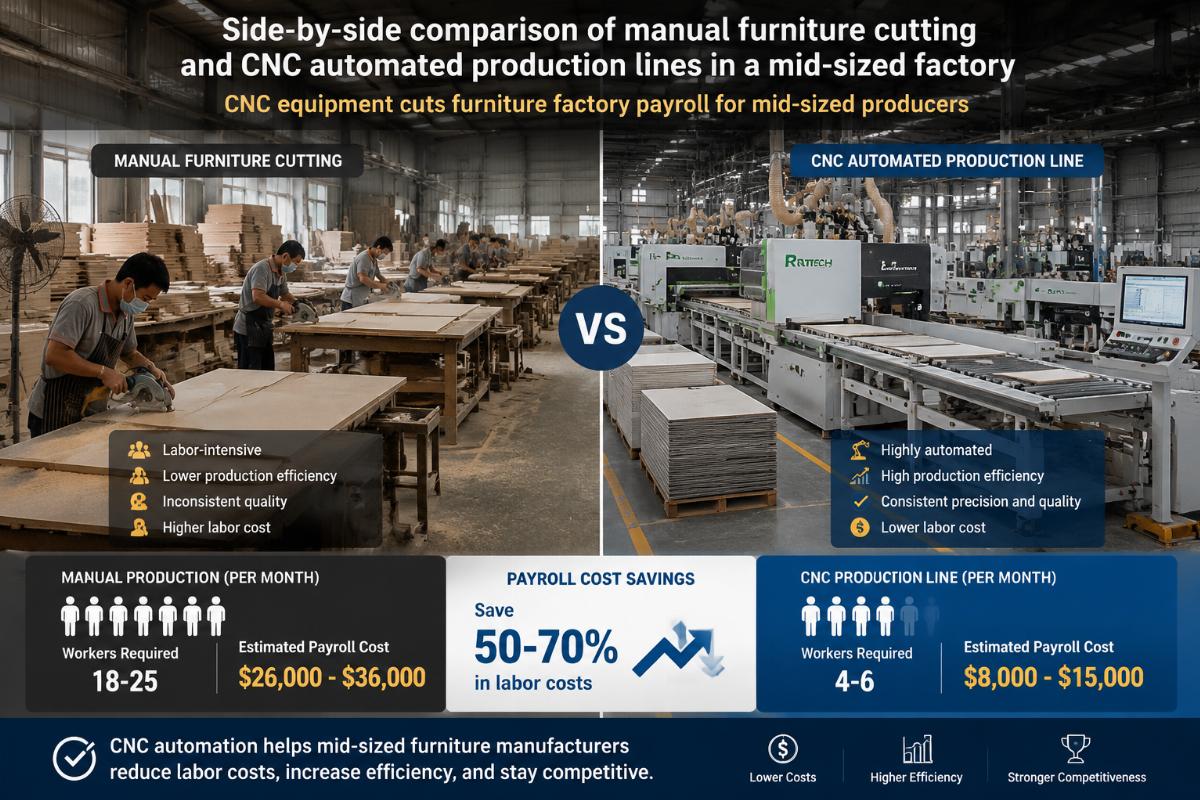
These proven, data-backed practices eliminate guesswork and deliver measurable labor savings from the first month of operation.
How much labor can CNC equipment actually eliminate per production station?
Labor substitution rates for CNC equipment follow clear industry benchmarks, no need to replace full production lines to see cost drops. Industry data shows that labor cost breakdown across standard furniture production processes is 35% for cutting, 22% for edge banding, 18% for drilling, and 25% for post-processing, meaning even targeted upgrades to high-labor segments deliver disproportionate returns.
| Production Stage | Common Inefficient Practice | Proven Optimized Approach |
|---|---|---|
| Panel Cutting | Retain full 10+ person manual cutting team, plan for full line replacement | Only install CNC nested machining center at cutting bottleneck, cut 83% of labor at this single station [NEED_CITE: Mid-sized factories replacing only core cutting stations achieve 40% total labor cost reduction without full line investment] |
| Door Lock Drilling | Assign 4 manual workers per station for repeated hole alignment | Deploy dedicated CNC lock hole machining center, reduce headcount to 1 per station and cut manual error by 90% |
| Startup Workshop Setup | Hire 5+ skilled senior carpenters for full process coverage | Deploy entry-level 1325 CNC router paired with semi-automatic edge bander, run full production with 3 total entry-level workers |
A panel furniture factory in Southeast Asia previously operated with 12 dedicated cutting workers, with a monthly payroll of 18000 USD. After switching to a CNC nested machining center with automatic loading and unloading, only 2 part-time operators were required to run the line, bringing monthly payroll for that station down to 8500 USD, a 52% reduction in just 3 months. [NEED_CITE: CNC automation reduces furniture factory cutting station labor demand by up to 83% for mid-sized producers]
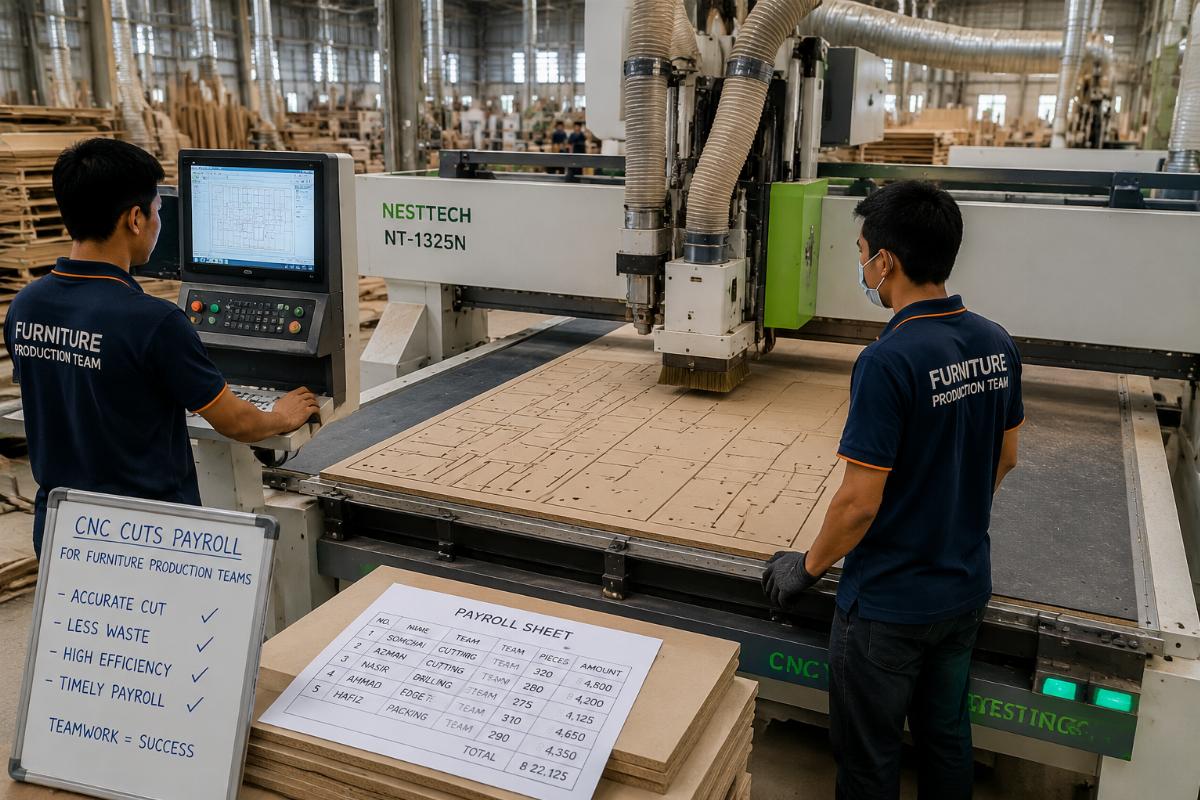
- Target Bottleneck Stations First – Prioritize upgrades for the production step with the longest worker wait time and highest labor headcount, instead of replacing the entire production line at once.
- Calculate Substitution Ratio Pre-Investment – Match CNC model selection to the specific labor reduction target for your core process, rather than purchasing over-specified equipment for non-critical steps.
- Test Single Station Operation – Run the new CNC line in parallel with existing manual operations for 2 weeks to confirm headcount reduction before layoffs or reassignments.
What is the minimum investment threshold for small and mid-sized factories to upgrade to CNC?
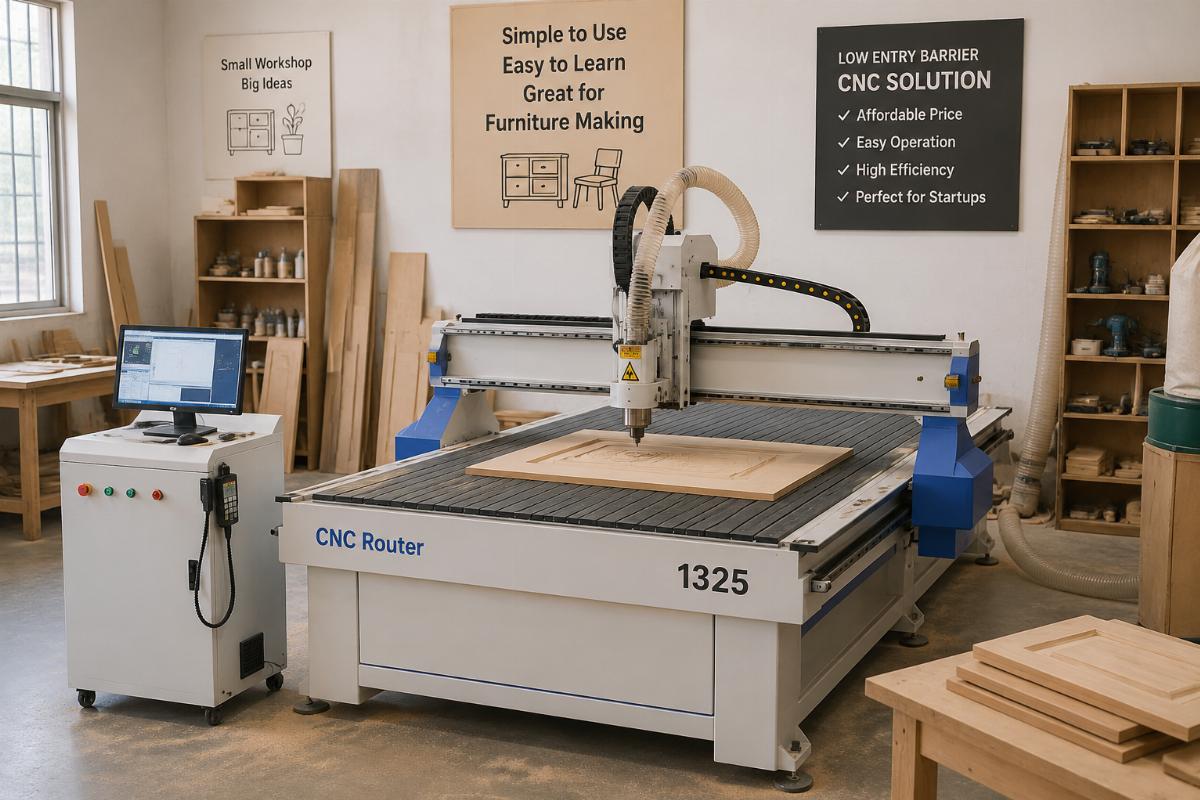
Entry-level CNC packages for small producers start at single-unit purchase, no large batch orders or full factory overhauls required. Many new operators assume they need to sign six-figure full line contracts to access CNC benefits, but entry-level 1325 CNC routers paired with basic auxiliary tools deliver immediate labor savings for even 3-person startup workshops.
| Factory Scale | Common Misconception | Actual Minimum Upgrade Path |
|---|---|---|
| Startup Woodworking Workshop | Need 100k+ USD full line to compete with larger factories | Purchase single entry-level 1325 CNC router + semi-automatic edge bander, start production with 3 workers |
| 1000 Sets Monthly Cabinet Producer | Must invest 200k+ USD for full automation | Purchase single CNC nested machining center with automatic loading/unloading, hit 45% labor cost reduction |
| 2000 Sets Monthly Cabinet Producer | Wait for annual budget cycle to fund full line | Purchase 2 core CNC cutting stations, hit 50% total labor cost reduction within 6 months [NEED_CITE: Monthly production volume directly correlates to CNC-enabled labor cost reduction, with 2000 units per month hitting 50% savings] |
A startup woodworking workshop based in Africa purchased a basic 1325 CNC router and paired it with a low-cost semi-automatic edge bander, eliminating the need to hire 3 additional skilled senior carpenters to meet order demand. The setup delivered 21000 USD in annual labor cost savings, with full payback on equipment costs reached in 11 months.
- Confirm Production Output Target – Match equipment size to your current monthly order volume, avoid over-purchasing capacity you will not use in the first 12 months.
- Prioritize Single Unit Orders – Select suppliers that support single-unit minimum order quantities to test performance before scaling to full lines.
- Calculate Payback Window Upfront – Use the standard formula: monthly labor cost savings × payback months = total equipment cost, only proceed if the window falls between 8 and 14 months.
How to avoid hidden extra costs after CNC upgrade?
Free operator training and on-site installation from suppliers eliminates 120% higher hidden costs from recruitment and training that most factory owners never budget for. The single largest unplanned expense after CNC installation is not equipment repairs, but the 1 to 3 months of lost production and wasted materials while new staff learn to operate the machine.
| Cost Category | Common Hidden Cost Pitfall | Mitigation Best Practice |
|---|---|---|
| Operator Training | Pay external trainers 20-30% of equipment cost to teach staff operation | Choose suppliers that include free on-site operator training as part of standard package |
| Installation Delay | Pay local technicians 500-1000 USD per day to assemble and calibrate equipment | Select suppliers that include free engineer dispatch for on-site installation in overseas markets |
| Post-Installation Debugging | Suffer 2-4 weeks of low yield and wasted raw materials during calibration | Work with manufacturers that provide lifetime remote technical support to resolve issues in real time [NEED_CITE: Pre-upgrade skilled worker recruitment and training costs are 1.2 times the CNC equipment purchase price for unguided upgrades] |
A door processing factory based in the Middle East installed a CNC lock hole machining center, reducing manual demand per station from 4 workers to 1. Daily production volume jumped from 80 door units to 220 units, and labor cost as a share of total production cost dropped from 38% to 17% within 4 weeks, with zero extra training costs because the supplier included full on-site setup and operator guidance.
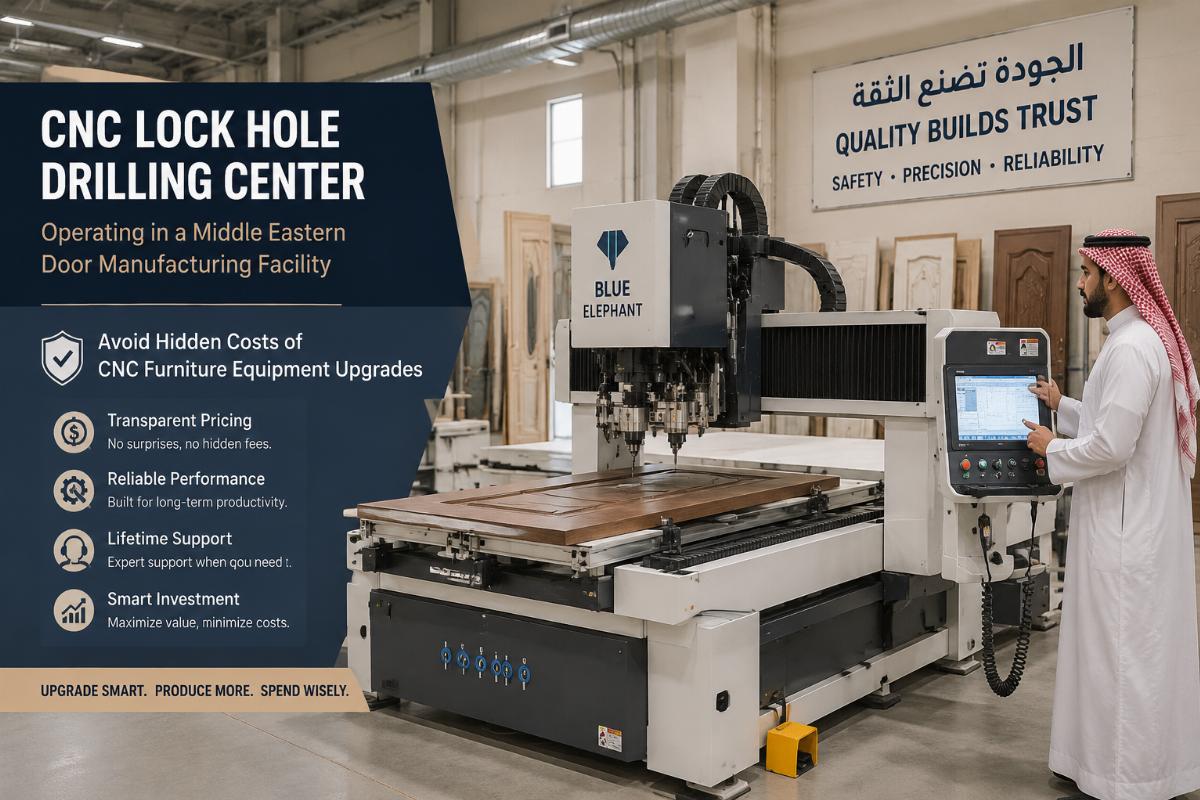
- Verify Training Inclusions Upfront – Ask all potential suppliers to confirm free operator training and on-site installation are included in the quoted price, no extra fees.
- Check Language Support – Confirm the machine control system supports local languages including English, Russian, Spanish or Arabic to eliminate operation barriers.
- Review Warranty Terms – Select equipment with minimum 2-year warranty and lifetime technical support to avoid unexpected maintenance costs.
Conclusion
CNC automation delivers predictable, measurable labor cost reduction for furniture factories only when upgrades are targeted to core bottleneck processes, not pursued as a full-line blind overhaul. The most overlooked cost driver for most upgrades is not the equipment itself, but hidden recruitment and training expenses that can be fully eliminated by selecting the right supplier partner. For producers of all sizes from 3-person startups to mid-sized 2000-unit monthly operations, the proven path to cutting payroll by up to half follows simple, data-backed steps that deliver returns in less than 14 months.
Leave a Reply