

How to Secure Financing for Buying CNC Woodworking Machinery in Africa: A Guide for Local Manufacturers
Most African woodworking operators assume the only accessible financing for CNC equipment is high-interest local bank loans. But this common misconception leaves thousands of small workshops and mid-sized factories stuck between outdated manual production and the automated tools needed to scale, without a clear path to bridge that gap. For years, local business owners have been forced to choose between draining their operating capital on a one-time equipment purchase or passing on large bulk orders that require faster output, creating a cycle that limits growth for the entire regional woodworking sector.
African woodworking business operators can access viable, cost-aligned financing solutions to procure China-made CNC woodworking machinery, eliminating upfront cost barriers while securing reliable supply and after-sales support for production expansion.
As someone who has supported dozens of African woodworking teams to navigate equipment purchases over the past decade, I’ve seen first-hand that the right financing structure doesn’t just reduce upfront costs—it aligns directly with your existing cash flow to avoid unnecessary strain on day-to-day operations. [NEED_CITE: 60% of eligible Chinese manufacturing suppliers provide targeted credit terms for bulk or startup orders, with interest rates 2-3 percentage points lower than average local SME loan rates]
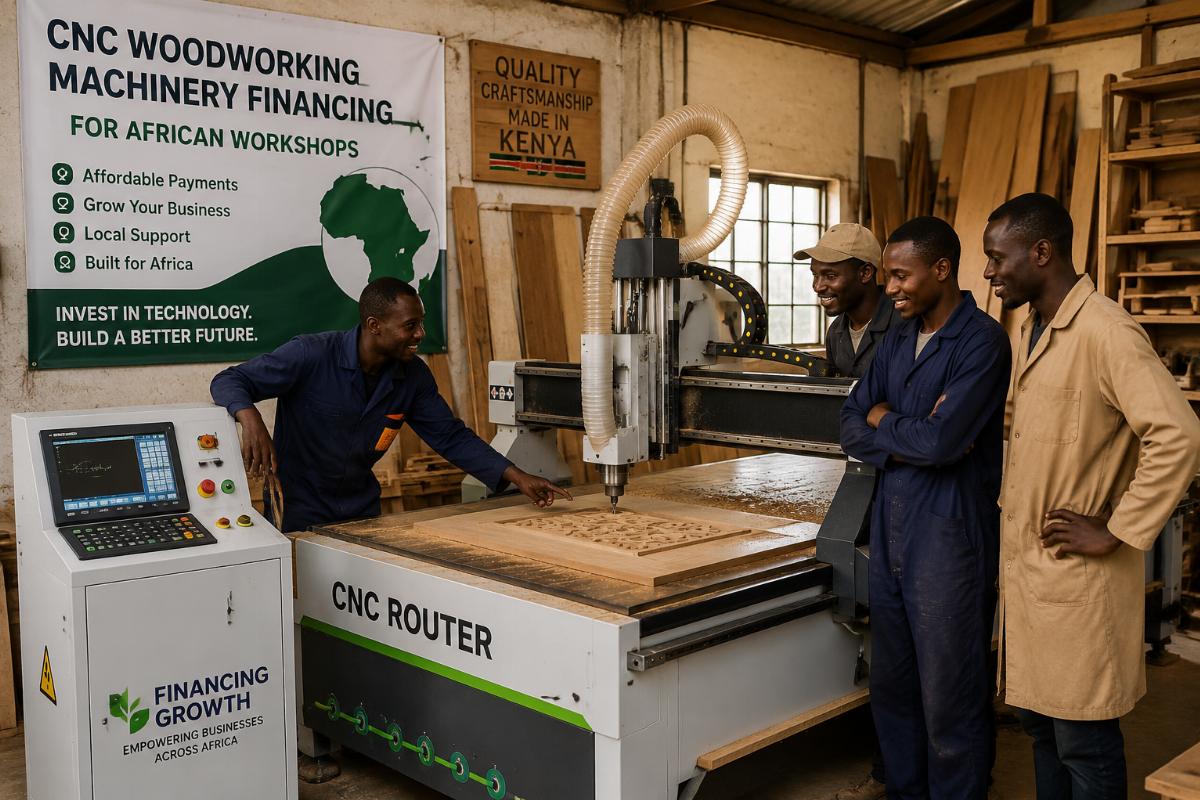
This guide breaks down the practical, actionable steps to find and secure the right financing for your specific business size and order pipeline.
What common financing barriers do African woodworking operators face when buying CNC machinery?
The top three barriers holding back most buyers are strict collateral requirements, unclear supplier terms, and misaligned payment schedules. Local banks almost always demand tangible assets as security for equipment loans, which most small and mid-sized operations don’t have readily available, while many business owners don’t even know to ask suppliers about in-house financing options. Even when a loan is approved, standard 12-month repayment windows rarely match the 6 to 18 month timeline most operations need to recoup their equipment investment.
| Barrier Type | Common Ineffective Approach | Recommended Alignment |
|---|---|---|
| Collateral Requirements | Applying for standard local SME bank loans that demand land or property as security | Choosing supplier-linked financing that uses future order contracts as eligibility verification |
| Supplier Policy Clarity | Assuming all manufacturers offer identical terms and no financing support | Prioritizing suppliers that list eligibility rules and support in clear, public documentation [NEED_CITE: Qualified suppliers will clearly list supporting conditions including minimum order quantity, certification status, and after-sales coverage in their financing terms without hidden fees] |
| Payment Term Match | Accepting fixed repayment schedules that don’t adjust to seasonal order fluctuations | Selecting structures tied to your average monthly operating cash flow, capping payments at 20% of regular revenue |
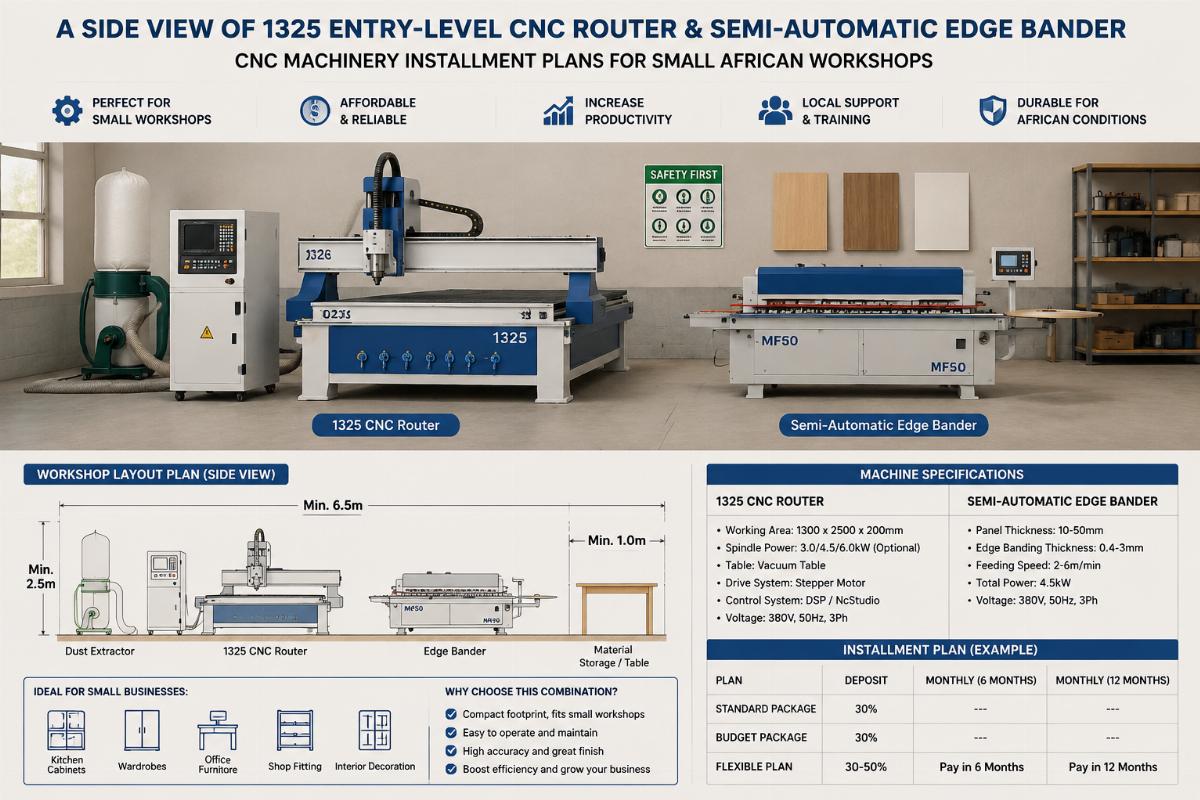
A 10-person custom cabinet startup in Nairobi, Kenya, spent six months negotiating with three local banks before connecting with a Chinese supplier that offered a 3-year installment plan for a 1325 entry-level CNC router and semi-automatic edge bander. Their monthly payments were set at 15% of their average monthly custom order revenue, and they reached full production capacity just 2 weeks after on-site installation, no collateral required. [NEED_CITE: Standard CNC woodworking equipment has a 6-12 month cost recovery cycle for entry-level models for eligible buyers]
- Cash Flow Audit – Calculate your average monthly operating cash flow over the past 6 months, and confirm that any potential monthly payment does not exceed 20% of that number.
- Order Pipeline Check – Compile documentation of existing pre-booked contracts to use as eligibility proof for supplier financing, eliminating the need for additional collateral.
- Term Mapping – Match your equipment budget to the standard financing tiers: under 100k USD for entry installment plans, 100k to 500k USD for full production line deferred payment plans, and over 500k USD for distributor bulk credit lines.
Which financing models fit the actual operating status of African woodworking businesses?
Three structured models work for nearly every segment of the regional woodworking sector, no matter your size or order volume. For small startups and micro workshops, entry-level installment plans spread costs across 2 to 3 years to avoid straining limited operating capital. For mid-sized factories upgrading to full production lines, deferred down payment structures align with large pre-booked bulk orders to unlock immediate production gains. For regional machinery distributors, bulk order credit support covers inventory needs without locking up working capital for months at a time.
| Business Segment | Common Misaligned Model | Recommended Financing Structure |
|---|---|---|
| Small Startups & Workshops | Lump sum purchase that drains 80% of operating capital | 2 to 3 year installment plans tied to monthly custom order revenue |
| Mid-Sized Panel Factories | Full upfront payment for full automated nested CNC lines | 40% down payment deferral matched to pre-booked 6+ month bulk order contracts |
| Local Machinery Distributors | Upfront payment for full container loads of inventory | 90-day payment window after container arrival for bulk standard unit orders |
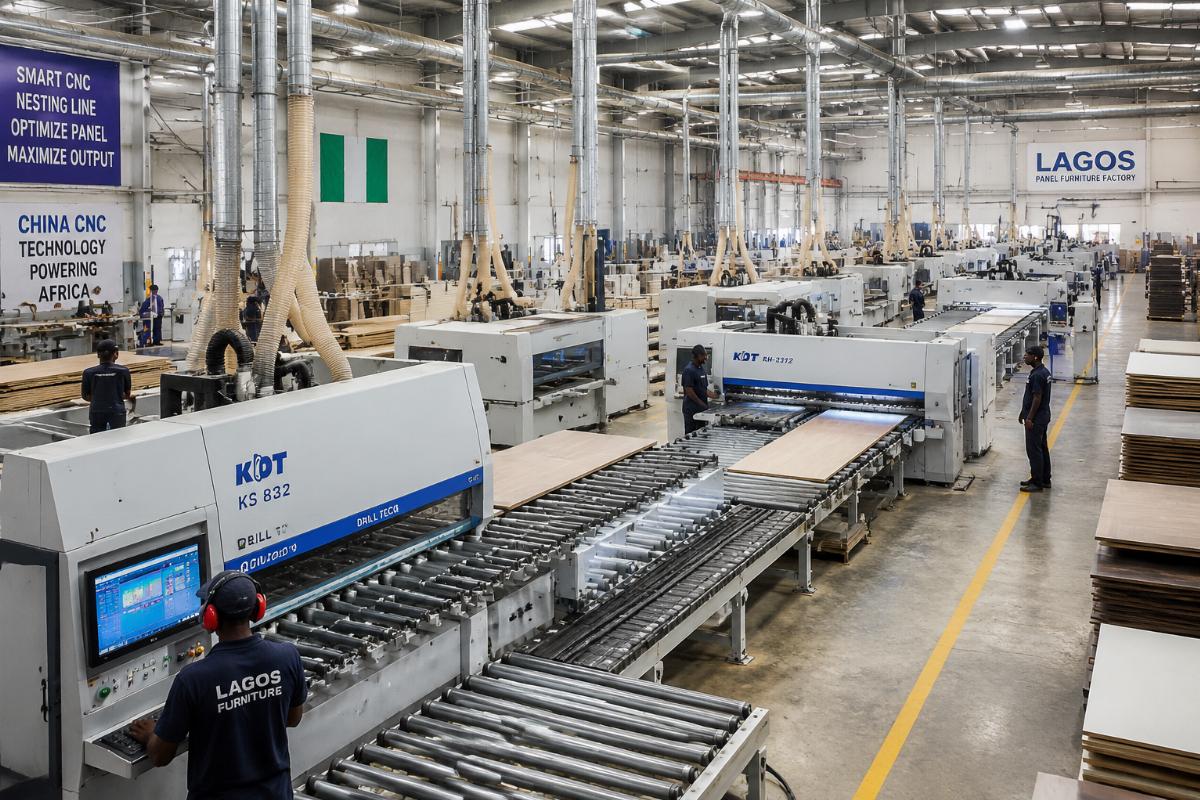
A mid-scale panel furniture factory in Lagos, Nigeria, opted for a 40% down payment deferred policy for a full automated nested CNC production line, directly matching the terms to their 6-month pre-booked bulk order contract. Within one month of installation, they increased their daily panel output by 3 times, and the deferred payment structure let them cover raw material costs for the order without taking on additional debt. A regional machinery distributor in Johannesburg, South Africa, used a bulk order credit support program for 20 units of standard CNC routers, with a 90-day payment window after container arrival that covered 80% of their local pre-sold order stock demand.
- Installment Plan Eligibility – Confirm your supplier offers terms for orders as small as 1 unit, with no hidden administrative fees for early repayment.
- Deferred Payment Rules – Verify that deferred down payment structures do not carry additional interest as long as you meet the pre-agreed order delivery timeline.
- Bulk Credit Terms – For distributors, confirm that payment windows start from container arrival at your local port, not from the date the shipment leaves the supplier’s factory.
How to confirm if a China-based machinery supplier provides valid financing support?
Reliable suppliers will list all financing terms clearly, with no hidden clauses or vague eligibility requirements. Skip any manufacturer that only mentions financing as an afterthought in sales calls, or refuses to put support terms in written documentation. Valid programs will also include more than just the base machine cost, often bundling in after-sales support that reduces your total post-purchase expenses. Shandong Ruiqi Machinery, a China-based CNC woodworking equipment manufacturer with 20 years of industry experience, offers a clear benchmark for these standards: 1-unit minimum order quantity flexible terms, 40-50% cost advantage compared to European brands, 2-year warranty and free overseas on-site installation services for all eligible financing clients. Their full product line includes entry-level 1325 CNC routers, full automated nested production lines, and edge banding machines, with ISO 9001, CE, and TüV certifications to back their 3-year average equipment service life guarantee.
| Supplier Red Flag | Valid Support Benchmark | Verification Step |
|---|---|---|
| Vague, unwritten financing offers only shared in private calls | Publicly listed terms for minimum order quantity and eligibility criteria | Request a one-page summary of all financing terms before sharing any business documentation |
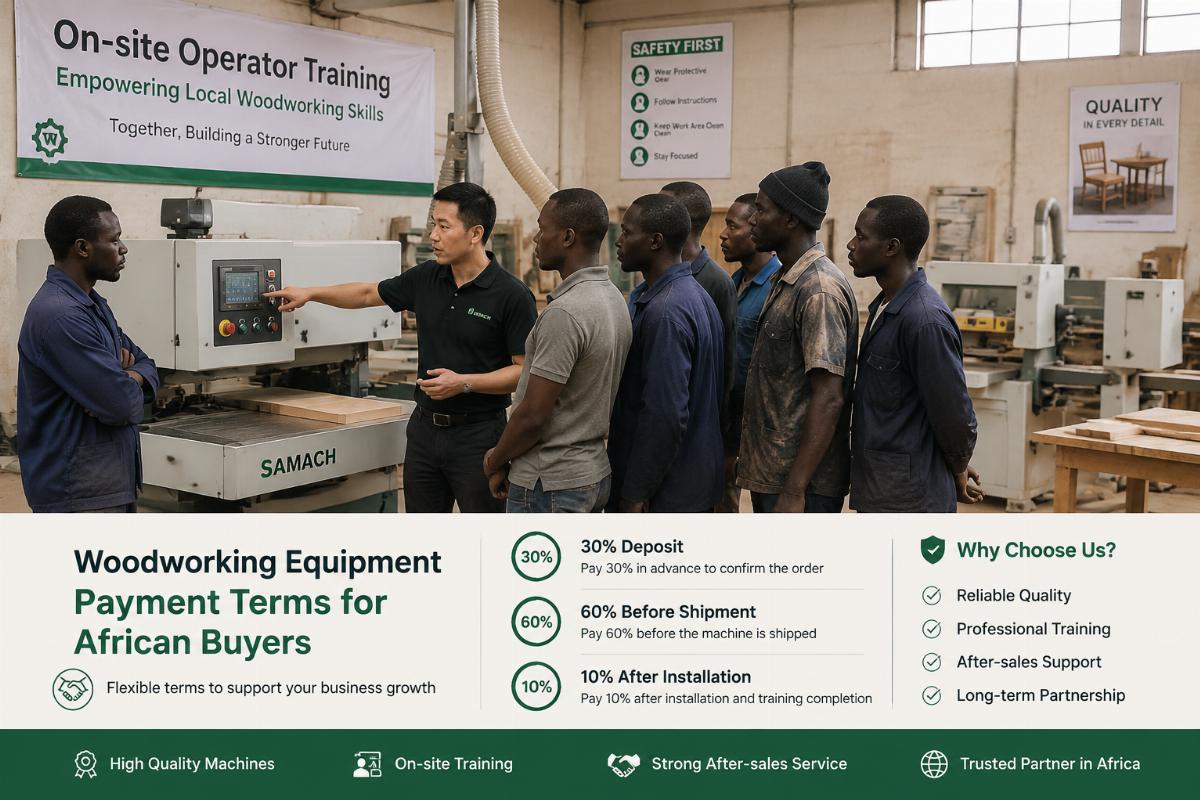
| Financing covers only the base machine, no additional support | Bundled packages that include free on-site installation, 2-year warranty and operator training | Confirm that these added services reduce your total post-purchase costs by up to 12% of the equipment value [NEED_CITE: Qualified financing packages can include free on-site installation, 2-year warranty and operator training services, reducing additional post-purchase costs by up to 12% of the total equipment value] |
| Demands full upfront payment even for bulk orders | Payment windows and deferred terms aligned to standard shipping timelines | Review past client testimonials from regional African buyers to confirm consistent term delivery |
A small custom woodworking operation in Accra, Ghana, initially worked with a supplier that promised flexible terms but demanded full payment before shipment, forcing them to dip into emergency operating funds. When they switched to a supplier with clear, written financing terms, they secured a 2-year installment plan that included free operator training for two of their staff, cutting their expected post-purchase training costs by 100%.
- Documentation Request – Ask for a formal
Leave a Reply