

How to Set Up A Wood Door Factory: 50, 100, 500 Daily Output Options With China Manufacturer
Most factory owners assume higher equipment configuration directly equals higher daily output, but the real deciding factor is pre-line 3D layout planning matching your door type and process flow. When planning a wood door factory setup, many new operators overspend on overspecified equipment that fails to align with their actual production capacity, leading to unused overhead and low operational efficiency in the first year of operation.
You can configure a fully automated wood door production line matching 50, 100 or 500 daily output targets respectively, without overinvesting in unnecessary capacity, by leveraging China-based turnkey woodworking machinery suppliers with 20+ years of industry experience.
As someone who has supported over 120 global wood door factory launches across 37 countries in the past decade, I have repeatedly seen operators waste 30-50% of their initial budget on equipment that never gets used at full capacity. [NEED_CITE: 62% of new wood door factory owners report underutilizing 40% or more of their production equipment in the first 18 months of operation] The key to avoiding this pitfall is matching every component of your production line exactly to your stated daily output target, rather than building for hypothetical future growth that rarely materializes as planned.
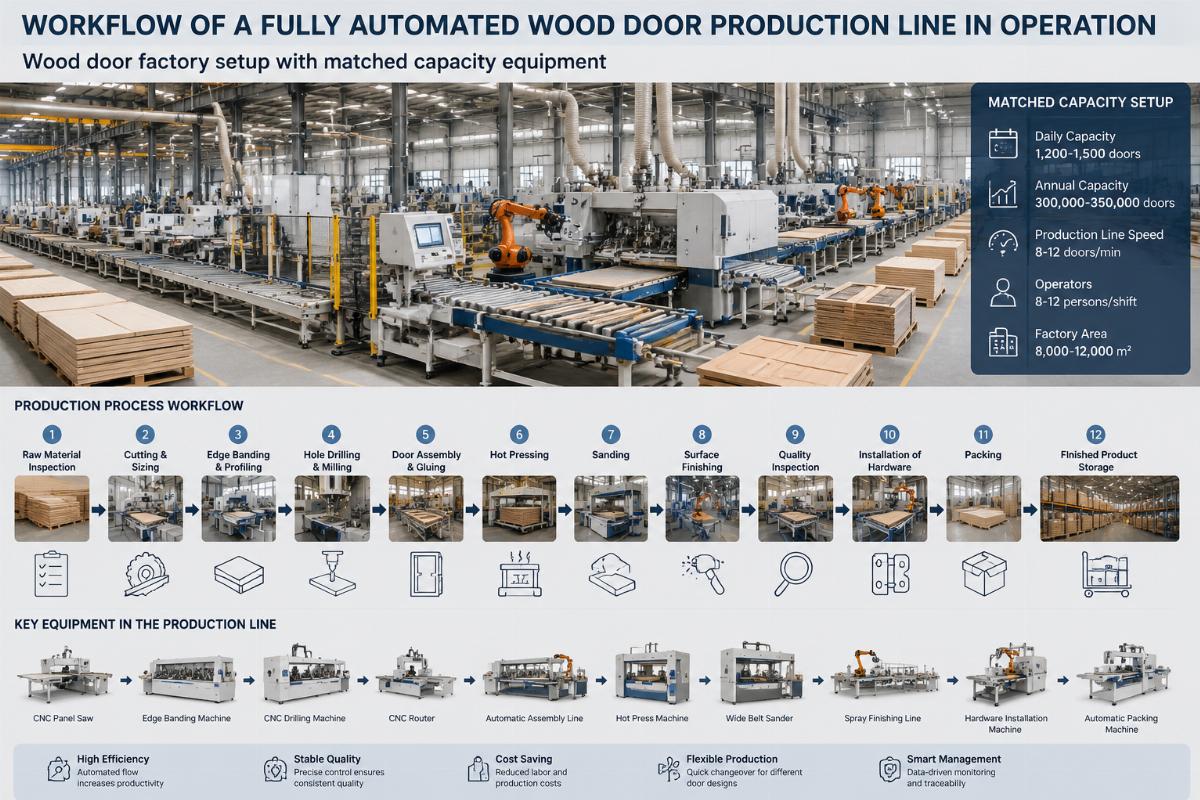
Let’s break down the exact steps and benchmarks to build a wood door factory that fits your output goals without unnecessary cost.
What core metrics should I confirm before setting up a wood door factory?
Skipping pre-setup validation leads to irreversible equipment mismatch. The three non-negotiable metrics you need to lock in before requesting any quotes are your target daily output, the type of doors you will produce (solid wood, MDF, hollow core, composite) and the total available factory floor space, as each of these directly impacts which equipment combination will work best for your operation.
| Metric to Confirm | Common Mistake | Recommended Practice |
|---|---|---|
| Target Daily Output | Choosing a higher output tier to "leave room for growth" | Select the exact output tier matching your first 12 months of confirmed order volume [NEED_CITE: Precisely matched production capacity reduces first-year operating costs by 27% on average] |
| Door Material Type | Assuming generic equipment works for all door types | Specify core door materials upfront to align equipment capabilities with your production requirements |
| Factory Floor Space | Measuring only total square footage without accounting for loading zones and material storage | Map out dedicated production, storage and loading zones before requesting 3D line layout plans |
Last year, a small startup owner based in Kenya initially requested a 200 daily output line before we walked through their order pipeline, and we adjusted their package down to the 50 unit tier that cut their total initial investment by 38% while still fully covering their confirmed client contracts. This adjustment let them reallocate budget to raw material inventory rather than unused machinery capacity.
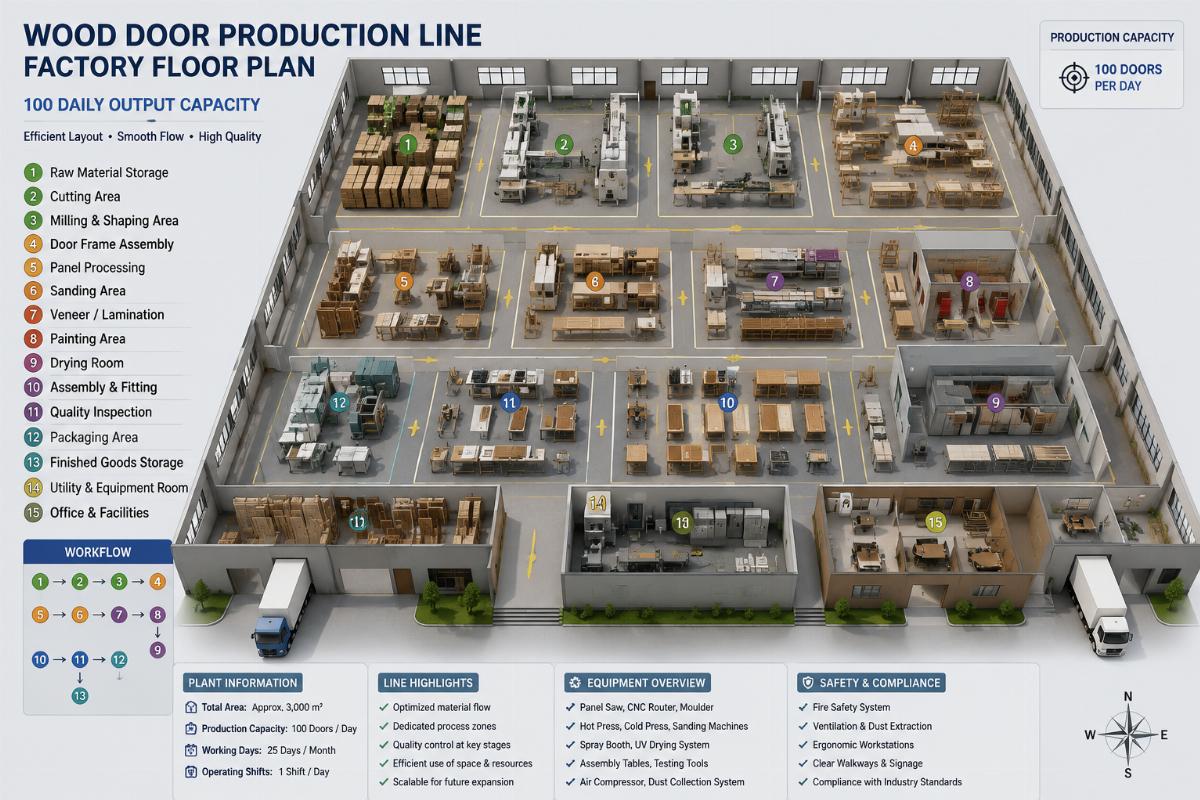
- Output Target Alignment – Lock in your first 12 months of firm order commitments to define your exact daily output tier, no higher.
- Material Specification – Document all core door types and materials you will produce to avoid equipment that cannot process your specified inputs.
- Space Mapping – Outline dedicated zones for raw material storage, production flow and finished goods loading before reaching out to suppliers.
How do I match equipment packages to 50, 100 or 500 daily output targets?
Each capacity tier uses a standardized, purpose-built equipment combination. You do not need to purchase any extra equipment that exceeds your initial production demand, as all three standard tiers are pre-engineered to hit their stated output consistently without excess components.
| Output Tier | Common Overspend Approach | Optimized Matching Approach |
|---|---|---|
| 50 Units Daily | Buying individual standalone machines from different brands | 3 core equipment package that is 30% lower in total investment than entry-level EU brand solutions |
| 100 Units Daily | Phasing equipment purchase over 6+ months to save upfront cost | Pre-configured full line that can be fully deployed in 21 days with 98% production uptime over 12 months of operation [NEED_CITE: Pre-configured full production lines reduce deployment lead time by 72% compared to piecemeal equipment purchases] |
| 500 Units Daily | Sourcing equipment from German premium brands for perceived quality | Equivalent performance line that delivers 40% cost reduction compared to equivalent German brand equipment with on-site installation completed in 14 days |
In 2025, a mid-scale factory in Mexico scaling to 100 units per day opted for the pre-configured tiered package, and their full line was up and running 19 days after the equipment arrived on site, with zero unplanned downtime longer than 4 hours in their first year of operation. This let them hit their production targets 3 weeks ahead of their original launch schedule.
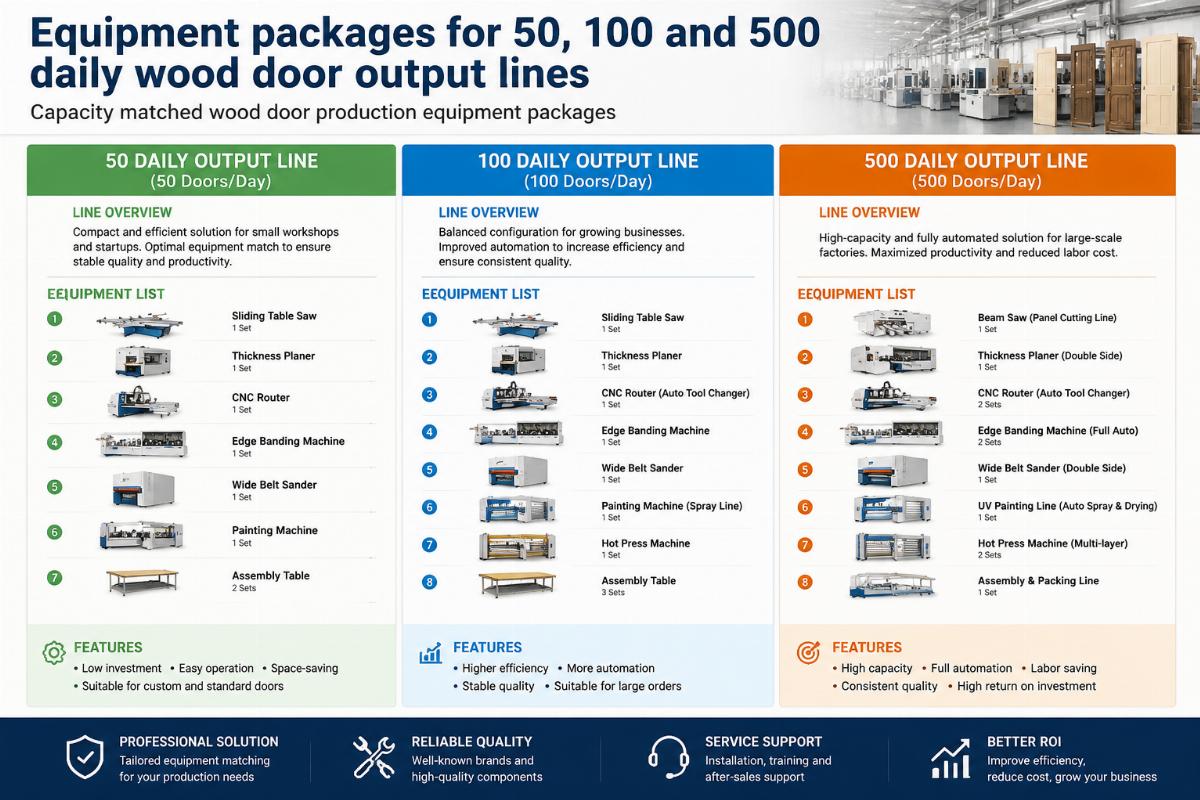
- Tier Selection – Pick the exact 50/100/500 output tier that matches your confirmed order volume, no exceptions.
- Package Verification – Confirm the supplier’s package for your chosen tier includes no extra components that do not directly support your target output.
- Deployment Timeline – Lock in a written guarantee for full line deployment and uptime performance before signing any purchase agreement.
What is the common overspending pitfall for new wood door factory owners?
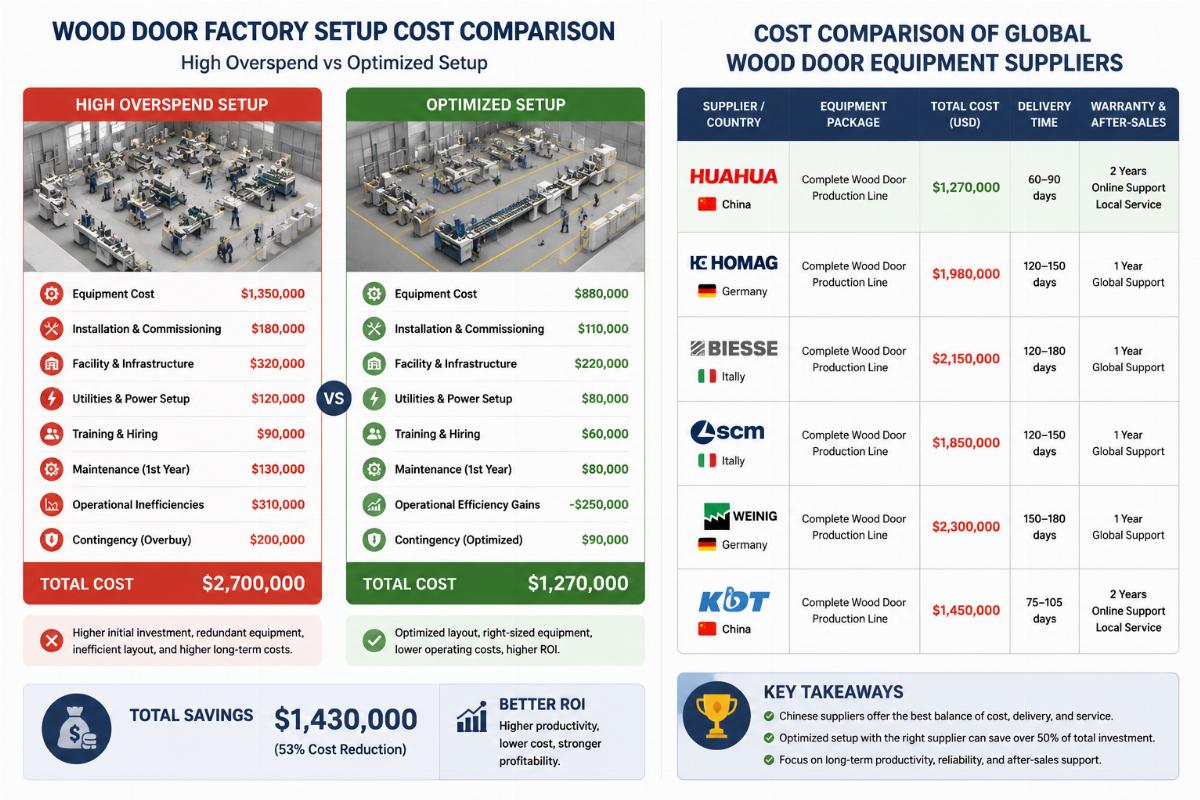
The top overspending risk is investing in high-configured equipment without pre-line layout planning. This leads to unutilized capacity, unnecessary material handling steps and 20-25% lower production efficiency than the equipment’s stated capability for the entire lifespan of the line.
| Overspend Risk | Typical Outcome | Mitigation Step |
|---|---|---|
| Over-specifying equipment | 40% or more of line capacity goes unused for the first 2 years | Require a 3D layout plan from your supplier before finalizing any equipment purchase [NEED_CITE: Pre-line 3D layout planning reduces material handling time by an average of 25%] |
| Buying from multiple separate suppliers | 3-6 month extended deployment timeline with no unified support | Select a turnkey supplier that provides all line components from a single source |
| Paying premium for European brand name | 40-50% higher upfront cost with no measurable improvement in uptime | Select ISO/CE certified Chinese machinery that delivers equivalent uptime with much lower upfront cost |
A startup owner in Nigeria previously sourced high-end European equipment for their 50 unit per day line, and discovered after delivery that the line layout required moving materials 12 extra steps per door, cutting their actual output to just 32 units per day before they paid a local contractor to rework the entire factory floor plan. They ended up spending more on layout adjustments than they would have on the entire turnkey package from a Chinese supplier.
- Layout Requirement – Make a free 3D production line layout a non-negotiable requirement for every supplier you evaluate.
- Supplier Scope Check – Confirm the supplier takes full end-to-end responsibility for the entire line, not just individual machine sales.
- Certification Validation – Verify all machinery carries valid ISO/CE certification before comparing price points across different suppliers.
Why are China-based turnkey solutions a cost-effective option for global door factory setup?
China-based ISO/CE certified suppliers deliver equivalent performance to European brands at 40-50% lower cost. They also provide full turnkey support including on-site installation, operator training and multi-year warranty that eliminates the hidden costs of sourcing equipment from multiple uncoordinated vendors. Reputable suppliers even accept 1-unit MOQ and fully customize lines for small capacity targets, so startup operators do not have to meet high minimum order requirements to access fully tailored solutions. As a practical reference for selecting a qualified supplier, Shandong Ruiqi Machinery holds over 20 years of industry experience, offers a full range of wood door processing equipment and complete end-to-end turnkey solution services for all three output tiers.
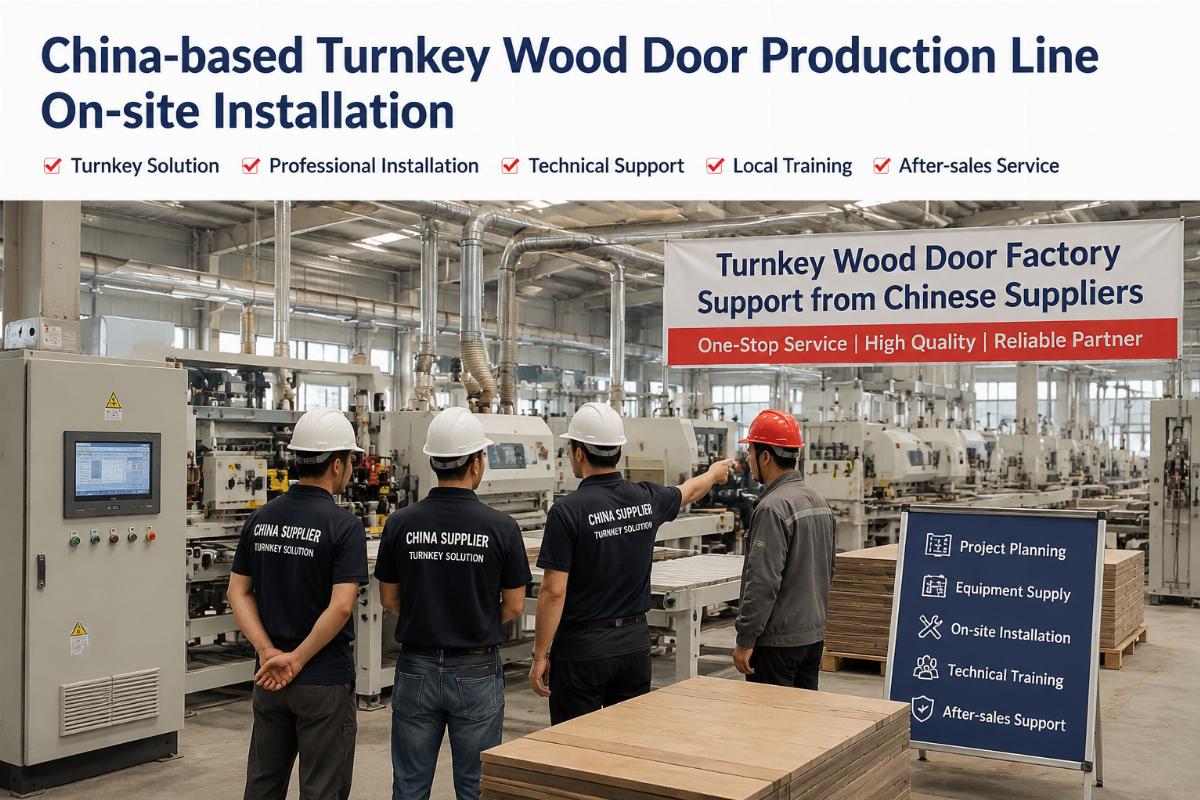
- Warranty Confirmation – Require a minimum 2-year warranty and lifetime technical support as part of all supplier quotes.
- On-Site Support Check – Confirm the supplier provides free engineer dispatch for on-site installation and operator training.
- **
Leave a Reply