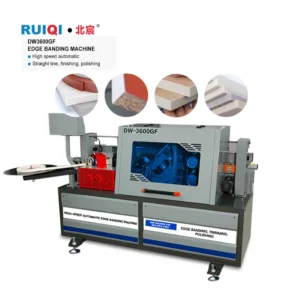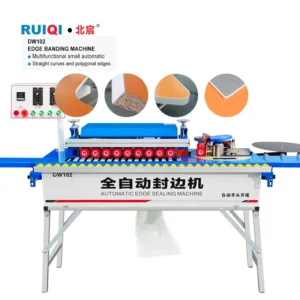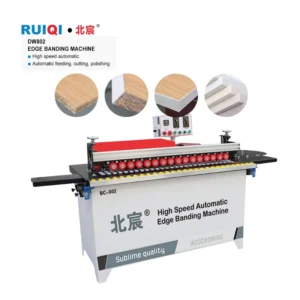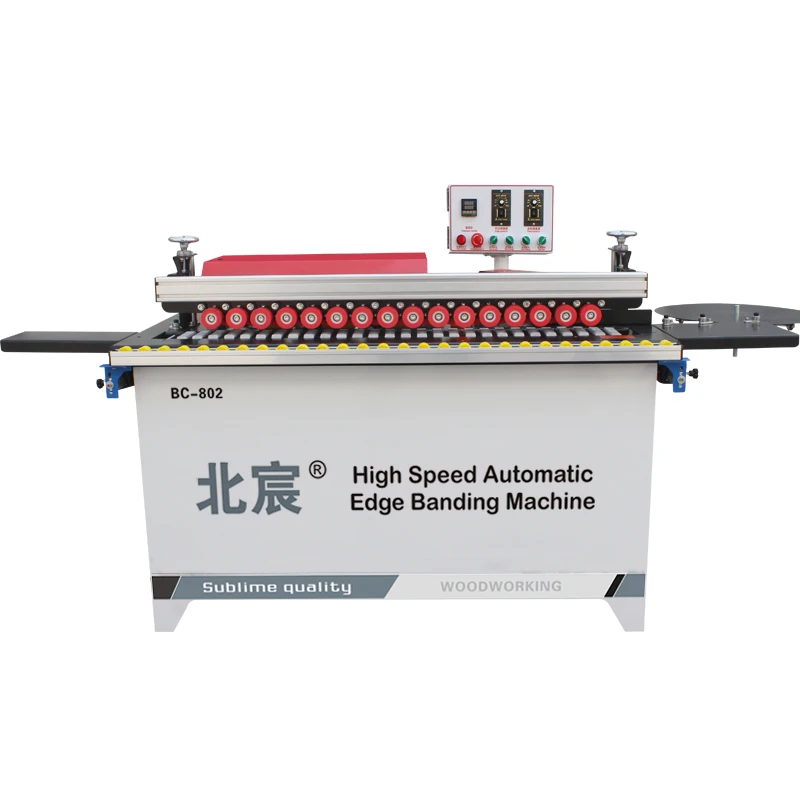
DW802 Automatic Edge Banding Machine, 4200W, 0.3–3mm Edge Thickness, 4000ml Glue Pot — designed as a scalable station within a complete panel processing line, matching throughput with upstream sawing and downstream boring operations.
Engineer-led line configuration proposals delivered within 24 hours, covering electrical schematics, throughput matching, and pre-shipment verification under load for all stations.
Engineer-led configuration — the DW802 is proposed only after verifying upstream saw output and downstream boring cycle time, ensuring this edge banding machine production line station does not become the bottleneck.
| Parameter | Value |
|---|---|
| Model | DW802 |
| Product Type | Automatic Edge Banding Machine |
| Total Power | 4200W |
| Voltage & Frequency | 220V / 380V / customization available |
| Edge Banding Height Range | 0–50 mm |
| Edge Banding Thickness Range | 0.3–3 mm |
| Minimum Sheet Length | 25 cm |
| Minimum Sheet Width | 10 cm |
| Glue Pot Capacity | 4000 ml |
| Edge Feed Power | 140W |
| Transmission Power | 140W |
| Trimming Power | 800W × 2 |
| Polishing Power | 180W × 2 |
| Vacuum Power | 1200W |
| Air Source Pressure | 0.4–0.8 MPa |
| Overall Dimensions (L×W×H) | 130 × 60 × 95 cm |
| Net Weight | 135 kg |
| Standard Functions | Edge banding, trimming, polishing, automatic head and tail cutting, vacuum hold-down |
| Language Options | Chinese, English; other languages customizable |
| Plug Options | EU, USA, AU, UK |
| Certification | CE, ISO 9001 |
| Application | Material or Output |
|---|---|
| Custom cabinet door edge sealing | MDF and particleboard with PVC or melamine edge banding |
| Wardrobe side panel finishing | Plywood and ecological board with 0.3–3 mm banding material |
| Home decoration workshop panel processing | Solid wood board edge sealing at moderate volumes |
| Turnkey edge banding solution for phased factory builds | Integrated cutting-to-boring line with matched throughput |
Mismatched voltage across stations can stall commissioning for weeks.
I have walked into factories where the panel saw was wired for 380V three-phase, but the edge bander arrived configured for 220V single-phase. The electrician spent days rewiring and upsizing breakers while the entire edge banding machine production line sat idle. When a turnkey edge banding solution involves four or five stations sharing one electrical panel, confirming voltage and frequency for every machine before production starts is non-negotiable. The DW802 supports 220V and 380V configurations, and we confirm the exact specification against your facility’s electrical schematic before the machine enters assembly [NEED_CITE: voltage and frequency standards by export market].
The biggest failure mode I see in small-to-mid-size furniture factories is buying machines one at a time without checking whether feed speeds align. A panel saw pushing 40 boards per hour into a DW802 that can accept them faster is fine — but if the downstream multi-boring machine cycles slower, panels pile up on the floor between stations. When planning a turnkey edge banding solution, the line only works when every station’s throughput is documented and balanced before the first machine ships.
A single edge bander drawing 4200W and requiring 0.4–0.8 MPa air pressure is manageable. But when you add a sliding table saw, a multi-boring machine, and a dust extraction system, the combined electrical load and compressed air demand can exceed what a small workshop originally installed. The DW802’s vacuum system alone pulls 1200W, and its air cylinders need stable pressure to maintain trimming accuracy. I always map out compressor sizing and total amperage for the full line before recommending equipment [NEED_CITE: compressed air system sizing for multi-station woodworking lines].
The 4000 ml glue pot capacity determines how long the DW802 can run continuously before needing a refill — in a production line context, a small pot means frequent stops that break rhythm across every downstream station. The automatic head-and-tail cutting with vacuum hold-down keeps panels stable at line-speed feeding, which matters when boards arrive from the saw station without manual slowing. The overall footprint of 130 × 60 × 95 cm is compact enough to fit between a cutting station and a boring station without requiring a major floor plan redesign. However, feed speed and maximum panel thickness are not stated in the current specification sheet — these must be confirmed before finalizing the line layout, since they directly determine how many boards per hour can flow through this station.
I once saw a custom cabinet factory purchase a six-function edge bander on its own merits, only to discover that the feed height did not match their existing roller conveyors. Panels had to be manually lifted onto the machine bed, adding fatigue and slowing every operator. In a line context, a 95 cm machine height means your upstream and downstream conveyors must align to that same transfer plane. When machines are sourced from different suppliers without a unified layout plan, these mismatches compound — and the result is a production floor where operators spend more time handling panels than running machines [NEED_CITE: ergonomic transfer height standards in panel furniture manufacturing].
In-house manufacturing means the DW802 can be reconfigured for your line’s exact voltage and plug type before it ships — no field adapters or rewiring on arrival. The four-stage quality control process covers incoming material inspection through pre-shipment verification, so when this machine arrives as part of a multi-station order, each unit has been tested under load rather than only at idle. Engineer-led configuration means you receive a formal line layout proposal showing how the DW802 fits between your saw and boring stations, with throughput numbers documented for every position. Factory visits are available so you can witness the assembly and testing of your specific machines before crating.
To propose a balanced line layout, I need to know your upstream panel saw model and its hourly output, your downstream boring machine cycle time, and the total floor space available for the production corridor. Please also confirm your facility voltage, frequency, and whether compressed air is already piped to the installation area. If you are planning a phased rollout, let me know which stations you intend to install first so the DW802 can be configured to operate independently before the full edge banding machine production line comes online.
Q: How do I match the DW802 feed speed with my panel saw and boring machine?
A: Feed speed for the DW802 must be confirmed against your specific configuration. Share your upstream saw model and downstream boring machine cycle time, and the engineering team will calculate whether this station can accept panels as fast as they arrive and pass them forward without creating a queue. Balanced throughput across every station is what makes a line actually produce.
Q: What is the best order to install stations in a phased investment plan?
A: Most workshops install the panel saw first to generate cut parts, then the edge bander to finish those parts, and finally the boring machine for hardware mounting. The DW802 can operate as a standalone station during phase two, then integrate into the full turnkey edge banding solution once downstream equipment arrives and conveyors are connected.
Q: How should I size the air compressor for a multi-station line?
A: The DW802 requires 0.4–0.8 MPa air pressure for its trimming and polishing cylinders. When multiple stations share one compressor, total CFM demand adds up quickly. Provide the model list for every machine in your planned line, and the compressed air requirement will be calculated so you can spec a compressor with adequate reserve capacity.
Q: What does a full line quotation include versus a single-machine order?
A: A line quotation covers equipment layout drawing, throughput matching calculations, shared utility planning for electrical and air supply, and coordinated shipping so all stations arrive together. A single DW802 order includes the machine, manual, and spare parts list but does not include line integration engineering unless specifically requested.
Q: Can the DW802 run independently before the rest of the line is installed?
A: Yes. The DW802 functions as a standalone edge banding machine production line station with its own feed table and output rack. Operators load panels manually until upstream conveyors are installed. Once the full line is commissioned, the same machine accepts panels directly from the roller conveyor at matched line speed.
* Detailed technical specifications vary by model. Contact us for the full parameter sheet and customization options.
Heavy-duty wooden crate with moisture-proof lining and steel strapping. Seaworthy standard for safe ocean freight.
Standard models: 15-20 working days. Custom OEM orders: 25-35 working days from deposit confirmation.
FOB Qingdao / Tianjin. EXW, CIF available. T/T, L/C, Western Union accepted. Flexible payment terms for long-term partners.
We export to 100+ countries across Europe (Germany, Spain, Italy), Americas (USA, Mexico, Brazil, Argentina), Southeast Asia (Vietnam, Indonesia, Thailand), Africa (Nigeria, Egypt, South Africa), and the Middle East. Full customs documentation and export compliance support included.
Your logo on machine body, control panel and packaging. Full white-label production available.
Support 110V/60Hz, 220V/50Hz, 380V/50Hz, 440V/60Hz and other local electrical standards.
Modify table size, motor power, cutting capacity and other parameters per your production requirements.
Control panel available in English, Spanish, French, Arabic, Russian and other languages on request.
Custom paint color, machine casing design and aesthetic modifications to match your brand identity.
Bundled tooling sets, spare parts kits, installation tools and custom accessories for your market needs.
Fill in your requirements and our sales team will respond within 24 hours with a formal quotation and full technical specifications.