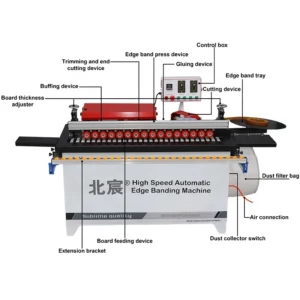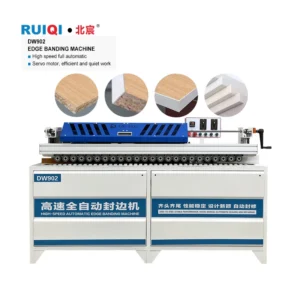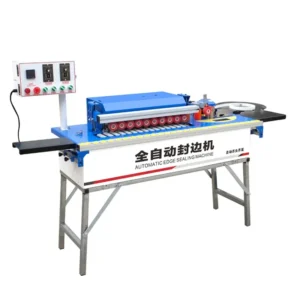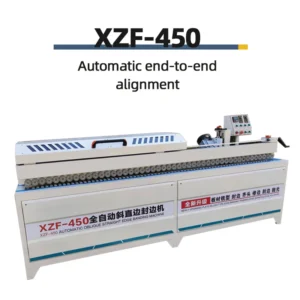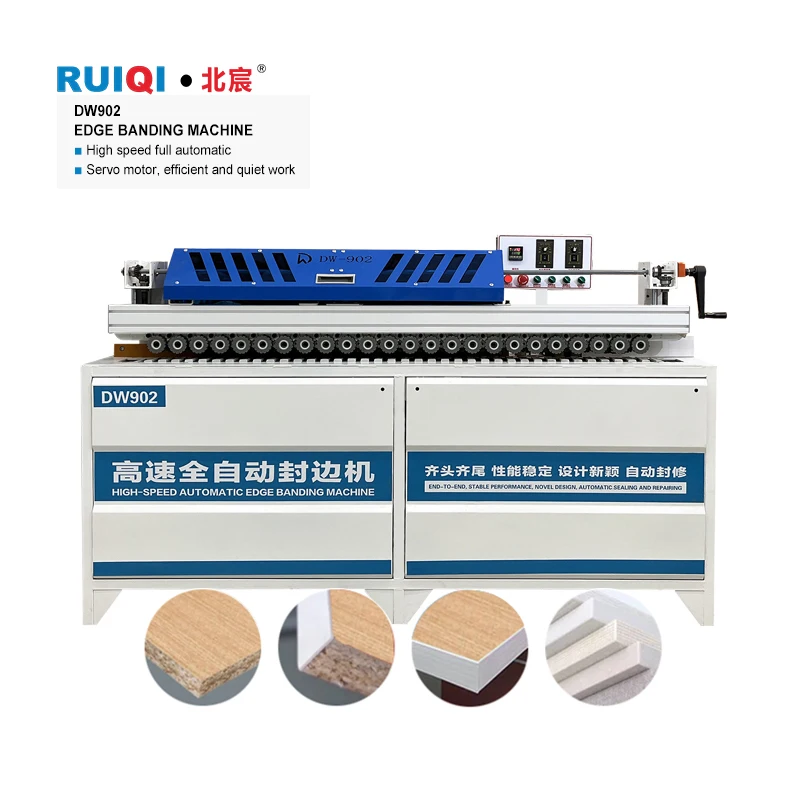
DW902 Automatic Edge Banding Machine, 4000W, 24000r/min Trimming — designed for phased furniture production line integration with oblique and straight dual-purpose banding, 24000r/min trimming speed, and 4000ml glue pot capacity for continuous MDF, particleboard and plywood processing at 90-degree angles.
Voltage-flexible integration — The DW902 edge banding machine is wired for 220V/380V or custom configurations so your line does not stall over a power mismatch.
| Parameter | Value |
|---|---|
| Model | DW902 |
| Product Type | Automatic Edge Banding Machine |
| Total Power | 4000W |
| Voltage | 220V/380V/customization |
| Trimming Power / Speed | 800W × 2, 24000 r/min |
| Polishing Power | 380W × 2 |
| Edge Power | 140W |
| Transmission Power | 140W |
| Vacuum Power | 550W |
| Glue Pot Capacity | 4000 ml |
| Air Source Pressure | 0.5–0.8 MPa |
| Edge Banding Thickness | 0.3–3 mm |
| Edge Banding Height | 5 cm |
| Minimum Sheet Length | 25 cm |
| Minimum Sheet Width | 10 cm |
| Edge Banding Angle | 90 degrees |
| Machine Features | Oblique and straight dual-purpose, double hot air, feeding auxiliary slide plate, 4 groups oblique pressure wheels, double row pressing wheels |
| Product Size | 175 × 87 × 112 cm |
| Product Weight | 240 kg |
| Application | Material or Output |
|---|---|
| Cabinet door and carcase edge finishing | MDF, particleboard, plywood |
| Custom furniture panel edging | Ecological board, melamine-faced board |
| Medium-volume household furniture production | Solid wood board, blockboard |
| Phased line buildout for panel processors | 90-degree square edge on standard sheet stock |
Matching feed rhythm across stations matters more than the sticker spec of any one unit.
I have watched furniture factories pull in an edge bander without checking whether the upstream panel saw could keep it fed or whether the downstream boring station would absorb its output. The edge banding machine production line then bottlenecks at the station you least expect. One cabinet shop in Southeast Asia saw its finishing crew standing idle for hours because the bander outpaced the drill station by a wide margin. Sourcing each machine in isolation ignores throughput alignment, material flow height, and the physical spacing needed between stations [NEED_CITE: production line throughput matching principles in panel furniture manufacturing].
When you slot the DW902 into a turnkey edge banding solution, the first conversation should be about the roller conveyor height feeding into it. The machine’s 175 cm footprint length and 87 cm width dictate the aisle space required for operators to load panels and clear trimmed waste. If the upstream sliding table saw discharges at a different table height, you need a transfer bridge or adjustable roller stand to prevent panel edge damage before the board even reaches the glue pot.
Many workshops in this region grow from a single panel saw into a three-station cell over two or three equipment purchases. The DW902 handles board widths down to 10 cm and lengths down to 25 cm, which covers most cabinet component sizes. That means a factory can start with shelving and drawer fronts and add wardrobe doors later without swapping the bander. Planning the electrical drop and compressed air line for this station now avoids tearing up the floor when the next machine arrives [NEED_CITE: compressed air and electrical planning for woodworking line expansion].
The 24000 r/min trimming speed on the dual 800W trimming motors is relevant when you run melamine-faced particleboard, where a slower spindle leaves micro-chips along the PVC edge. The 4000 ml glue pot capacity lets operators complete a full shift on standard cabinet volumes without stopping to refill, which matters when you are balancing cycle time against the panel saw upstream. Air pressure between 0.5 and 0.8 MPa must be stable; pressure dips below that range cause the pressure wheels to lose contact on warped MDF, producing visible glue lines that the scraping station cannot fully correct. The double hot air design softens thicker PVC banding before it meets the pressure zone, which becomes important when ambient workshop temperature drops below 20 °C in air-conditioned factories or during monsoon-season humidity swings.
I have seen factories wire a new bander to an existing breaker only to trip the entire cell when the trimming motors and vacuum start together. A 4000W total draw sounds modest, but if your panel saw and dust collector share the same phase, the cumulative surge causes nuisance trips. Compressed air is another blind spot: a 0.5–0.8 MPa requirement means the shop compressor must deliver consistent volume to this machine and every other pneumatic tool on the floor simultaneously. When air drops, the four oblique pressure wheel groups lose clamping force, and scrap rates climb without any obvious alarm on the control panel [NEED_CITE: compressed air system sizing for multi-station woodworking lines].
The in-house manufacturing process covers precision-ground components with multi-stage inspection before assembly, which means the DW902 arrives with verified clearances rather than field-adjustable guesswork. Voltage is confirmed against your workshop supply before production begins, avoiding the scenario where a 380V machine lands in a 220V-only facility. An engineer-led configuration review pairs this bander with compatible upstream and downstream equipment so feed heights and throughput expectations align on paper first. A four-stage quality check runs from incoming material through pre-shipment verification, and factory visits are open for buyers who want to witness a test run on their own panel stock. The product family spans entry-level to full-function models, allowing a workshop to scale its edge banding machine production line without changing suppliers.
Share your current panel saw model, its discharge height, and typical sheet dimensions so the infeed transfer can be specified correctly. Provide your workshop voltage and phase configuration, the compressor capacity in liters per minute, and the language your operators read. If you are planning to add a boring machine or panel saw in a later phase, mention that timeline so the floor layout leaves room for expansion without relocating the bander.
Q: How does the DW902 throughput align with upstream panel saws and downstream boring stations?
A: The machine processes standard cabinet component sizes with a minimum sheet length of 25 cm. We map its feed rhythm against your panel saw output and boring station cycle during configuration so no station sits idle. This alignment check is part of the turnkey edge banding solutions proposal before you commit.
Q: What floor layout factors matter when adding this bander to an existing line?
A: The 175 × 87 cm footprint requires operator clearance on the infeed and outfeed sides, plus space for the auxiliary slide plate to support long panels. Conveyor height between stations must match to prevent edge damage during transfer. We review your current floor plan during the quotation stage.
Q: Can I phase this machine into a line investment over multiple purchases?
A: Yes. The DW902 handles board widths from 10 cm up, covering components from small drawer fronts to full wardrobe panels. Factories often start with this edge banding machine production line station and add upstream or downstream equipment in subsequent orders without replacing it.
Q: How do I confirm the machine handles my panel materials at line speed?
A: Request a factory test using your actual MDF, particleboard, or plywood samples at production feed rates. The test record documents edge finish quality, trimming accuracy, and glue adhesion on your substrates. Pre-shipment verification repeats these checks before the machine leaves the facility.
Q: What installation infrastructure does this edge bander require?
A: You need a dedicated circuit matching the confirmed voltage (220V or 380V), a compressed air supply holding 0.5–0.8 MPa under continuous draw, and a level concrete base for the 240 kg machine. The operation manual in your language covers glue pot first-fill and trimming station adjustment.
* Detailed technical specifications vary by model. Contact us for the full parameter sheet and customization options.
Heavy-duty wooden crate with moisture-proof lining and steel strapping. Seaworthy standard for safe ocean freight.
Standard models: 15-20 working days. Custom OEM orders: 25-35 working days from deposit confirmation.
FOB Qingdao / Tianjin. EXW, CIF available. T/T, L/C, Western Union accepted. Flexible payment terms for long-term partners.
We export to 100+ countries across Europe (Germany, Spain, Italy), Americas (USA, Mexico, Brazil, Argentina), Southeast Asia (Vietnam, Indonesia, Thailand), Africa (Nigeria, Egypt, South Africa), and the Middle East. Full customs documentation and export compliance support included.
Your logo on machine body, control panel and packaging. Full white-label production available.
Support 110V/60Hz, 220V/50Hz, 380V/50Hz, 440V/60Hz and other local electrical standards.
Modify table size, motor power, cutting capacity and other parameters per your production requirements.
Control panel available in English, Spanish, French, Arabic, Russian and other languages on request.
Custom paint color, machine casing design and aesthetic modifications to match your brand identity.
Bundled tooling sets, spare parts kits, installation tools and custom accessories for your market needs.
Fill in your requirements and our sales team will respond within 24 hours with a formal quotation and full technical specifications.