EDGE BANDING MACHINE
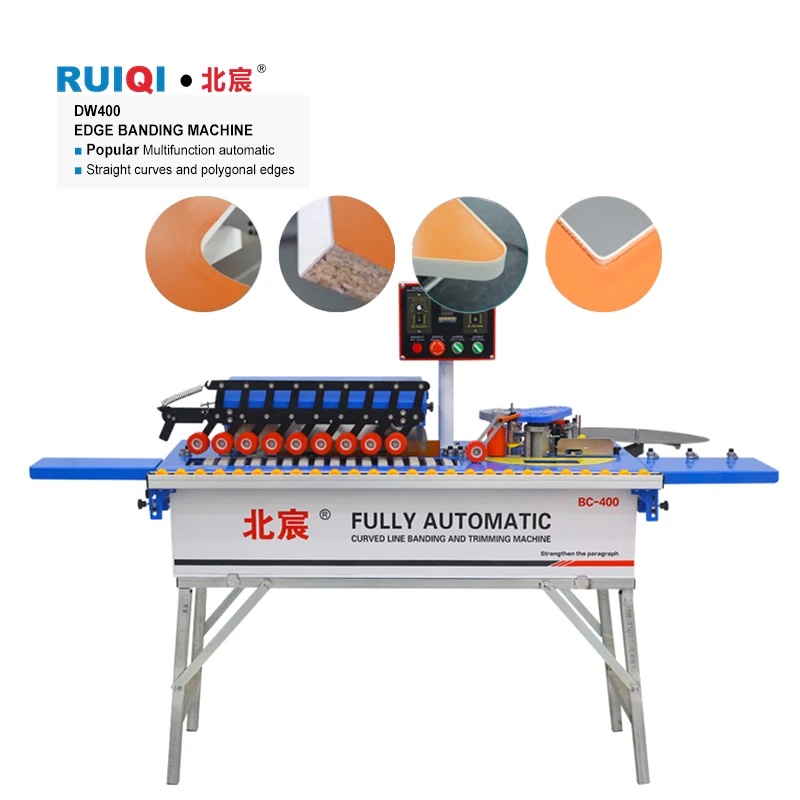
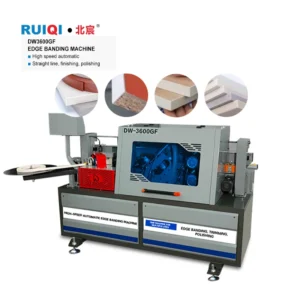
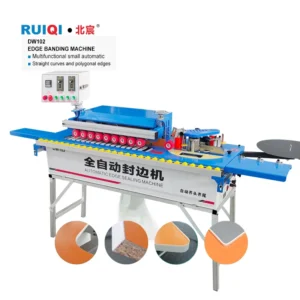
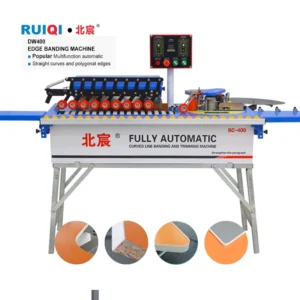
DW400 Edge Banding Machine, 220V/380V, 1000ml Glue Pot, 0.3–3mm Edge Thickness — configured for phased production line integration with upstream panel saws and downstream boring stations.
Engineer-led line layout proposal with matched throughput between stations, delivered as a formal quotation within 24 hours.
Engineer-Led Configuration — every DW400 proposal is validated against your actual panel stock and upstream feed rates before an order is placed, preventing line-level mismatches.
| Parameter | Value |
|---|---|
| Model | DW400 |
| Product Type | Edge Banding Machine |
| Total Power | 3800W |
| Voltage | 220V / 380V / customization |
| Standard Features | Straight edge banding, trimming, polishing |
| Minimum Sheet Length | 25 cm |
| Minimum Sheet Width | 10 cm |
| Edge Banding Height | 0–50 mm |
| Edge Banding Thickness | 0.3–3 mm |
| Edge Power | 20W |
| Air Source Pressure | 0.5–0.8 MPa |
| Transmission Power | 60W |
| Glue Pot Capacity | 1000 ml |
| Trimming Power | 650W × 2 |
| Vacuum Power | 1200W |
| Polishing Power | 180W × 2 |
| Overall Dimensions (L×W×H) | 116 × 47 × 69 cm |
| Net Weight | 70 kg |
| Certification | CE, ISO 9001 (factory-level) |
| Application | Material or Output |
|---|---|
| Cabinet door edge finishing | MDF and plywood panels with PVC or veneer banding |
| Wardrobe side panel processing | Particleboard with 0.3–3 mm straight edge tape |
| Polymer door production | Polymer composite substrates with matching edge profiles |
| Small-batch custom furniture | Blockboard and solid wood panels in varied dimensions |
| Phased factory line integration | Panels from upstream sliding table saws feeding into downstream boring stations |
A machine wired for the wrong supply will never leave the crate in working condition.
I learned this after a cabinet factory in the Middle East took delivery of a bander configured for a frequency their local grid did not support. The motor overheated within the first shift, and the line sat idle while replacement parts shipped across two time zones [NEED_CITE: voltage and frequency standards by export market]. An edge banding machine production line is only as reliable as its electrical compatibility with your facility. Confirming voltage, phase, and frequency before production begins eliminates a failure mode that no amount of operator training can fix.
An edge banding machine production line rarely starts as a complete installation. Most factories I have worked with begin with a panel saw and a single bander, adding boring and routing stations as order volume grows. The DW400 sits at a feed height and panel width range that aligns with standard sliding table saws, so boards transfer between stations without manual lifting or reorientation. Planning the material flow early — even if you are only buying two machines now — avoids costly repositioning later.
The bottleneck in any panel processing cell is almost always the station with the longest cycle time. If your panel saw cuts faster than the bander can trim and polish, boards queue up and absorb floor space. If the bander outpaces the downstream boring machine, operators stand idle. Configuring the edge banding machine production line around verified feed rates at each station keeps work-in-progress moving without pileups [NEED_CITE: production line balancing principles for panel furniture].
The 1000 ml glue pot on the DW400 holds enough adhesive for extended runs before requiring a refill, which matters when your cutting station is feeding panels continuously. A smaller pot forces the operator to pause the line mid-batch, introducing cold joints on the next panel through. The 0.5–0.8 MPa air supply requirement is standard for factory pneumatic systems, but I always verify the compressor capacity with the buyer — an undersized compressor causes inconsistent trimming pressure, leaving visible ridges on the edge profile.
The 0.3–3 mm edge banding thickness range covers PVC, melamine, and thin veneer tapes used across cabinet and door production. The dual 650W trimming motors handle the full range without swapping cutters between jobs. The 0–50 mm banding height accommodates everything from thin shelving stock to thick door panels. In practice, the trimming quality on 3 mm PVC depends heavily on the cutter condition and feed consistency — I recommend scheduling cutter inspection at intervals your production manager can track without guesswork.
When machines are purchased one at a time without a layout plan, feed heights drift between stations and operators spend shifts lifting panels manually. I have seen workshops where the bander and the boring machine were sourced from different suppliers, and the panel transfer height mismatched by enough to cause edge damage during handling [NEED_CITE: ergonomic and quality risks in manual panel transfer]. These problems surface weeks after installation, when returning the machine is no longer practical.
Each DW400 proposal is built by an engineer who reviews your panel specifications, existing equipment, and local electrical infrastructure before quoting. The four-stage quality check covers incoming material inspection, in-process assembly verification, finished product testing, and pre-shipment validation. Voltage and control panel language are confirmed in writing before production starts. Patented cutting mechanisms maintain trimming tolerance throughout the bander’s service life. Factory visits are open so you can inspect the assembly process before committing.
To size this bander correctly within your production flow, share your primary panel material, typical edge banding thickness, daily panel count target, and the voltage and frequency at your facility. If you already have upstream saws or downstream boring machines on the floor, include their models so we can verify feed height and throughput alignment before finalizing the proposal.
Q: How do I match the DW400 throughput with my existing panel saw and boring machine?
A: Share the model and rated feed rate of each station. We compare cycle times and identify the bottleneck, then adjust conveyor height and buffer space recommendations so boards move continuously without queuing or operator idle time between machines.
Q: What should I install first when building a production line in phases?
A: Most cabinet factories start with a panel saw and edge bander, since those two stations handle the majority of panel processing. Boring and slotting machines follow once order volume justifies dedicated stations rather than manual secondary operations.
Q: How is voltage and frequency confirmed for my factory’s electrical system?
A: We request your supply specifications during the inquiry stage and include a signed voltage confirmation document with the quotation. The electrical schematic shipped with the machine reflects the exact configuration built for your facility.
Q: Can this machine be integrated into a turnkey project with private labeling?
A: OEM branding, custom control panel language, and specification adjustments are available for project integrators. Each unit undergoes the same four-stage quality check regardless of labeling, with documentation matched to the destination market.
* Detailed technical specifications vary by model. Contact us for the full parameter sheet and customization options.
Heavy-duty wooden crate with moisture-proof lining and steel strapping. Seaworthy standard for safe ocean freight.
Standard models: 15-20 working days. Custom OEM orders: 25-35 working days from deposit confirmation.
FOB Qingdao / Tianjin. EXW, CIF available. T/T, L/C, Western Union accepted. Flexible payment terms for long-term partners.
We export to 100+ countries across Europe (Germany, Spain, Italy), Americas (USA, Mexico, Brazil, Argentina), Southeast Asia (Vietnam, Indonesia, Thailand), Africa (Nigeria, Egypt, South Africa), and the Middle East. Full customs documentation and export compliance support included.
Your logo on machine body, control panel and packaging. Full white-label production available.
Support 110V/60Hz, 220V/50Hz, 380V/50Hz, 440V/60Hz and other local electrical standards.
Modify table size, motor power, cutting capacity and other parameters per your production requirements.
Control panel available in English, Spanish, French, Arabic, Russian and other languages on request.
Custom paint color, machine casing design and aesthetic modifications to match your brand identity.
Bundled tooling sets, spare parts kits, installation tools and custom accessories for your market needs.
Fill in your requirements and our sales team will respond within 24 hours with a formal quotation and full technical specifications.