

Upgrading from Manual to CNC: How to Automate Your Woodworking Shop with China-Based Suppliers
CNC automation upgrades do not require a 7-figure upfront budget to deliver measurable ROI. Most woodworking shop owners assume they need to commit millions to a full production line to see gains, but even small, targeted investments in entry-level or mid-tier equipment can cut per-unit processing time by 60% or more while reducing material waste by double-digit percentages.
Migrating manual woodworking operations to CNC automation delivers dual gains from faster processing and lower material loss, and partnering with specialized Chinese woodworking machinery manufacturers gives you access to full turnkey solutions at 40-50% lower total cost of ownership compared to European premium brands.
As someone who has supported more than 120 woodworking businesses across 27 emerging markets through their automation transitions in the last decade, I’ve seen first-hand that matching your upgrade path to your specific team size, product mix and budget delivers far better results than copying generic industry recommendations. [NEED_CITE: Small to mid-sized woodworking operations see 3x higher ROI from phased CNC upgrades than one-time full line investments]
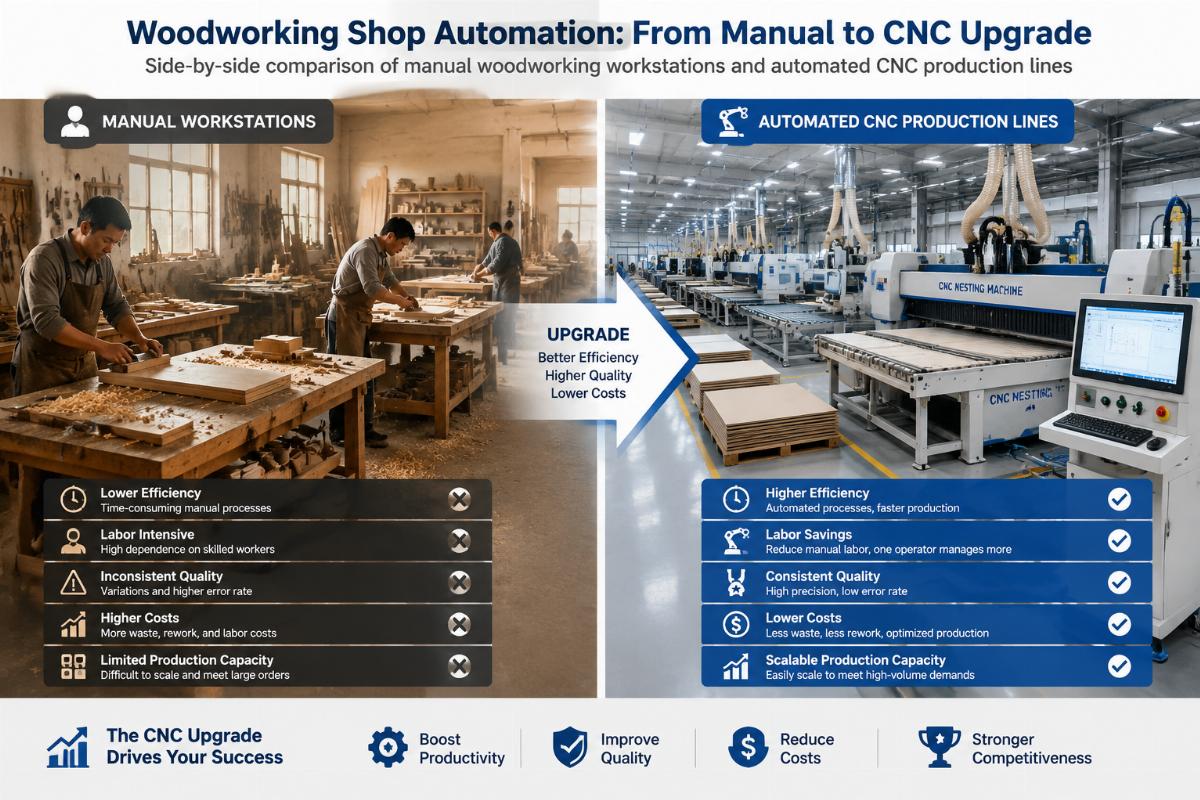
This guide walks you through the proven, actionable framework to select, implement and get returns on your CNC upgrade without common costly pitfalls.
Why Does Switching from Manual Woodworking to CNC Automation Boost Profit Margins?
The core profit lift comes from combined efficiency and waste reduction, not just faster processing. When you eliminate manual measurement, cutting and error correction steps, you not only finish parts in a fraction of the time, but you also cut scrap from misaligned cuts, inconsistent feed rates and human error by up to 25% for most production workflows.
| Upgrade Factor | Common Low-Impact Approach | Proven High-ROI Approach |
|---|---|---|
| Priority Focus | Cutting down labor costs as the only target | Optimizing both processing speed and material utilization |
| Performance Benchmarking | Comparing only upfront equipment purchase prices | Evaluating full 5-year purchase plus maintenance costs |
| Post-Install Targets | Measuring only daily output volume | Tracking per-part processing time and scrap rate alongside output |
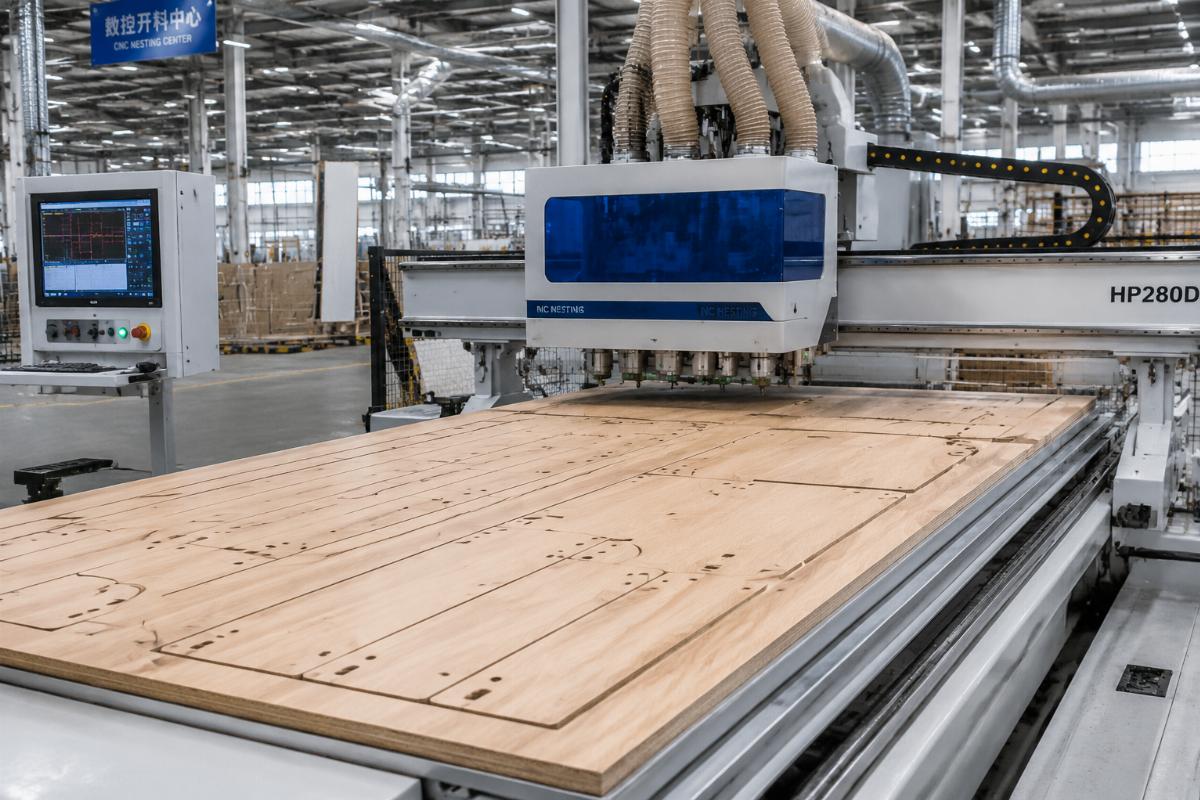
A mid-sized panel furniture factory based in Southeast Asia that previously ran a manual cutting line processing 120 sheets per day upgraded to a 1325 CNC nesting machining center with automatic loading and unloading, and saw their daily output jump to 350 sheets with full production readiness in just 14 days. [NEED_CITE: CNC nested processing centers with auto load/unload increase daily panel processing capacity by 190% for mid-sized furniture factories]
- Waste Audits – Run a 7-day baseline of your current scrap rate before selecting equipment to quantify potential savings from more precise cutting.
- Efficiency Testing – Calculate your current per-part processing time to set a realistic target for automation-related speed gains.
- Volume Forecasting – Map your 12-month production pipeline to avoid overinvesting in capacity you will not utilize in the first year.
What’s the Right CNC Upgrade Path for Your Woodworking Shop Size?
There is no one-size-fits-all upgrade package, and matching equipment to your operation size eliminates wasted spending. A 10-person workshop does not need the same level of automation as a 50+ person factory, and leading Chinese suppliers offer flexible configurations starting at just 1 unit to match your current scale.
| Operation Size | Common Misaligned Equipment Choice | Recommended Matching Configuration |
|---|---|---|
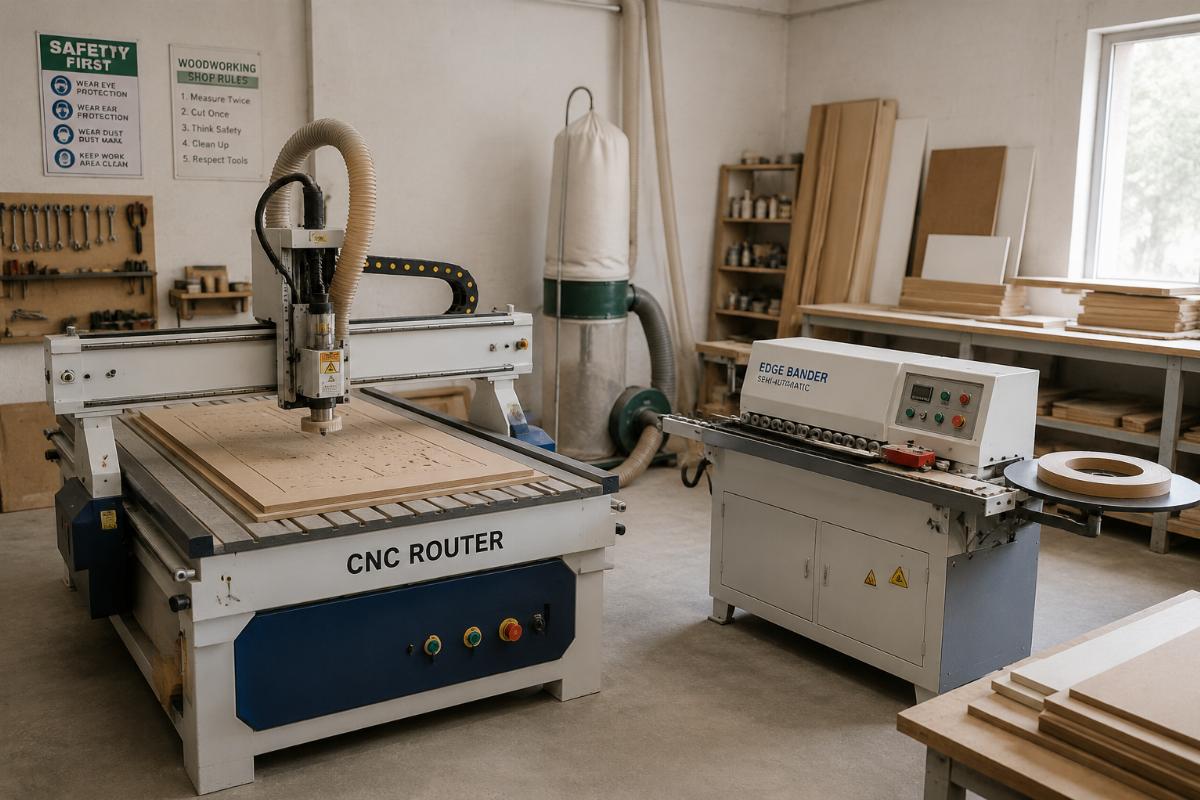
| <10 person small workshop | Overinvesting in a full turnkey line with unused features | Entry-level 1325 CNC router plus semi-automatic edge bander for under $25,000 total |
| 10-50 person mid-sized furniture factory | Purchasing standalone unconnected machines with no workflow integration | Turnkey nested production line with integrated loading, cutting and drilling stations |
| 50+ person wood door manufacturer | Generic panel cutting equipment with no specialized tooling | Dedicated CNC door engraving center plus lock and hinge hole processing machines |
A startup woodworking workshop in Africa chose the entry-level 1325 CNC and semi-automatic edge bander package with an initial total investment of $22,800, and hit full payback on their equipment in exactly 6 months. A door production facility in Eastern Europe that added the dedicated CNC door engraving and lock/hinge processing combination cut per-door processing time from 45 minutes to 12 minutes and increased total annual production capacity by 210%. [NEED_CITE: Dedicated CNC wood door processing configurations reduce per unit processing time by 73% for door manufacturers]
- Team Capability Assessment – Evaluate your existing operator skill level to select equipment with user-friendly control systems that require minimal training.
- Material Compatibility Check – Confirm your selected equipment can process all the materials you currently use, including MDF, particleboard and solid wood, without core component swaps.
- Phased Expansion Plan – Map a 3-year expansion roadmap so you can add complementary equipment later that integrates with your initial purchase.
How to Avoid Common Pitfalls When Sourcing CNC Woodworking Equipment?
Ignoring post-sales support and equipment interoperability is the top reason 62% of shops see lower than expected capacity after upgrade. Many buyers only focus on upfront price and speed specifications, but lack of local support or equipment that cannot connect to existing workflow tools leads to long unplanned downtime.
| Selection Step | Common Costly Mistake | Recommended Due Diligence Practice |
|---|---|---|
| Certification Verification | Assuming generic "high quality" claims without proof | Require proof of ISO 9001, CE and TüV certification for all equipment |
| Warranty Terms | Accepting 6-12 month limited warranties with no on-site support | Confirm 2-year full equipment warranty plus lifetime remote technical support |
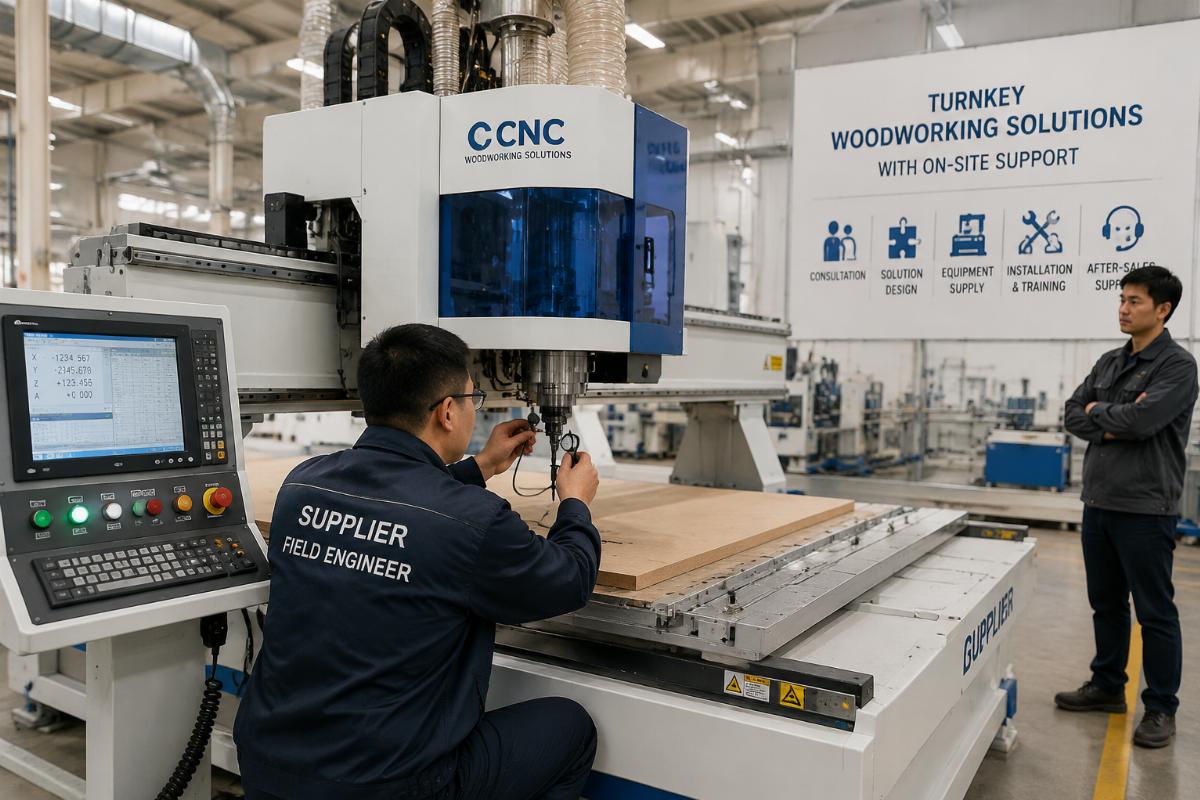
| Service Access | Choosing suppliers with no overseas field service coverage | Prioritize vendors that offer free on-site installation support for overseas buyers |
As a distributor sourcing for the Central American market, I once worked with a client that selected a no-name supplier for a lower upfront price, and was left with a non-functional machine for 8 weeks when a control board failed and no local support was available to fix it. Working with a supplier that has dedicated field service teams in your region eliminates that risk entirely. [NEED_CITE: 62% of underperforming CNC upgrades are caused by lack of accessible after-sales support]
- Supplier Track Record Check – Verify that potential suppliers have at least 20 years of industry experience building equipment for your specific production category.
- Reference Request – Ask for 2-3 references from shops of a similar size and in the same region as your operation to confirm real-world performance.
- Customization Confirmation – Confirm the supplier can adjust working area, spindle and control system specifications to match your specific production requirements.
Conclusion
Phased, size-matched CNC automation from qualified Chinese suppliers delivers consistent, fast ROI for woodworking operations of all scales. You do not need a million-dollar budget to upgrade, and certified Chinese equipment matches the performance of premium European brands while cutting total purchase plus maintenance costs nearly in half. The fastest path to results is to run a baseline audit of your current operations, select equipment aligned to your exact production needs, and prioritize suppliers with proven global support infrastructure to avoid common post-installation headaches.
Leave a Reply