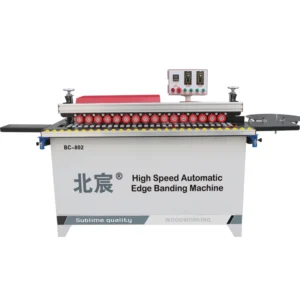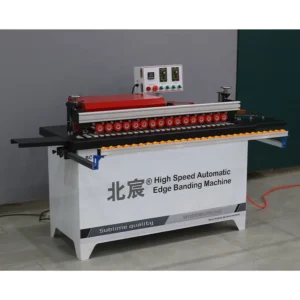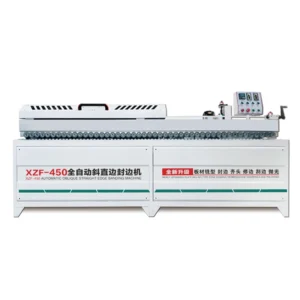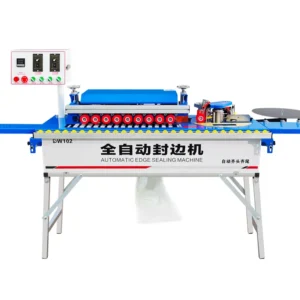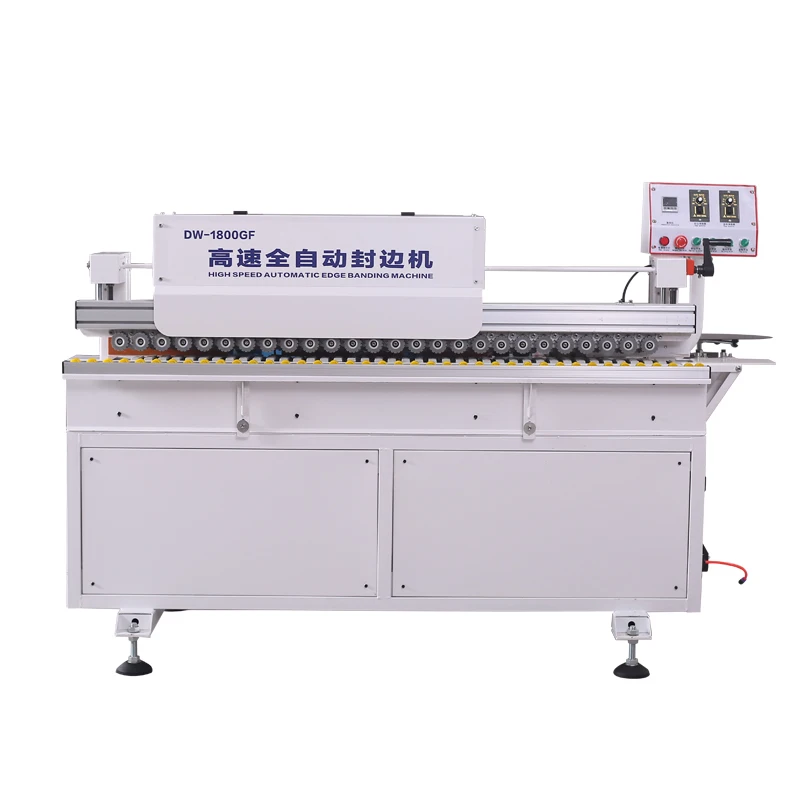
DW1800 Automatic Edge Bander, 4.9KW, 0–14m/min Feed Speed — engineered for full production line integration with matched throughput across cutting, edging, and boring stations.
Precision Line Integration — Every DW1800 configuration is mapped to upstream and downstream cycle rates before the quotation is issued, preventing bottleneck stalls across the full production layout.
| Parameter | Value |
|---|---|
| Model | DW1800 |
| Product Type | Automatic Edge Banding Machine |
| Total Power | 4.9 kW |
| Voltage | 380V / 220V / 415V (frequency to be confirmed per site) |
| Feed Speed | 0–14 m/min |
| Edge Banding Thickness | 0.3–3 mm |
| Edge Banding Height | 0–50 mm |
| Minimum Sheet Length | 200 mm |
| Minimum Sheet Width | 100 mm |
| Glue Pot Capacity | 4000 ml |
| Trimming Power / Speed | 800 W × 2 / 24,000 r/min |
| Polishing Power | 380 W × 2 |
| Vacuum Power | 550 W |
| Air Source Pressure | 0.4–0.6 MPa |
| Transmission Power | 180 W |
| Edge Power | 160 W |
| Overall Dimensions (L×W×H) | 2200 × 650 × 1250 mm |
| Net Weight | 320 kg |
| Mobile Table Guide | Roll-ball differential structure |
| Mobile Workstations | High-strength extruded aluminum alloy, oxidation-treated |
| Main Blade Inclination Display | Precision instrument visual display |
| Language Options | Chinese and English standard; Spanish and other languages on request |
| Plug Options | EU, USA, AU, UK |
| Certification | CE, ISO 9001 (per company profile) |
| Application | Material or Output |
|---|---|
| Custom cabinet panel edge banding | MDF, particleboard, plywood with PVC or melamine banding |
| Furniture component finishing | Solid wood panels and ABB boards with veneer edge banding |
| Panel processing plant line integration | Continuous feed of cut-to-size boards from upstream saws |
| Workshop scaling from manual to automated | Small-batch joinery output transitioning to conveyor-fed production |
| PVC and acrylic panel trimming | Organic glass plates and similar hardness substrates |
A fast edge bander starved by a slow saw wastes more money than a slow edge bander running steadily.
I have stood on factory floors where a high-speed bander sat idle for minutes at a time, waiting for the panel saw operator to finish the next cut. The line was advertised as high-output, but the actual throughput was dictated by the slowest station, not the fastest. When the DW1800 is configured for an edge banding machine production line, its 0–14 m/min feed range is cross-referenced against the cutting cycle of the upstream saw and the boring cycle of downstream stations so that no single machine sets the pace while others wait [NEED_CITE: line balancing principles in panel furniture manufacturing].
The DW1800 fits into a cutting–banding–boring sequence where each station must release panels at a compatible rhythm. With a variable feed speed and a minimum sheet length of 200 mm, this machine handles both long cabinet sides and short shelf panels without requiring the upstream saw to change its cutting program. Line planners need to confirm that the saw’s average panel-per-minute output falls within the bander’s continuous feed capacity, otherwise buffer racks accumulate and panels risk surface damage before they ever reach the glue station.
An edge banding machine production line is only as reliable as the distance and handling method between stations. The DW1800’s compact footprint of 2200 × 650 mm allows it to sit close to a sliding table saw or a CNC panel saw with minimal transfer distance. Roll-ball differential guides on the mobile table keep panels aligned as they move from the saw table onto the bander infeed, reducing the lateral drift that causes misregistered edge trimming downstream [NEED_CITE: material handling best practices for panel furniture lines].
The 0.3–3 mm edge banding thickness range covers the PVC, melamine, and wood veneer tapes used across standard cabinet and furniture work, meaning a single DW1800 can serve multiple product families without a changeover halt. The 4000 ml glue pot capacity supports extended runs before a refill is needed, which matters when the upstream saw is feeding panels without interruption. Double-sided gluing applies adhesive to both the panel edge and the banding strip simultaneously, improving bond consistency on porous substrates like particleboard where single-sided application can starve the joint. The 24,000 r/min trimming spindles produce a clean cut on the banding overhang, which directly affects whether the panel passes visual inspection at the packing station or loops back for rework.
When a factory buys an edge bander without checking the feed height against the saw table or the bore machine infeed, panels jam at the transition point. Operators spend the first week shimming tables and adjusting conveyor heights instead of producing furniture. In one Southeast Asian cabinet factory, the line stalled at the banding station because the upstream saw was cutting at a rate the bander could not absorb, and the buffer area had no room for staging [NEED_CITE: common causes of downtime in panel furniture production lines]. The result was two weeks of stopped production while additional conveyors and a rack system were fabricated locally.
Every DW1800 shipped for line duty is specified against the buyer’s upstream and downstream equipment list, so feed height, control language, and electrical plug type are confirmed before fabrication. The four-stage quality control process — incoming material, in-process, finished product, and pre-shipment — includes a line-level run test where the bander is fed panels at the agreed feed speed to verify glue uniformity and trimming accuracy. Voltage and frequency are locked to the destination facility’s supply, eliminating the scenario where a machine arrives and sits unpowered while a transformer is sourced. Engineer-led configuration proposals are issued within 24 hours of receiving the buyer’s production requirement, and factory visits are available for buyers who want to witness the test on their own substrate samples.
To configure a DW1800 within your production layout, share your upstream saw model and its average cutting cycle, the downstream boring or drilling equipment you plan to use, and your facility’s confirmed voltage and frequency. Include your primary panel substrates, the edge banding materials you run most often, and the languages your operators need on the control panel. If you have an existing factory drawing or a target daily output, attach it so the station spacing and buffer zones can be planned into the line proposal.
Q: How does the DW1800 feed speed align with upstream saws and downstream boring machines?
A: The 0–14 m/min variable feed is set during line configuration to match the upstream saw’s panel release rate and the downstream boring station’s cycle time. Before the order is finalized, we calculate the throughput at each station and adjust the feed speed recommendation so no single machine becomes a bottleneck.
Q: What is the phased investment path from one edge bander to a complete line?
A: Many factories begin with the DW1800 and a panel saw, then add a boring machine and conveyors as volume grows. Because the DW1800 is designed for line integration from the start, its feed height and control interfaces remain compatible when additional stations are added later, avoiding the cost of replacing the first machine.
Q: How is voltage confirmed before the machine ships?
A: The buyer’s facility voltage and frequency are confirmed during the quotation stage and written into the specification sheet. The DW1800 is then wired and tested at that exact voltage before dispatch, and the electrical schematic in the documentation package reflects the as-built configuration.
Q: Can I visit the factory to test the DW1800 on my own panel samples?
A: Factory visits are welcomed and encouraged. Bring your panel samples and preferred edge banding tape, and we will run a live test on the DW1800 so you can inspect glue uniformity, trimming quality, and edge finish before committing to a full line order.
Q: How are station spacing and material flow planned for a new production line?
A: We review your factory floor dimensions and existing equipment positions, then propose a layout showing the distance between the saw, the DW1800, and downstream stations. Buffer rack placement and conveyor routes are included so panels move continuously without accumulating on the floor or blocking operator walkways.
* Detailed technical specifications vary by model. Contact us for the full parameter sheet and customization options.
Heavy-duty wooden crate with moisture-proof lining and steel strapping. Seaworthy standard for safe ocean freight.
Standard models: 15-20 working days. Custom OEM orders: 25-35 working days from deposit confirmation.
FOB Qingdao / Tianjin. EXW, CIF available. T/T, L/C, Western Union accepted. Flexible payment terms for long-term partners.
We export to 100+ countries across Europe (Germany, Spain, Italy), Americas (USA, Mexico, Brazil, Argentina), Southeast Asia (Vietnam, Indonesia, Thailand), Africa (Nigeria, Egypt, South Africa), and the Middle East. Full customs documentation and export compliance support included.
Your logo on machine body, control panel and packaging. Full white-label production available.
Support 110V/60Hz, 220V/50Hz, 380V/50Hz, 440V/60Hz and other local electrical standards.
Modify table size, motor power, cutting capacity and other parameters per your production requirements.
Control panel available in English, Spanish, French, Arabic, Russian and other languages on request.
Custom paint color, machine casing design and aesthetic modifications to match your brand identity.
Bundled tooling sets, spare parts kits, installation tools and custom accessories for your market needs.
Fill in your requirements and our sales team will respond within 24 hours with a formal quotation and full technical specifications.