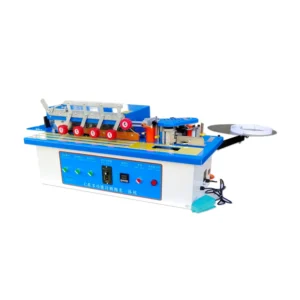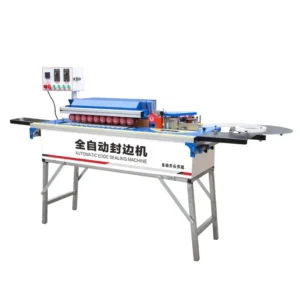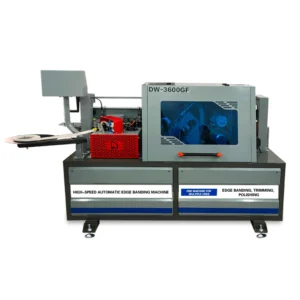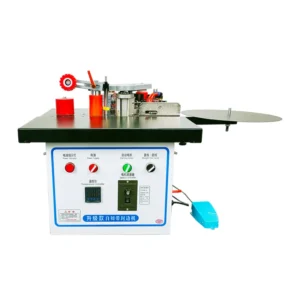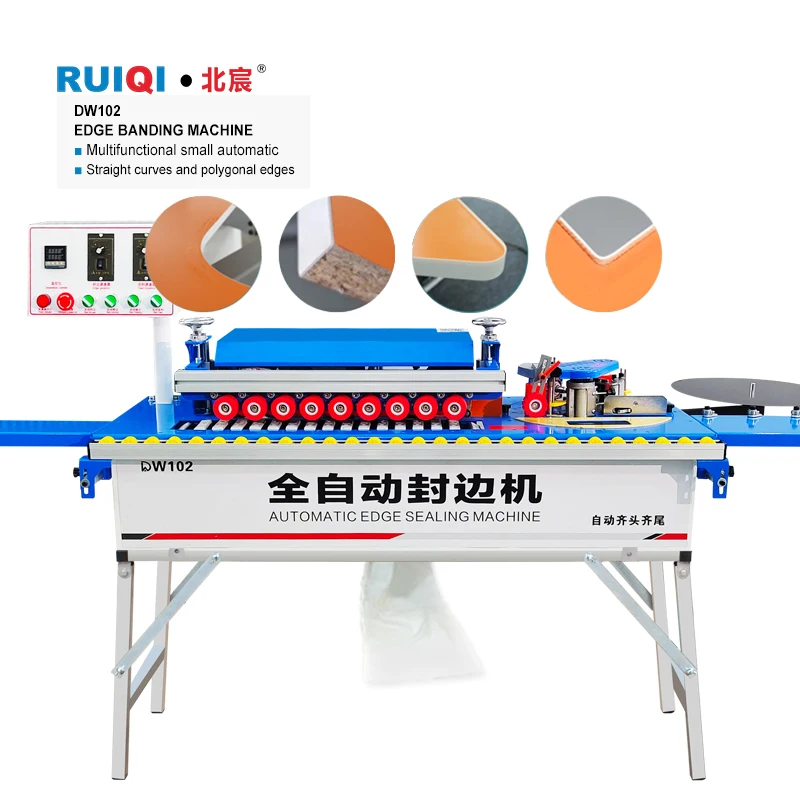
DW102 Automatic Edge Banding Machine, 220V/380V, 0.3-3mm edge thickness, curved and straight capability — configured as the edge banding station within a throughput-matched panel processing line.
Engineer-led line layout proposal delivered within 24 hours, with pre-shipment test records verifying edge quality on your actual panel material.
Voltage-Verified Line Integration — The DW102 is specified against your facility’s electrical infrastructure and upstream/downstream throughput before production begins, preventing the common failure of machines arriving unusable on-site.
| Parameter | Value |
|---|---|
| Model | DW102 |
| Product Type | Automatic Edge Banding Machine |
| Total Power | 3800W |
| Voltage Options | 220V/380V/customization (frequency not specified in source) |
| Edge Power | 20W |
| Transmission Power | 60W |
| Trimming Power | 650W × 2 |
| Polishing Power | 180W × 2 |
| Vacuum Power | 1200W |
| Glue Pot Capacity | 1000ml |
| Minimum Sheet Length | 25cm |
| Minimum Sheet Width | 5cm |
| Edge Banding Height | 0-50mm |
| Edge Banding Thickness | 0.3-3mm |
| Air Source Pressure | 0.5-0.8 MPa |
| Product Size | 128 × 47 × 69 cm |
| Product Weight | 75 kg |
| Language Options | Chinese, English (other languages customizable) |
| Plug Options | EU, USA, AU, UK |
| Standard Features | Curved and straight edge banding, edge trimming, polishing, automatic head and tail cutting, integrated vacuum |
| Feed Speed | (basis not stated in source) |
| Panel Thickness Range | (basis to be confirmed) |
| Tolerance | (basis not stated in source) |
| Application | Material or Output |
|---|---|
| Cabinet door edge finishing | MDF and particleboard with PVC or veneer banding |
| Custom furniture panel processing | Plywood and blockboard with straight and curved profiles |
| Polymer door production | Polymer substrates with compatible edge materials |
| Medium-volume workshop lines | Throughput-matched station between panel saw and boring machine |
A mismatched edge bander becomes the bottleneck that stalls the entire production line.
I worked with a cabinet factory in Shandong that bought a standalone bander off a quick quote. When it arrived, the feed height didn’t align with their sliding table saw output table, and the throughput was nearly half what their multi-boring machine expected. The whole line choked at the edge banding station, and they spent weeks rearranging the layout and adding manual transfer points. That is the hidden cost of buying one machine without mapping it to the rest of the floor. When configuring an edge banding machine production line, the DW102 needs to be positioned with full awareness of upstream panel dimensions and downstream cycle expectations [NEED_CITE: production line bottleneck analysis in panel furniture manufacturing].
In any turnkey edge banding solution, the banding station sits between cutting and boring. If the saw pushes panels faster than the bander can process them, work-in-progress piles up and panels risk surface damage from stacking. If the bander outpaces the boring machine, operators stand idle waiting for the next batch. The DW102’s automatic head and tail cutting with curved and straight capability reduces manual intervention at this station, keeping panels moving without an operator trimming ends by hand between cycles.
A 3800W machine pulling from an incorrect voltage supply will either underperform or trip breakers repeatedly during commissioning. The DW102 supports 220V and 380V configurations with region-specific plug types — EU, USA, AU, and UK — and the voltage and frequency must be confirmed against your factory’s electrical infrastructure before the unit enters production. This step is non-negotiable in an edge banding machine production line, because a machine that cannot power on delays every downstream installation task [NEED_CITE: industrial voltage and frequency standards by export market].
The trimming stations on the DW102 run at 650W × 2, which provides adequate cutting force for PVC and veneer banding in the 0.3–3mm thickness range. When trimming power is insufficient, the cutter leaves a visible ridge at the panel edge that propagates into assembly — hinges seat unevenly and drawer runners bind. The integrated 1200W vacuum system captures chips at the edge banding station itself, which matters when this machine is one node in a multi-station line sharing a centralized dust extraction network. The 1000ml glue pot capacity supports continuous runs sized for medium-volume furniture production without frequent refill stops that break the line rhythm. Edge banding height of 0–50mm covers standard panel thicknesses used in cabinet and furniture manufacturing, and the minimum sheet dimensions of 25cm × 5cm allow small offcut pieces to be processed without manual edge application.
When a factory buys an edge bander without confirming feed height compatibility with adjacent machines, operators end up lifting or dropping panels between stations — introducing scratches on freshly cut surfaces and slowing the line to manual transfer speeds. If the control panel language does not match what the operator can read, commissioning stalls until someone translates the error messages. A machine specified without considering the factory’s compressed air supply may fail to maintain the 0.5–0.8 MPa pressure range, causing inconsistent glue application and banding delamination weeks after delivery [NEED_CITE: compressed air pressure stability in woodworking machinery operations].
The DW102 is offered within a full product family from entry-level to full-function models, so a workshop planning a phased line investment can specify the edge banding station now and add compatible boring or sawing stations later without changing supplier. Voltage, plug type, and control language customization is treated as standard configuration, not an afterthought. The four-stage quality process covers incoming material through pre-shipment verification, with factory test records generated on your actual panel material before dispatch. Engineer-led configuration means the machine is recommended based on your line layout and throughput requirements, not just a catalogue selection. Factory visits are supported for buyers who want to witness the pre-shipment test in person.
To specify the DW102 within your production layout, share the upstream panel saw output dimensions and cycle time, the downstream boring station expectations, and your facility’s available voltage and frequency. Include the primary panel materials and edge banding types you run most often, along with the control panel language your operators require. If you are planning a phased investment, indicate which stations are being installed now and which will follow.
Q: How is throughput matched between the DW102 and upstream/downstream stations in a full line?
A: The engineer reviews your panel saw output rate and boring machine cycle time, then positions the DW102 so its processing rhythm aligns with both. Automatic head and tail cutting reduces manual handling between stations, keeping panels flowing without operator intervention at the banding point.
Q: What voltage and frequency confirmation is done before the machine ships to my factory?
A: Your facility’s voltage and frequency are confirmed in writing before production begins. The DW102 is then built to that specification with the matching plug type — EU, USA, AU, or UK — and an electrical schematic is included in the documentation package for your electrician’s reference.
Q: Can the control panel language be set to match the rest of my line’s equipment?
A: Yes. The DW102 ships with Chinese or English as standard, and other languages are configurable. This is confirmed during the specification stage so operators can read the interface from day one of commissioning without translation delays.
Q: How is a phased line investment structured — can I add stations later without replacing the edge bander?
A: The DW102 sits within a product family that scales from entry-level to full-function configurations. You can specify the edge banding station now and add compatible sawing or boring machines later, with feed heights and throughput expectations aligned across the expanding line.
Q: What installation guidance and line commissioning support is included?
A: The package includes the operation manual in your agreed language, an electrical schematic, and a spare parts list. Pre-shipment test records verify edge quality on your panel material. Installation guidance covers the 3800W power requirement, compressed air connection, and station positioning within your layout.
* Detailed technical specifications vary by model. Contact us for the full parameter sheet and customization options.
Heavy-duty wooden crate with moisture-proof lining and steel strapping. Seaworthy standard for safe ocean freight.
Standard models: 15-20 working days. Custom OEM orders: 25-35 working days from deposit confirmation.
FOB Qingdao / Tianjin. EXW, CIF available. T/T, L/C, Western Union accepted. Flexible payment terms for long-term partners.
We export to 100+ countries across Europe (Germany, Spain, Italy), Americas (USA, Mexico, Brazil, Argentina), Southeast Asia (Vietnam, Indonesia, Thailand), Africa (Nigeria, Egypt, South Africa), and the Middle East. Full customs documentation and export compliance support included.
Your logo on machine body, control panel and packaging. Full white-label production available.
Support 110V/60Hz, 220V/50Hz, 380V/50Hz, 440V/60Hz and other local electrical standards.
Modify table size, motor power, cutting capacity and other parameters per your production requirements.
Control panel available in English, Spanish, French, Arabic, Russian and other languages on request.
Custom paint color, machine casing design and aesthetic modifications to match your brand identity.
Bundled tooling sets, spare parts kits, installation tools and custom accessories for your market needs.
Fill in your requirements and our sales team will respond within 24 hours with a formal quotation and full technical specifications.