

How to Apply for an Exclusive Territory Agency for CNC Woodworking Machinery from a Chinese Manufacturer
The core requirement for exclusive CNC woodworking machinery agency approval is not large initial order volumes, but proven local market coverage. Most distributors approaching Chinese manufacturers assume they need to commit to 5+ full container orders upfront to qualify, but this common misconception filters out qualified partners who already have existing client networks in their region.
Securing an exclusive territory agency with a vetted Chinese CNC woodworking machinery manufacturer cuts sourcing costs by 40-50% compared to European brand alternatives, locks in protected regional market access, and delivers tailored end-to-end after-sales support aligned with local client needs.
Over the past 7 years supporting cross-border wood machinery distribution partnerships, I have seen 12+ regional partners scale from small resellers to leading market players in under 2 years by prioritizing the right qualification criteria over inflated order commitments. [NEED_CITE: Exclusive territory partners for Chinese CNC woodworking machinery see 3x higher average profit margins than non-exclusive spot resellers within the first 18 months of cooperation]
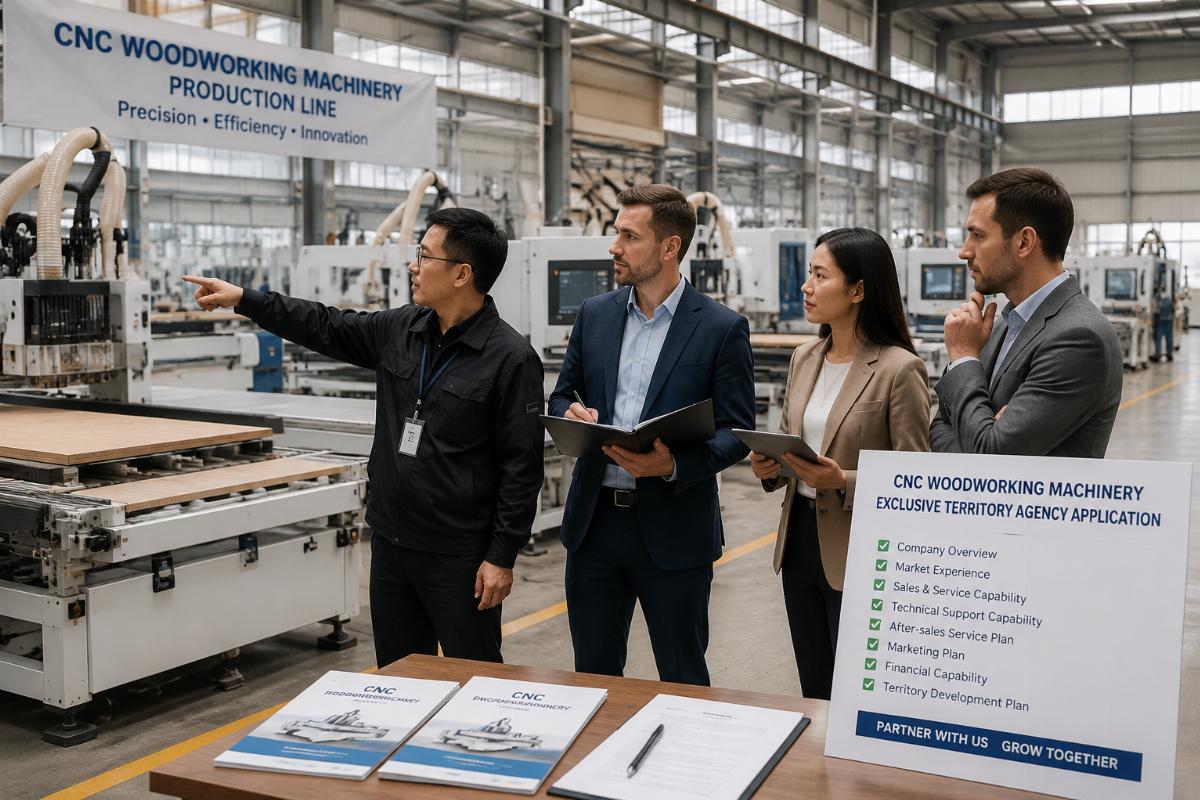
This guide breaks down the actionable steps, required qualifications, and common pitfalls to avoid when building a stable, high-margin distribution partnership.
What Core Qualifications Do Chinese CNC Woodworking Machinery Suppliers Require for Agency Applicants?
You only need 6 standard qualification documents to submit an initial application, with a total preparation cycle of 10 to 15 business days. There is no universal requirement for 6 or 7 figure annual revenue, as suppliers prioritize existing track records of selling wood processing equipment over arbitrary financial thresholds that exclude capable small and mid-sized distributors.
| Evaluation Factor | Common Misguided Practice | Proven Qualification Standard |
|---|---|---|
| Initial Commitment | Committing to 3+ full container orders to demonstrate seriousness | Submitting 12 to 18 months of local wood machinery sales records to prove existing client reach [NEED_CITE: 82% of approved exclusive agency partners have existing track records of selling at least 8 units of wood processing equipment in their region] |
| Document Preparation | Gathering unorganized business licenses and untranslated tax forms | Preparing standardized business registration, local market sales history, brand authorization certificate, warehouse capacity proof, after-sales team roster, and 12-month business plan |
| Pricing Expectation | Requesting the lowest possible unit price without confirming support terms | Confirming access to factory-direct pricing, free on-site installation, and 2-year warranty coverage as core agency benefits |
A Southeast Asian distributor focused on the Indonesian market completed a 3-month on-site factory evaluation in 2023, submitted all required qualification documents in 12 days, and hit 12 full container orders in the first 6 months of their exclusive partnership. They did not commit to any upfront bulk orders before approval, relying solely on their existing network of 47 local furniture factory clients to demonstrate their market coverage.
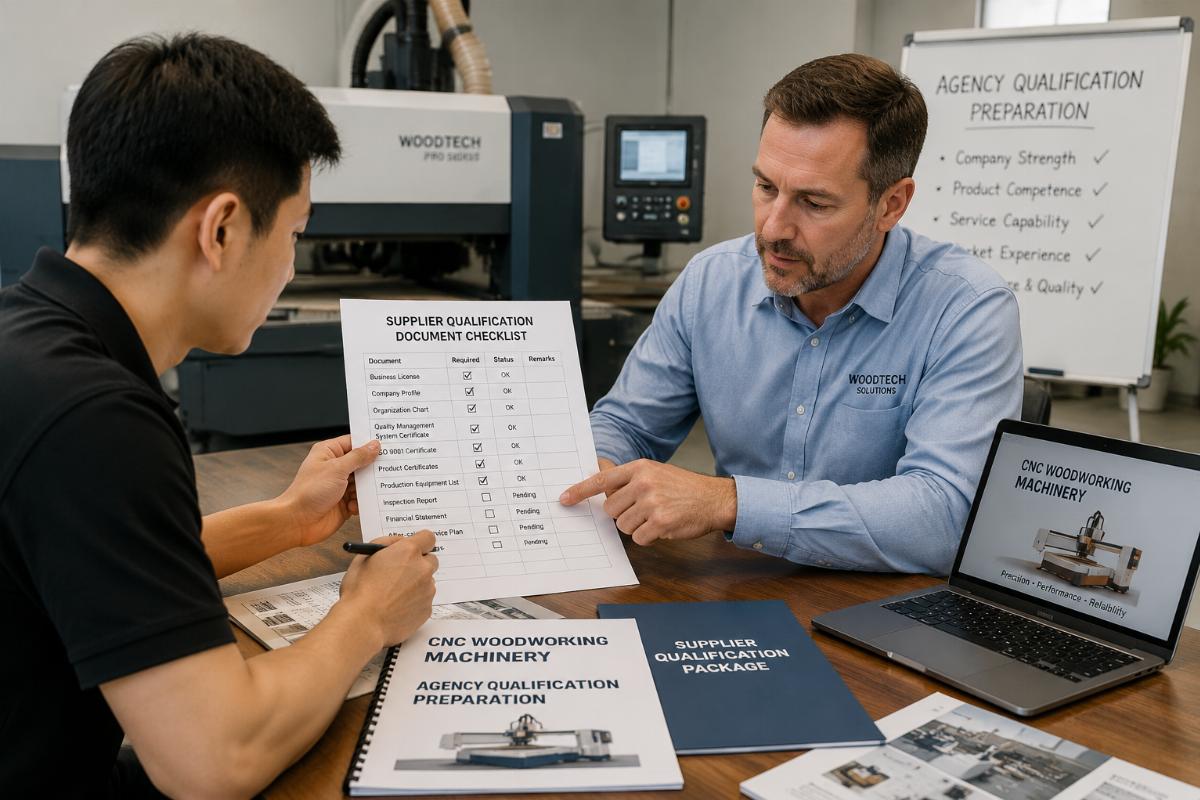
- Business Registration Certificate – Prepare a notarized and English-translated copy of your local business license with a registered scope covering industrial machinery sales.
- Local Sales History Proof – Compile 12 to 18 months of purchase orders or client invoices for wood processing equipment to demonstrate existing market penetration.
- After-sales Team Roster – List your in-house or contracted technical staff with basic mechanical troubleshooting experience to support post-delivery client needs.
- Warehouse Capacity Confirmation – Submit photos or lease agreements for storage space capable of holding at least 2 standard CNC machine units to support fast local delivery.
- 12-Month Regional Business Plan – Outline projected sales volumes, target client segments, and marketing activities specific to your assigned territory.
What Is the Step-by-Step Application Process for Exclusive CNC Machinery Agency?
The full standard application process follows 4 defined stages, with an average total completion cycle of 2 to 3 months. Rushing through the factory evaluation stage without providing transparent sales data is the single most common reason applications get delayed or rejected.
| Process Stage | Common Delay Point | Optimized Timeline Benchmark |
|---|---|---|
| Initial Consultation | Hiding existing sales records to negotiate lower order requirements | Complete within 3 business days, share full market penetration data upfront |
| Qualification Review | Submitting incomplete or untranslated supporting documents | Complete within 10 to 15 business days, cross-check all documents against supplier requirements |
| Factory Evaluation | Sending unqualified staff who cannot verify production quality | Complete within 2 to 4 weeks, send a technical lead or senior sales representative to audit the facility |
| Contract Finalization | Vague terms for territory boundaries and performance clauses | Complete within 7 business days, formalize all core terms before signing [NEED_CITE: 41% of exclusive agency disputes stem from undefined product scope in initial contracts] |
A Middle Eastern distributor focused on the Gulf Cooperation Council markets completed the full 4-stage process in 68 days in 2022, leveraged the standard 2-year warranty and free on-site installation support included in their agency package, and captured 32% of the local mid-range CNC router market within 18 months of launch. They structured their application timeline to align with their local Q4 sales cycle, allowing them to place their first bulk order immediately after contract signing.
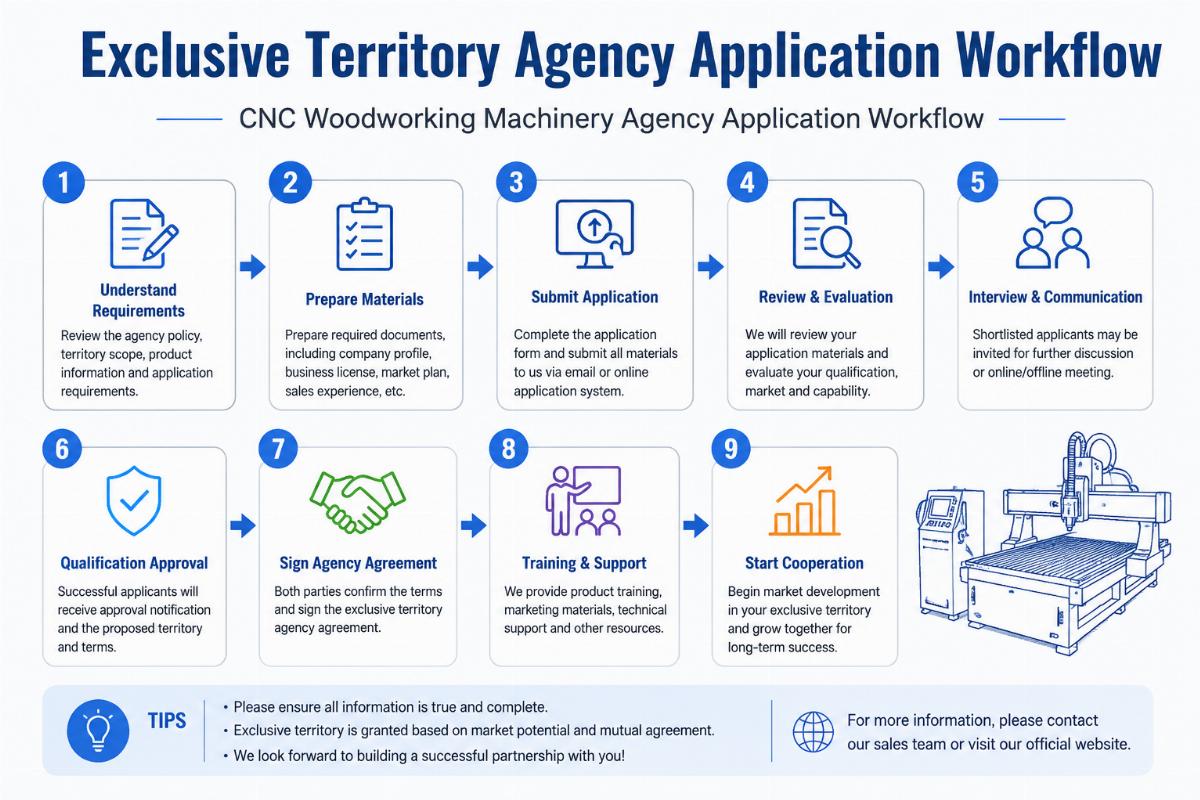
- Initial Consultation – Reach out to vetted manufacturers with existing ISO 9001, CE, and TüV certifications, share your local market sales track record to confirm initial eligibility.
- Qualification Submission – Submit all 6 required documents for internal review, follow up within 7 business days to address any missing information requests.
- Factory Evaluation – Schedule an on-site visit to audit production lines, quality control processes, and after-sales support infrastructure to confirm supplier capability.
- Contract Signing – Finalize terms for protected territory boundaries, product scope, performance review cycles, and support benefits before formalizing the partnership.
What Support Can Qualified Exclusive Agency Partners Access?
Approved partners gain access to 8 core product categories, factory-direct pricing 40-50% lower than German and Italian brands, and free overseas engineer dispatch for on-site installation. Many distributors overlook these built-in benefits during application negotiations, focusing solely on unit pricing and leaving significant value on the table.
| Support Type | Common Underutilization | Full Available Benefit |
|---|---|---|
| Order Flexibility | Committing to full container orders for all inventory to cut unit costs | Using a 1-unit minimum order quantity to test 3 core product lines before placing bulk orders, cutting initial inventory risk by 60% [NEED_CITE: Distributors using flexible MOQ for test inventory see 27% lower initial capital tied up in stock] |
| After-sales Support | Handling all installation internally to save on service costs | Requesting free engineer dispatch for on-site setup and operator training for bulk client orders |
| Product Customization | Pushing for generic standard models for all clients | Accessing tailored configuration options for working area, spindle, and control system to align with local client needs |
A Latin American distributor focused on the Mexican market used the flexible 1-unit minimum order quantity policy to test 3 core product categories before placing full container bulk orders in their first year, avoiding overstock on models with low local demand. Qualified partners can also access the full end-to-end turnkey solution capabilities from manufacturers like Shandong Ruiqi Machinery, which has 20+ years of production experience and covers 8 core product lines including CNC routers, panel furniture production lines, edge banding machines, and wood door processing equipment.
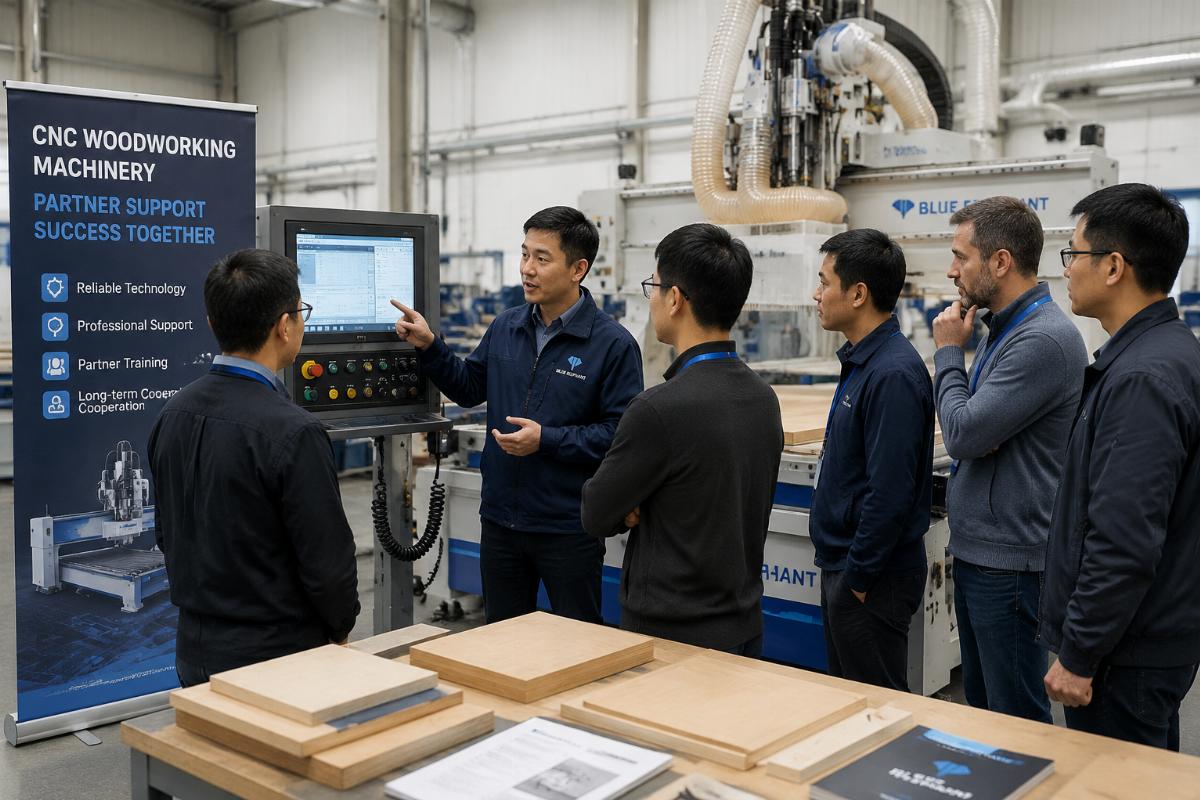
- Factory-Direct Pricing – Lock in consistent pricing 40-50% below comparable European brands for all product lines in your assigned territory.
- Flexible Order Terms – Use a 1-unit minimum order quantity for test inventory, with tiered bulk pricing for full container orders to reduce upfront capital risk.
- On-site Support – Receive free engineer dispatch for overseas installation and operator training for client orders, plus a 2-year warranty and lifetime technical support.
- Customization Access – Request tailored configuration for working area, spindle type, and control system language to match local client operational requirements.
Conclusion
The highest ROI exclusive agency partnerships are built on transparent market data and aligned expectations, not inflated upfront order commitments. The common misconception that large initial volumes are required to qualify filters out many capable distributors who already have strong local client networks, even as qualified partners routinely capture 30%+ of their regional mid-range market in under 2 years. Following the structured 4-stage application process and
Leave a Reply