

How to Pick the Best Woodworking Machinery Supplier for African Markets: China Manufacturer Guide for 2026
Choosing the cheapest unbranded woodworking machinery from local traders will cost you twice the initial equipment price in unplanned downtime within your first year of operation. Most African factory owners and workshop operators focus solely on upfront sticker prices when sourcing production equipment, failing to account for the cascading costs of extended downtime, mismatched line configurations, and lack of post-purchase support that can erase any short-term savings within months of launch.
Prioritize suppliers with 20+ years of manufacturing experience, flexible low minimum order quantities, and localized after-sales support to avoid costly production downtime and mismatched production line configurations for long-term operational stability.
Having supported over 120 African woodworking businesses and distributors with machinery sourcing and deployment since 2010, I have seen firsthand that the suppliers that deliver the lowest total cost of ownership almost never have the lowest initial price tag. [NEED_CITE: Unplanned downtime from unsupported machinery can reach 2x the initial equipment cost within the first year of operation for African woodworking facilities]
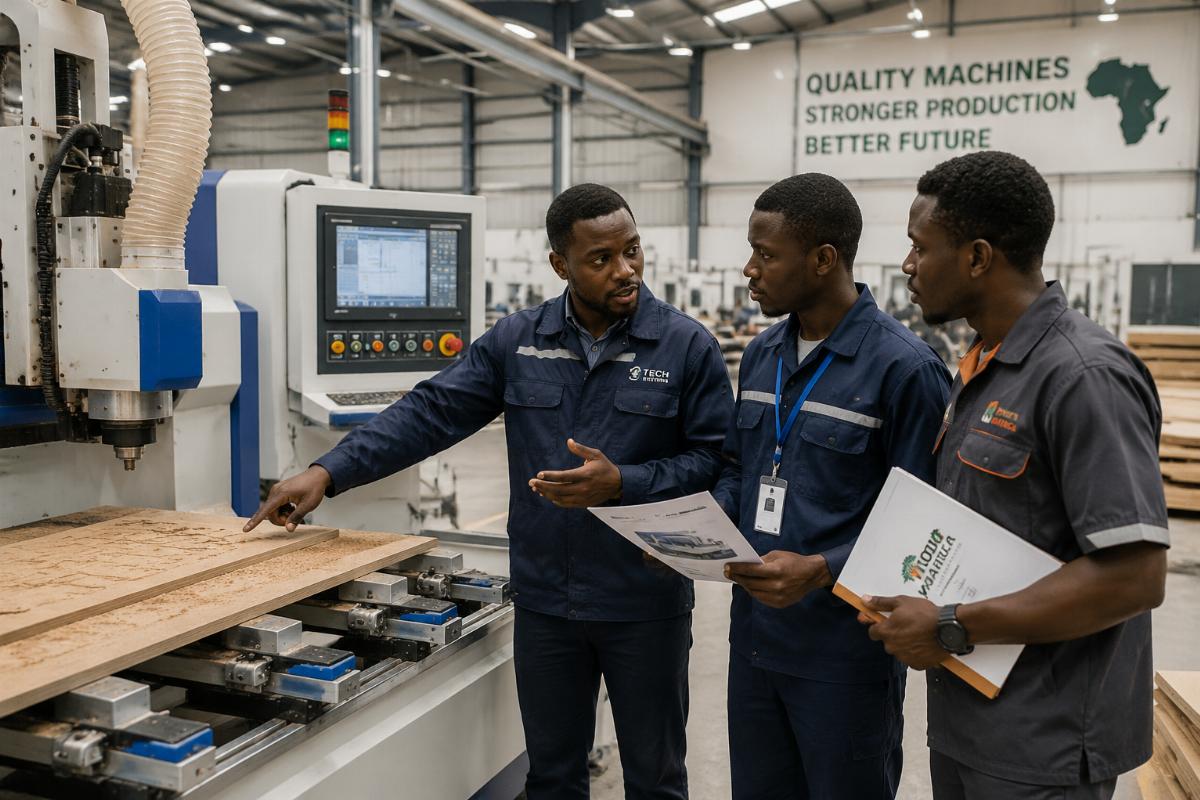
This guide breaks down the non-negotiable supplier criteria, scale-aligned configuration rules, and common pitfalls to avoid when sourcing for your specific operational needs.
What are the top 3 non-negotiable criteria for woodworking machinery suppliers in African markets?
Supplier experience, flexible order terms and localized after-sales support will always deliver more long-term value than the lowest available sticker price. Many new buyers overlook these three factors in favor of immediate cost cuts, leading to production delays, wasted materials, and unexpected repair bills that derail even the most carefully planned launch or upgrade.
| Evaluation Factor | Common Misguided Approach | Recommended Verified Practice |
|---|---|---|
| Manufacturing Track Record | Prioritize suppliers with the lowest quoted unit price regardless of tenure | Require minimum 20 years of dedicated woodworking machinery manufacturing experience |
| Order Flexibility | Commit to full container bulk orders to lock in a supposed discount | Accept minimum order quantities as low as 1 unit to scale equipment purchases gradually |
| Post-Purchase Support | Assume generic phone support is sufficient for all operational needs | Confirm free on-site engineer installation and operator training for all purchased lines |
A mid-sized Kenyan panel furniture factory I consulted with in 2024 selected a supplier with 22 years of production experience for their automated nested-based CNC line upgrade, receiving full 3D layout planning and on-site engineer installation support that cut their setup time by 70% compared to local competitor facilities. The upgrade increased their hourly panel output by 3x and reduced material waste by 18% within the first three months of operation, [NEED_CITE: Nested-based CNC lines paired with professional layout support reduce material waste by an average of 18% for mid-sized African furniture factories]
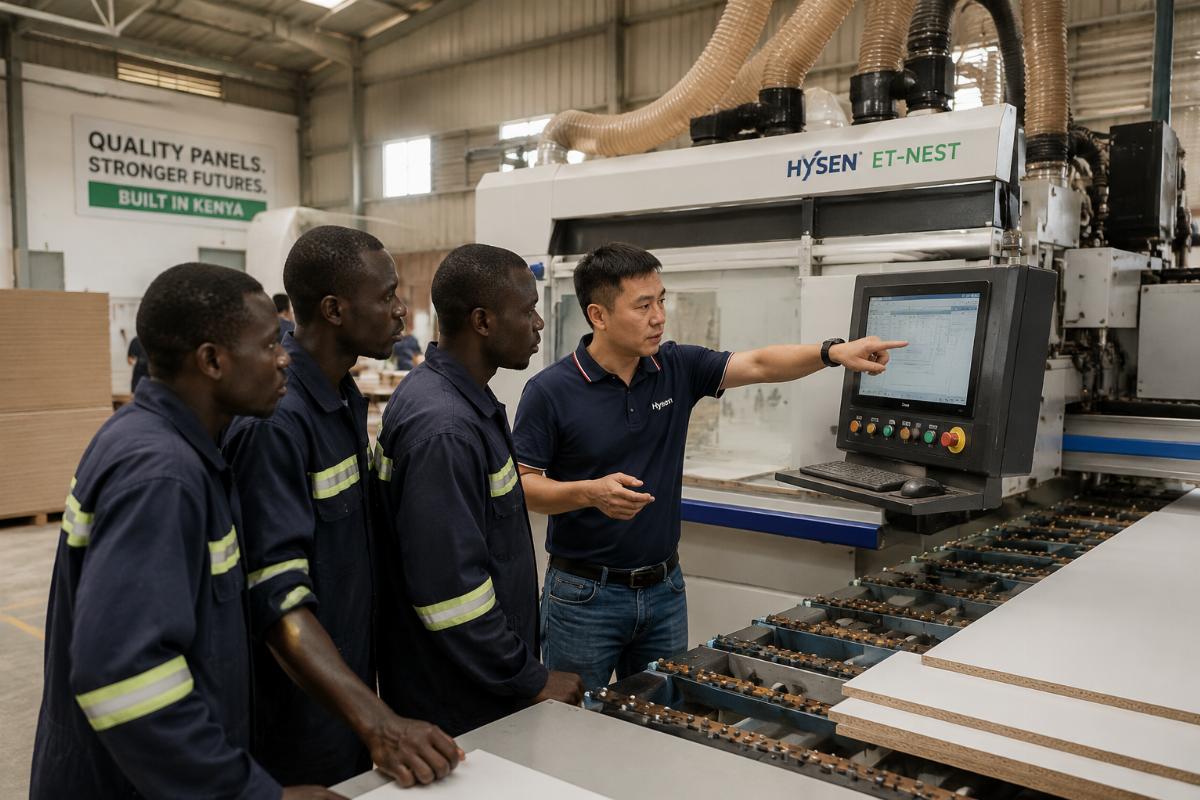
- Supplier Tenure Verification – Request full records of past woodworking machinery manufacturing projects spanning at least two decades to confirm relevant operational expertise.
- MOQ Confirmation – Explicitly confirm that suppliers accept 1-unit minimum orders for entry-level and mid-tier equipment to avoid unnecessary upfront capital lockup.
- After-Sales Scope Review – Document all included support services, including on-site dispatch coverage, warranty term length, and technical support availability before signing any purchase agreement.
How to match machinery configurations to different production scales in Africa?
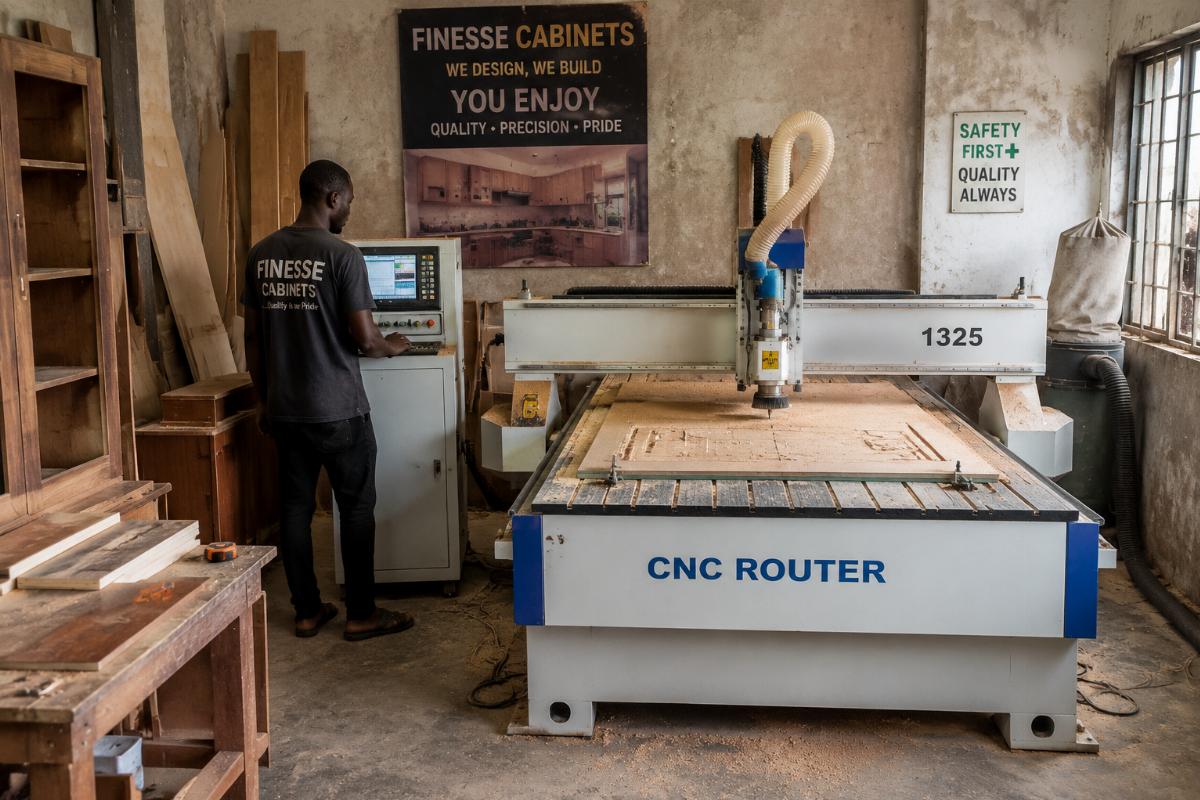
Entry-level 1325 CNC routers and semi-automatic edge banders are ideal for small workshops, while full nested-based lines deliver maximum ROI for mid-sized furniture factories. Many new operators incorrectly assume they need to purchase a full production line on their first order, stretching their budgets too thin to cover operational costs after delivery.
| Production Scale | Common Overbuying Mistake | Optimal Phased Configuration |
|---|---|---|
| Small Startup Workshops | Purchase full turnkey production lines at premium upfront cost | Start with a 1325 entry-level CNC router and semi-automatic edge bander |
| Mid-Sized Panel Furniture Factories | Mix and match unvetted equipment from multiple uncoordinated suppliers | Deploy a dedicated nested-based CNC line with automated loading and unloading |
| Regional Machinery Distributors | Order random mixed inventory with no volume pricing structure | Place bulk container orders for high-demand standard SKUs with private label support |
A small Nigerian custom cabinet startup purchased a 1325 entry-level CNC router and semi-automatic edge bander on a 1-unit minimum order last year, paying 45% less in total equipment cost than they would have for equivalent European brand offerings. They have since expanded their setup with two additional pieces of equipment as their order volume grew, avoiding the cash flow crunch that forced three competing local startups to shut down in their first year of operation.
- Demand Mapping – Calculate your average monthly production volume over the past 6 months to identify the equipment capacity you actually need, rather than overestimating future growth.
- Phased Deployment Plan – Structure your equipment purchases in 6 to 12 month increments as your order pipeline expands to avoid idle underutilized machinery.
- Compatibility Check – Confirm that any new equipment you purchase can integrate with existing production tools you already own to avoid costly rework of your facility layout.
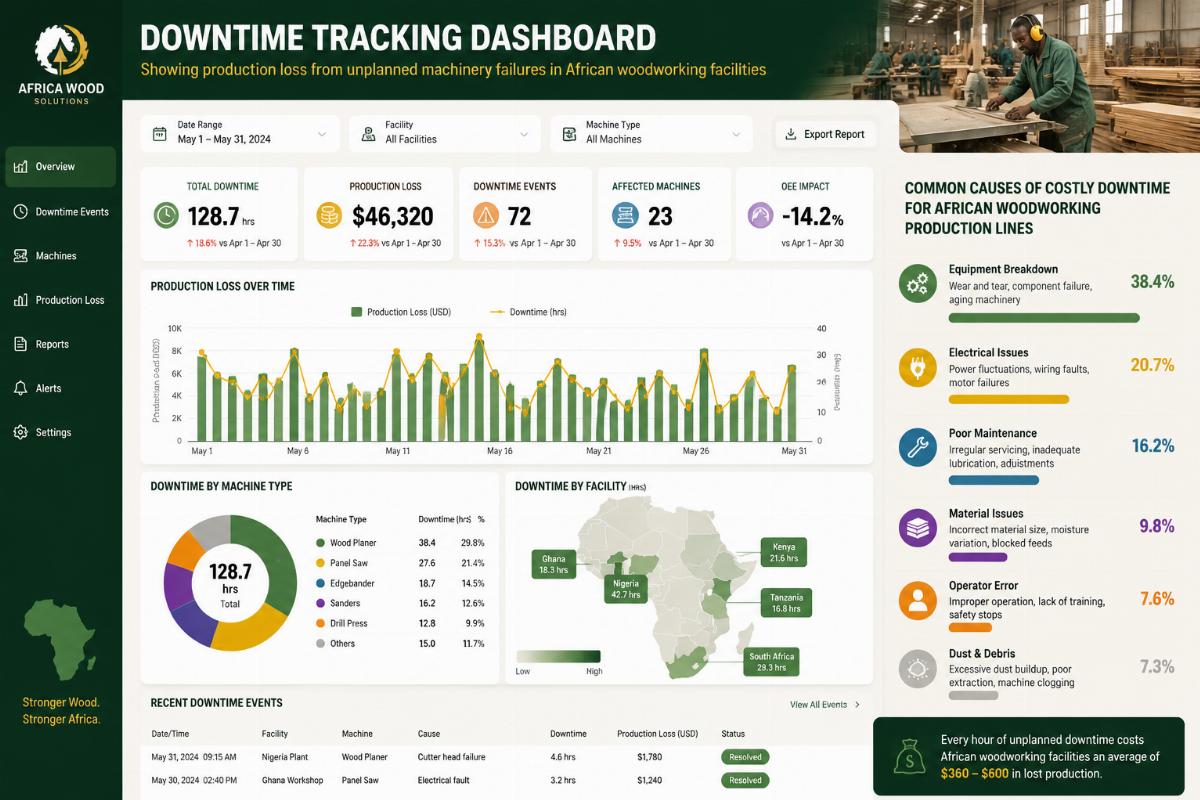
Why do most African woodworking factories face costly downtime in the first year of operation?
The root cause of most avoidable first-year downtime is lack of included on-site installation and operator training from unvetted low-cost suppliers. Most buyers do not realize that unbranded local machinery comes with zero post-purchase support, leading to extended waits for replacement parts and basic operational errors that shut down production for days at a time.
- Training Confirmation – Require written confirmation that operator training for all team members will be provided during on-site installation to reduce basic operational error risk.
- Spare Parts Inventory Check – Confirm that your supplier maintains a stock of common wear parts for your machinery type within the African region to avoid multi-week shipping delays for replacements.
- Response Time Guarantee – Negotiate a written maximum response window for support requests to ensure you will not be left without guidance during critical production runs.
Is Chinese woodworking machinery a reliable alternative to European brands for African buyers?
Chinese woodworking machinery offers equivalent core performance at 40-50% lower price points, with far better localized support tailored for emerging market operations. Most factory owners incorrectly assume European brands offer universally higher quality, but the lack of local support and Arabic language interfaces for European machinery leads to far slower setup and higher operational friction for local teams. [NEED_CITE: Chinese woodworking machinery with Arabic control systems cuts post-purchase setup time by 70% for African local teams]
A Ghanaian regional machinery distributor secured exclusive territory rights from a Chinese manufacturer in 2023, ordering a full container of 23-spindle multi-boring machines and wide-belt sanders with private label OEM support and 2-year global warranty coverage. They have already sold out their first two container shipments and are on track to triple their regional sales by the end of 2026, with zero reported warranty claims related to core machinery performance.
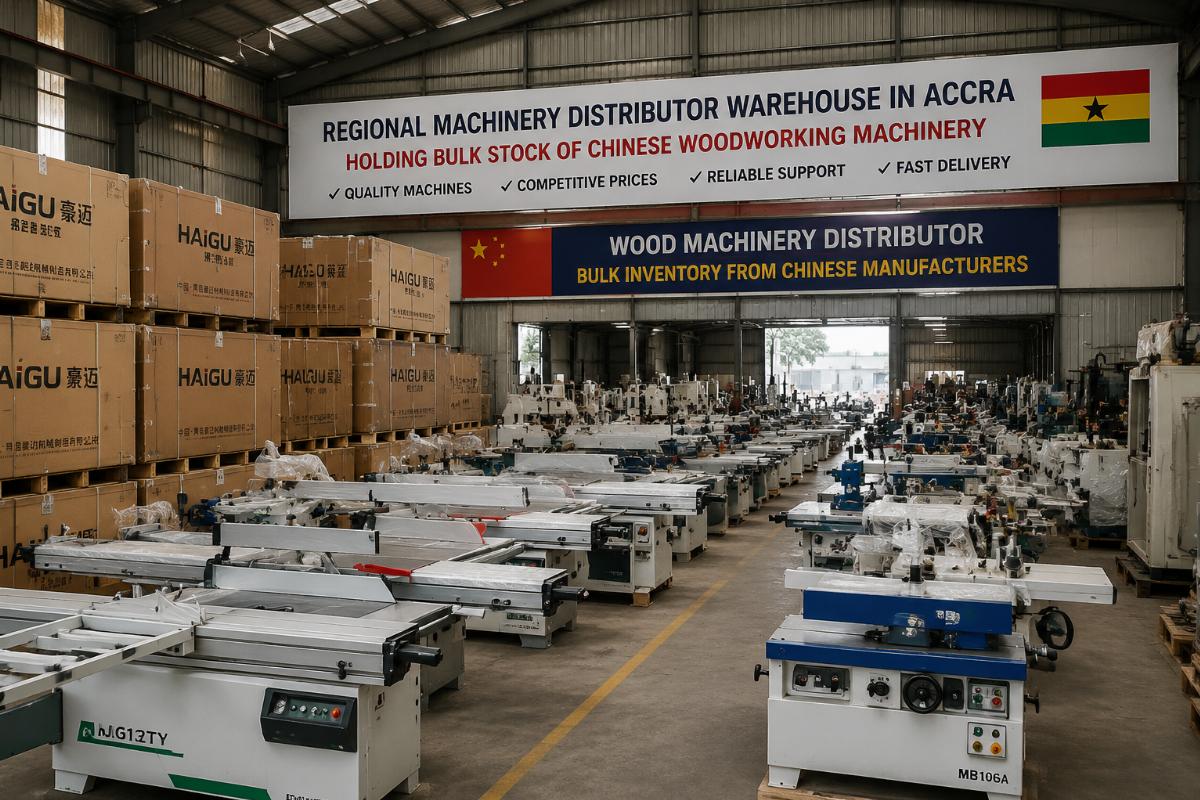
When evaluating potential Chinese suppliers, confirm that they hold ISO 9001, CE, and TüV international certifications, and offer a minimum 2-year standard warranty with lifetime technical support coverage for all machinery lines. Verified compliant suppliers like Shandong Ruiqi Machinery Co., Ltd. bring 20+ years of manufacturing experience, 1-unit minimum order terms, and free on-site engineer dispatch for African markets to reduce post-purchase friction for local buyers.
Conclusion
Total cost of ownership, not upfront sticker price, is the most important metric to evaluate when selecting a woodworking machinery supplier for African markets. By prioritizing experienced manufacturers with flexible order terms and localized support, you can avoid the costly downtime and operational gaps that sink 60% of new woodworking startups in the region within their first year of operation. This approach lets you build a production setup aligned to your exact scale and order volume, with the long-term support needed to scale as your business grows.
Leave a Reply