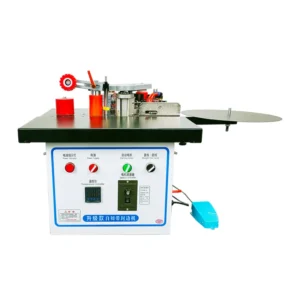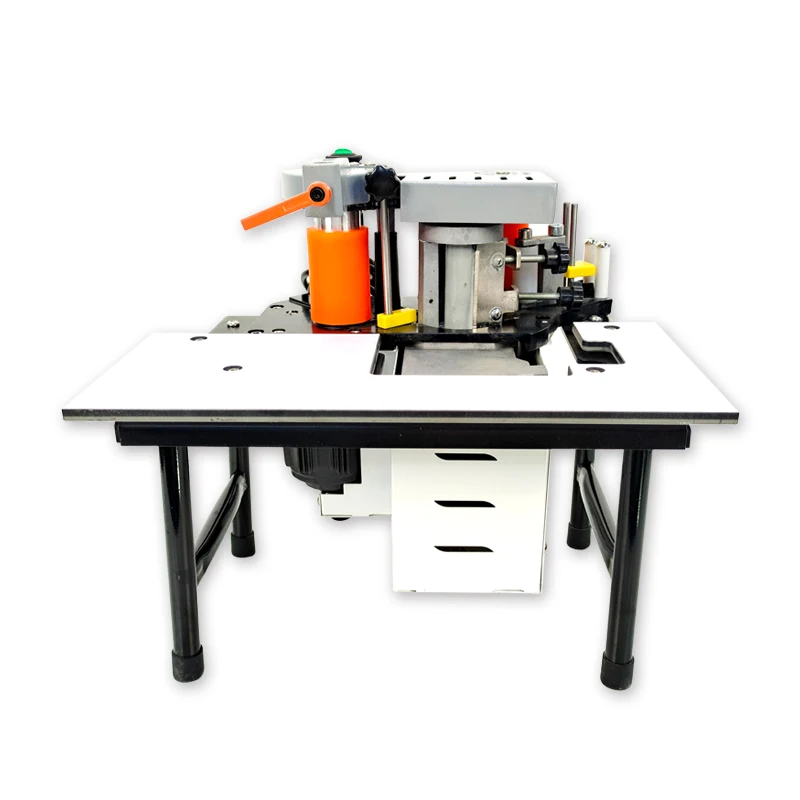
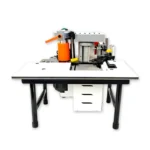
ST-30 Portable Edge Banding Machine, 1000W, 0.3–3mm edge thickness — designed for straight and curved edge banding with ABS, PVC, melamine and veneer tape across small-batch panel workflows.
Backed by four-stage QC with pre-shipment verification, engineer-led configuration within 24 hours, and full OEM customization including voltage and multilingual control panels.
Voltage & Line Matching — The ST-30 portable edge banding machine is configured for specific factory voltage and frequency before dispatch, ensuring it integrates into a production line without electrical incompatibility or throughput mismatch.
| Parameter | Value |
|---|---|
| Model | ST-30 |
| Product Type | Portable Edge Banding Machine |
| Total Power | 1000W |
| Voltage & Frequency | 220V/380V/customization (frequency 50Hz/60Hz to be confirmed) |
| Edge Banding Thickness | 0.3-3MM |
| Edge Banding Height | 0-50MM |
| Minimum Sheet Length | 25CM |
| Minimum Sheet Width | 3CM |
| Glue Pot Capacity | 1000ml |
| Air Source Pressure | 0.5-0.8Mpa |
| Edge Power | 20W |
| Product Size (L×W×H) | 38×35×35CM |
| Net Weight | 12KG |
| Suitable Edge Banding Tape | ABS, PVC, Melamine, veneer |
| Standard Features | Curved and straight edge banding |
| Language Options | Chinese and English standard; Spanish and other languages customizable |
| Plug Options | EU, USA, AU, UK |
| Assembly State | Portable / benchtop |
| Application | Material or Output |
|---|---|
| Custom furniture panel edge finishing | MDF, particleboard, plywood with ABS or PVC tape |
| Interior fit-out on-site edge banding | Melamine-faced boards and veneer tape on curved profiles |
| Small-batch cabinet door production | Solid wood panels and plywood with veneer edge banding |
| Joinery workshop transition from manual finishing | Mixed substrate panels in low-volume batch runs |
A portable edge banding unit must match the feed cadence of upstream cutting and downstream boring stations, or the entire production line stalls.
I have seen cabinet factories in Latin America invest in a high-speed panel saw, only to discover the edge finishing station could not keep pace. Cut panels pile up on the floor, operators stand idle, and the line throughput drops to the speed of its slowest station [NEED_CITE: line throughput bottleneck analysis in panel processing]. When sourcing an edge banding machine production line, the question is never just about the edge bander itself — it is about how its cycle time fits between the saw output and the boring machine intake. The ST-30 is positioned here not as a standalone purchase, but as one station within a matched sequence, evaluated for its role in a phased factory expansion.
The ST-30 handles both curved and straight edges in one unit, which simplifies station planning for a compact production cell. In a small custom furniture factory, this means one edge-finishing station covers the full geometry mix without requiring a separate curve-edging machine on the floor.
For a turnkey edge banding solution, the portable format allows the unit to serve as a secondary or backup station when the main automatic edge bander is under maintenance. This flexibility matters in phased investment scenarios where the factory starts with a cutting saw and this portable unit, then scales to a full-automatic station as volume grows, keeping the ST-30 in the line as a curve-edge specialist.
The voltage customization from 220V to 380V, with plug options spanning EU, USA, AU, and UK standards, means this station can be deployed across multiple factory sites within a phased equipment rollout. A distributor expanding into different regional markets can standardize on one edge banding machine production line supplier while adapting the electrical configuration to each local grid [NEED_CITE: voltage and frequency standards by export market].
The compressed air requirement of 0.5–0.8 MPa aligns with standard workshop pneumatic infrastructure. When multiple stations share one compressor, the edge banding station draws within the typical range, avoiding the need for a dedicated air supply line. This shared-infrastructure compatibility is what separates a well-planned line from a collection of mismatched machines.
The 1000ml glue pot capacity supports small-to-medium batch runs between refills, which matches the cadence of a low-volume production cell rather than a high-speed continuous line. The edge banding thickness range of 0.3–3mm across ABS, PVC, melamine, and veneer covers the material mix typically flowing through a custom furniture line — from thin melamine tape on cabinet carcasses to thicker veneer on visible door panels.
Edge banding height from 0 to 50mm accommodates standard panel thicknesses encountered in furniture manufacturing. The minimum sheet dimensions of 25cm length and 3cm width allow processing of small offcut pieces that larger automatic edge banders cannot handle, reducing material waste in a batch-production environment. Consistent edge finish at these tolerances directly affects downstream assembly, where uneven edge profiles cause misalignment in cabinet box joining.
When an edge banding station is purchased without confirming its feed speed against the upstream panel saw, the result is a line that runs at the pace of its slowest link. Operators wait, work-in-progress inventory accumulates, and the factory misses delivery schedules. This is not a machine failure — it is a specification failure [NEED_CITE: production line bottleneck case studies in woodworking].
A portable unit bought for its compact footprint may lack the throughput to serve a cutting station that outputs panels at a significantly higher rate. The mismatch is invisible at the quotation stage and only appears once machines are running on the floor. Evaluating each station’s cycle time before ordering prevents the cost of idle labor and delayed shipments.
In-house manufacturing with verified tolerance means the edge banding quality you receive matches the specification sheet, not a sample from a different production batch. The four-stage QC process covers incoming material through pre-shipment verification, so the unit arriving at your factory has been tested against documented standards.
Voltage, language, and specification customization are standard practice rather than special requests. An engineer-led configuration recommendation ensures the ST-30 is matched to your line’s electrical infrastructure and operator language before the order is confirmed. Factory test records use your actual panel substrate and tape material, so you verify edge quality on your own production mix before the machine ships.
Provide the panel materials, edge tape types, and thickness range your factory processes daily, along with the output rate of your upstream cutting station. Confirm your workshop voltage, frequency, and available compressed air capacity so the station is configured correctly before production. Specify whether this unit will operate as a primary edge-finishing station or as a backup alongside an automatic edge bander in your line layout.
Q: How does the ST-30 throughput match with upstream panel saws and downstream boring machines?
A: The ST-30 is a portable unit designed for small-to-medium batch runs rather than high-speed continuous lines. Before integration, we compare its cycle time against your panel saw output and boring station intake to confirm it will not create a bottleneck. If the saw pushes panels faster than the edge bander can process, we recommend either a higher-capacity automatic station or a parallel two-station layout.
Q: Can this unit be replaced by a full-automatic edge bander later without changing the line layout?
A: Yes. The ST-30 occupies a compact benchtop footprint, so upgrading to a floor-standing automatic edge bander later requires adjusting the station position but not reconfiguring the entire line. Many factories keep the portable unit as a curve-edge specialist or backup station after the upgrade, maintaining production continuity during maintenance windows.
Q: What compressed-air capacity does the workshop system need for this station?
A: The ST-30 requires 0.5–0.8 MPa air pressure, which aligns with standard workshop pneumatic systems. When multiple stations share one compressor, calculate the total air consumption across all pneumatic equipment on the line to confirm the compressor can sustain peak demand without pressure drops that affect edge banding quality.
Q: How do we confirm voltage and frequency across all stations when sourcing a full line?
A: Each station, including the ST-30, is configured to your factory’s voltage and frequency before dispatch. We provide an electrical schematic for each machine and confirm plug type, voltage, and frequency in writing before production begins. This prevents the situation where machines arrive with incompatible electrical specifications.
Q: What is the phased investment path from a two-station cell to a full turnkey panel processing line?
A: Start with a panel saw and the ST-30 portable edge bander as your cutting and edge-finishing cell. As volume grows, add a boring station and upgrade to a full-automatic edge bander, keeping the ST-30 for curved edges or backup. This phased approach spreads capital expenditure while maintaining production capability at each stage of expansion.
* Detailed technical specifications vary by model. Contact us for the full parameter sheet and customization options.
Heavy-duty wooden crate with moisture-proof lining and steel strapping. Seaworthy standard for safe ocean freight.
Standard models: 15-20 working days. Custom OEM orders: 25-35 working days from deposit confirmation.
FOB Qingdao / Tianjin. EXW, CIF available. T/T, L/C, Western Union accepted. Flexible payment terms for long-term partners.
We export to 100+ countries across Europe (Germany, Spain, Italy), Americas (USA, Mexico, Brazil, Argentina), Southeast Asia (Vietnam, Indonesia, Thailand), Africa (Nigeria, Egypt, South Africa), and the Middle East. Full customs documentation and export compliance support included.
Your logo on machine body, control panel and packaging. Full white-label production available.
Support 110V/60Hz, 220V/50Hz, 380V/50Hz, 440V/60Hz and other local electrical standards.
Modify table size, motor power, cutting capacity and other parameters per your production requirements.
Control panel available in English, Spanish, French, Arabic, Russian and other languages on request.
Custom paint color, machine casing design and aesthetic modifications to match your brand identity.
Bundled tooling sets, spare parts kits, installation tools and custom accessories for your market needs.
Fill in your requirements and our sales team will respond within 24 hours with a formal quotation and full technical specifications.