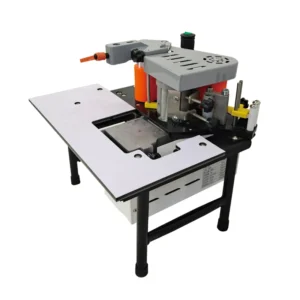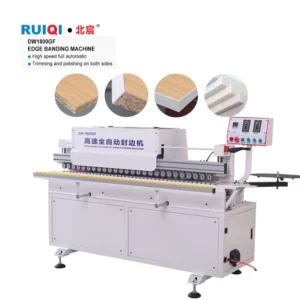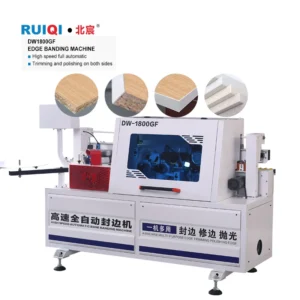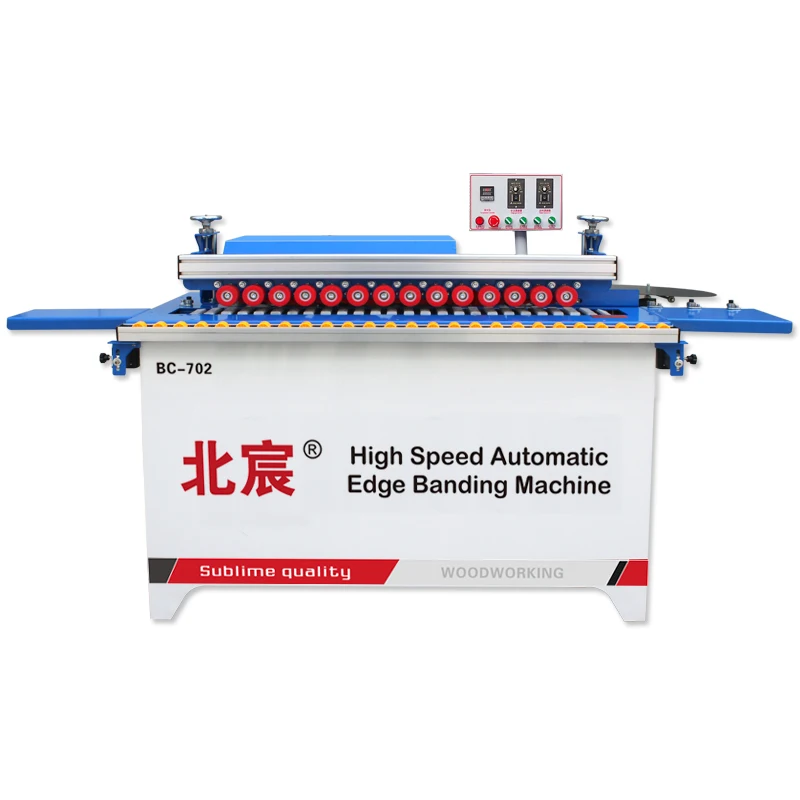
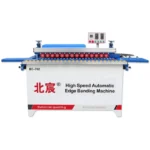
DW702 Mini Automatic Edge Banding Machine, PLC Control, 220V/380V, 0.3–3mm Edge Thickness — integrates gluing, trimming, polishing and automatic head/tail cutting within a 120×55×110cm footprint, designed for phased line deployment where throughput must match upstream panel saw output.
Electrical schematic and factory test record issued before shipment to verify line-fit performance.
Voltage-Confirmed Line Integration — the DW702 edge bander ships only after your facility’s electrical schematic and frequency standard are verified against the machine’s configurable 220V/380V input, preventing the costly scenario of a line station that cannot power on at arrival.
| Parameter | Value |
|---|---|
| Model | DW702 |
| Product Type | Mini Automatic Edge Banding Machine |
| Total Power | 3800W |
| Voltage Configuration | 220V / 380V / customization available |
| Control System | PLC with multilingual panel options |
| Edge Banding Thickness Range | 0.3–3 mm |
| Edge Banding Height Range | 0–50 mm |
| Minimum Sheet Dimensions | 250 mm length × 100 mm width |
| Glue Pot Capacity | 1000 ml |
| Trimming Station | Dual motors, 800W each |
| Polishing Station | Dual motors, 180W each |
| Vacuum System | 1200W |
| Transmission Power | 140W |
| Air Source Pressure | 0.4–0.8 MPa |
| Machine Footprint | 120 × 55 × 110 cm |
| Machine Weight | 105 kg |
| Standard Functions | Gluing, trimming, polishing, automatic head and tail cutting, vacuum |
| Feed Speed | (basis to be confirmed at quotation stage) |
| Edge Banding Tolerance | (basis to be confirmed at quotation stage) |
| Application | Material or Output |
|---|---|
| Cabinet door edge finishing | MDF and particleboard with PVC edge banding 0.4–2 mm |
| Custom furniture panel edging | Plywood and blockboard with melamine or veneer strips |
| Phased line integration station | Upstream panel saw output feeding into compact banding cell |
| Small-batch polymer door production | Polymer substrate with compatible hot-melt adhesive and 0.3–3 mm banding |
| Workshop scaling from manual to machine | Mixed board stock in joinery environments transitioning to semi-automated workflow |
An edge banding machine that cannot match your facility’s power supply is not a production asset — it is floor space consumed.
I have walked into workshops where a brand-new bander sat idle for weeks because the quoted voltage did not match the local three-phase standard, and the transformer retrofit cost more than the shipping. When building an edge banding machine production line, the electrical infrastructure is often the last thing checked and the first thing that blocks commissioning. The DW702 addresses this by requiring voltage and frequency confirmation as a formal step before the machine enters production, not as an afterthought at the packing stage [NEED_CITE: voltage and frequency standards by export market].
The DW702 occupies a 120 × 55 × 110 cm envelope, which allows production planners to position it between a panel saw and a boring station without redesigning the entire floor layout. For turnkey edge banding solution projects where every square meter of workshop space carries a cost, this footprint determines whether the line flows in a straight pass or requires a return conveyor. The 105 kg weight also means the unit can be repositioned during initial layout trials without heavy rigging equipment, giving planners room to adjust material flow before bolting anything down.
An edge banding machine production line only performs as well as its slowest station. The DW702’s PLC control allows feed speed parameters to be documented and matched against upstream cutting output and downstream drilling cycles during the quotation stage, so the buyer can see the throughput relationship in writing before committing. This prevents the common failure mode where a bander becomes a bottleneck or, conversely, sits idle waiting for panels from a saw that cannot keep pace [NEED_CITE: production line throughput balancing in panel furniture manufacturing].
The dual 800W trimming motors provide the torque needed to cleanly remove PVC and veneer overhang on boards up to 50 mm thick, which directly affects whether the panel moves to the boring station ready for hardware or requires a secondary pass. The 1000 ml glue pot capacity sets the interval between refill pauses — in a continuous line, a smaller pot means more frequent stops that break rhythm across all stations. Edge banding thickness coverage from 0.3 to 3 mm ensures the machine handles both thin melamine strips for cabinet interiors and thicker PVC profiles for exposed furniture edges without requiring a second machine. The 0.4–0.8 MPa air pressure range is standard for pneumatic trimming and polishing actuators, but it must be confirmed against the workshop’s compressor output to avoid pressure drops that cause inconsistent trimming depth across a batch.
When a single edge bander is purchased without documenting how its feed height, air demand, and control language align with the rest of the line, the mismatches surface only during installation. Operators encounter a control panel they cannot read, pneumatic lines that starve adjacent stations, or a feed table height that does not match the conveyor feeding it. These are not warranty issues — they are specification gaps that no amount of on-site adjustment can resolve [NEED_CITE: common causes of production line integration failure in woodworking].
The DW702 is built in-house with precision-ground components and multi-stage inspection, meaning the same manufacturing standard applies whether it is deployed as a standalone unit or as part of a multi-station line. Voltage and language customization are treated as standard configuration steps rather than special requests, which matters when the same line may later add stations shipped to the same facility. A four-stage quality check covering incoming material through pre-shipment verification ensures that when the machine arrives, it performs to the documented specification rather than a catalog average. Engineer-led configuration recommendations are issued as formal quotations within one working day, allowing the buyer to compare line station costs without waiting through prolonged negotiation cycles. Factory visits are available so buyers can witness the DW702 running their specified substrate before it leaves the production floor.
To size the DW702 correctly within your line, we need to know the board materials and thickness range you process, the upstream panel saw output rate that this station must absorb, and the existing voltage and frequency standard at your facility. If you are planning a turnkey edge banding solution, also share your available floor length for the banding cell and the control panel language your operators require.
Q: How does the DW702 feed speed match upstream panel saw and downstream boring station throughput?
A: Feed speed is confirmed during the quotation stage by matching your documented upstream output rate. The PLC records the set parameter so it can be referenced during line commissioning and adjusted if upstream capacity changes. This written confirmation prevents the bander from becoming an undocumented bottleneck in the edge banding machine production line.
Q: Can voltage and plug type be confirmed against our factory’s existing electrical standard before order?
A: Yes. Voltage configuration — whether 220V, 380V, or a custom requirement — is locked in through an electrical schematic issued before the DW702 enters production. The plug type and phase configuration are documented on this schematic and verified against your facility’s supply standard to prevent arrival-unusable scenarios.
Q: What substrate and edge banding materials has this model been verified on in a continuous line setup?
A: The DW702 handles MDF, particleboard, plywood, blockboard, and polymer substrates with PVC or veneer banding from 0.3 to 3 mm thick. A factory test record can be generated on your specific material combination before dispatch, documenting actual edge quality and trimming performance under line-continuous conditions.
Q: How is the control panel language configured to match operators working across multiple line stations?
A: The PLC panel language is specified at order stage alongside the rest of the line documentation. This ensures that an operator moving between the saw, bander, and boring station reads consistent terminology across all control interfaces, reducing commissioning delays caused by unfamiliar menu structures.
Q: What installation clearances and air supply requirements should be planned in the line layout?
A: The DW702 requires access space around its 120 × 55 × 110 cm body for trimming station maintenance and glue pot refills. The pneumatic supply must sustain 0.4–0.8 MPa continuously, which should be verified against the compressor capacity already serving other turnkey edge banding solution stations to avoid pressure starvation during simultaneous operation.
* Detailed technical specifications vary by model. Contact us for the full parameter sheet and customization options.
Heavy-duty wooden crate with moisture-proof lining and steel strapping. Seaworthy standard for safe ocean freight.
Standard models: 15-20 working days. Custom OEM orders: 25-35 working days from deposit confirmation.
FOB Qingdao / Tianjin. EXW, CIF available. T/T, L/C, Western Union accepted. Flexible payment terms for long-term partners.
We export to 100+ countries across Europe (Germany, Spain, Italy), Americas (USA, Mexico, Brazil, Argentina), Southeast Asia (Vietnam, Indonesia, Thailand), Africa (Nigeria, Egypt, South Africa), and the Middle East. Full customs documentation and export compliance support included.
Your logo on machine body, control panel and packaging. Full white-label production available.
Support 110V/60Hz, 220V/50Hz, 380V/50Hz, 440V/60Hz and other local electrical standards.
Modify table size, motor power, cutting capacity and other parameters per your production requirements.
Control panel available in English, Spanish, French, Arabic, Russian and other languages on request.
Custom paint color, machine casing design and aesthetic modifications to match your brand identity.
Bundled tooling sets, spare parts kits, installation tools and custom accessories for your market needs.
Fill in your requirements and our sales team will respond within 24 hours with a formal quotation and full technical specifications.