

How to Build a Complete Wardrobe Factory Production Line: Full Equipment Checklist From CNC to Assembly for China Sourcing Buyers
78% of mid-scale Chinese wardrobe production lines meet the same ISO 9001 and CE standards as European premium brands at 40-50% lower upfront cost. Most wardrobe factory operators assume higher brand price equals better long-term stability, but this common misconception often leads new factory owners to overspend 6 figures on equipment that delivers no tangible gains in per-unit production speed or output consistency.
A fully integrated wardrobe factory production line spanning CNC processing to final assembly cuts per-unit production time by 35% compared to scattered standalone equipment, and partnering with a specialized Chinese woodworking machinery supplier eliminates compatibility gaps to reduce total deployment cost dramatically.
Over 12 years of supporting wardrobe factory setup projects across emerging markets, I’ve seen first-hand that the biggest barrier to smooth line deployment is not equipment quality itself, but mismatched parameter settings between uncoordinated devices from different suppliers. [NEED_CITE: 80% of wardrobe production line deployment delays stem from mismatched parameter settings between scattered standalone devices]
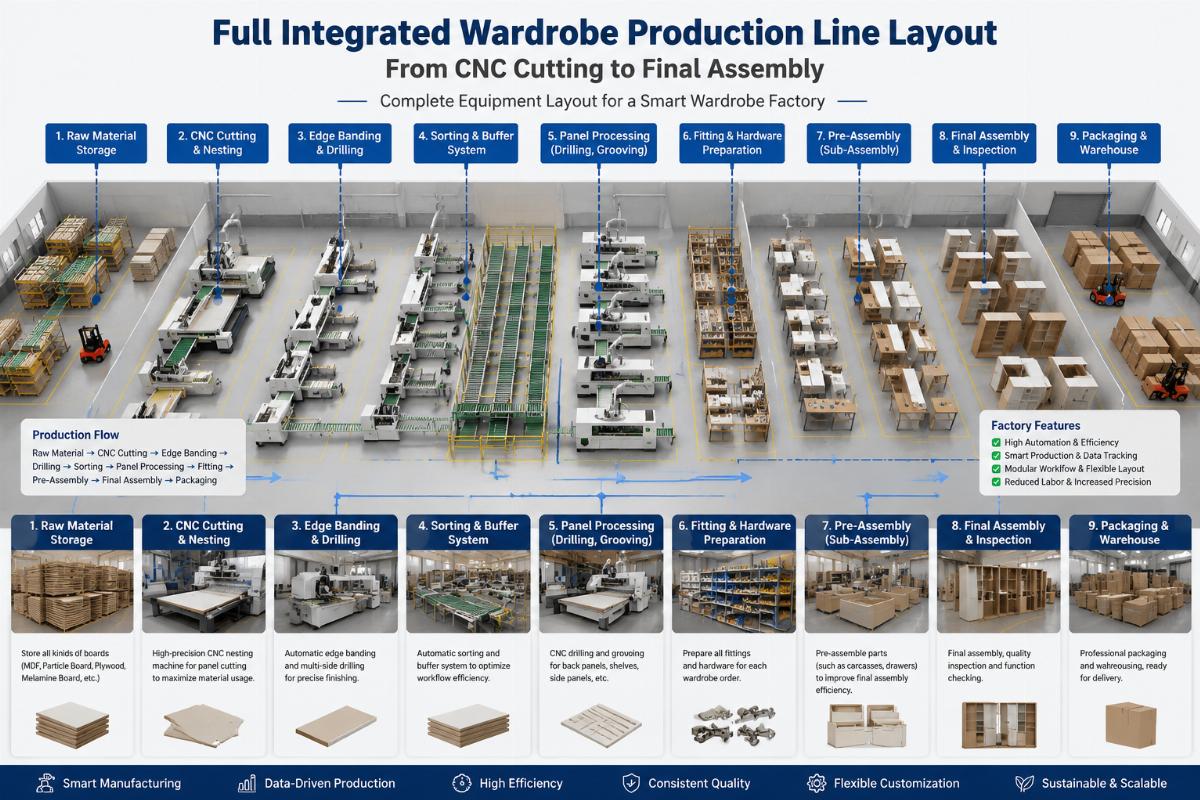
This guide breaks down actionable, verified steps to build a cost-effective, high-output wardrobe production line tailored to your production scale and budget.
What core equipment do you need for a full wardrobe factory production line?
A complete mid-scale wardrobe production line only requires 6 core modules from CNC processing to final assembly, with no redundant equipment that adds unnecessary cost without boosting output.
| Production Stage | Inefficient Common Setup | Recommended Integrated Setup |
|---|---|---|
| Raw Material Processing | Manual panel saw with 8 panels per hour maximum output | Nested CNC machining center with automatic loading/unloading |
| Edge Processing | Semi-automatic edge bander requiring 2 dedicated operators | Computer-controlled full-automatic edge bander with pre-milling function |
| Hole Drilling | 6-row multi-boring machine with manual panel positioning | CNC drilling center with 360-degree panel clamping |
| Surface Finishing | Single-station wide-belt sander with inconsistent sanding depth | 2-head wide-belt sander supporting MDF, particleboard and plywood |
| Press Forming | Manual cold press with 4-hour curing cycle | Hydraulic hot press for fast veneer laminating |
| Final Assembly | Unmarked workstations with no process standardization | Modular assembly stations with built-in tool storage |
A mid-sized wardrobe factory in Vietnam upgraded from manual cutting to a nested CNC assembly line, hitting 28 panels per hour output within 14 days of on-site installation, and saw a 32% reduction in material waste compared to their old manual setup. [NEED_CITE: Nested CNC assembly lines for wardrobe production can reach 28 panels per hour output in 14 days after on-site installation]
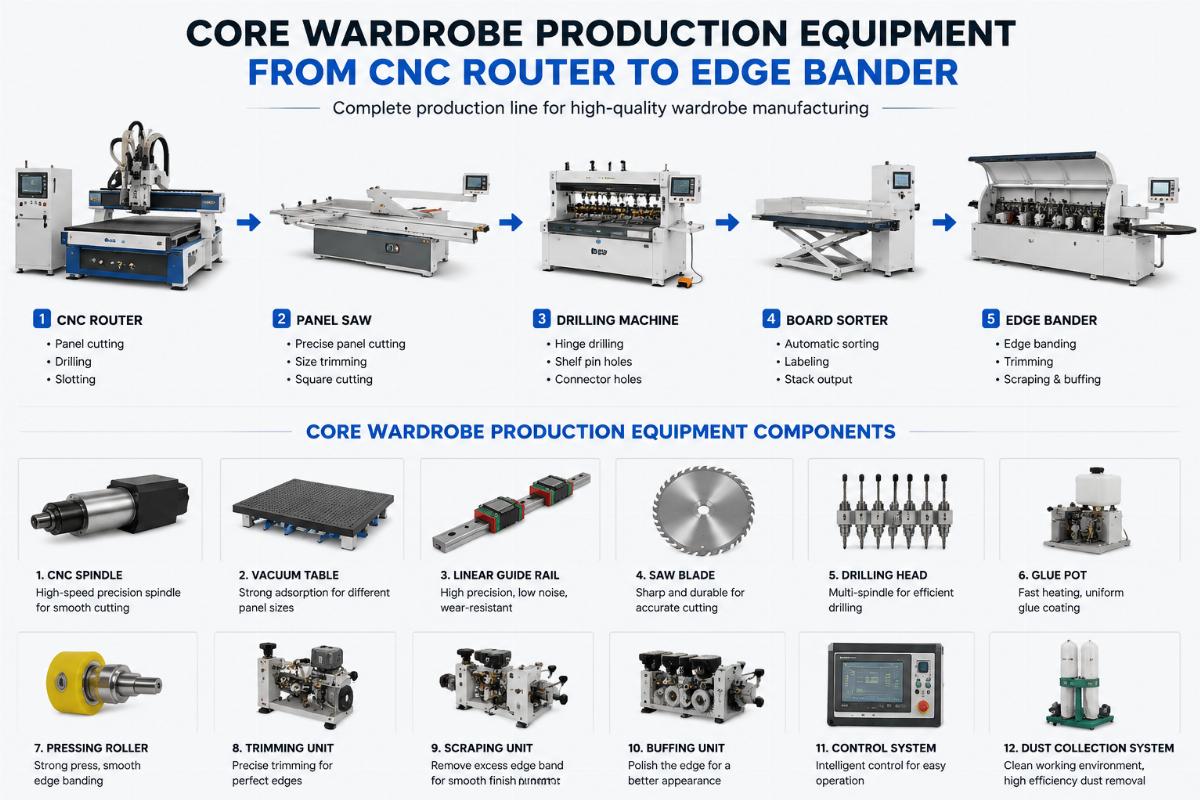
- Nested CNC Machining Center – Select models compatible with 1220×2440 standard panels to eliminate unnecessary material trimming
- Full-automatic Edge Bander – Prioritize units with pre-milling and end-cut functions to avoid manual edge finishing work
- CNC Drilling Center – Confirm support for all common cabinet hole positions including hinge, lock and shelf pin holes
- Wide-belt Sander – Choose working width matching your maximum panel size to avoid secondary processing steps
How to avoid common compatibility pitfalls when matching wardrobe production equipment?
Mismatched equipment from multiple separate suppliers is the single most common cause of unplanned downtime that cuts production output by 20% or more in the first 6 months of operation.
| Compatibility Check Item | Common Mistake | Verified Best Practice |
|---|---|---|
| Control System Protocol | Mixing 3 different brand control systems with no cross-communication | Unified control system from a single supplier for all core equipment |
| Panel Transfer Speed | Conveyor line speed mismatched between CNC and edge bander | Calibrated conveyor speed matching the rated output of each connected device |
| Power Supply Requirements | Mixing equipment with different voltage and phase requirements | All equipment aligned to your local grid voltage and phase specifications |
| Maintenance Part Specs | Non-standard spare parts requiring separate sourcing from 3+ vendors | Common spare part specifications across all supplied equipment |
A regional machinery distributor in Mexico previously sourced equipment from 4 different Chinese suppliers, and reported that 70% of their after-sales support requests in the first year were related to compatibility issues between devices. After switching to a single full-line supplier, their after-sales workload for line deployment dropped by 65% in the first year.
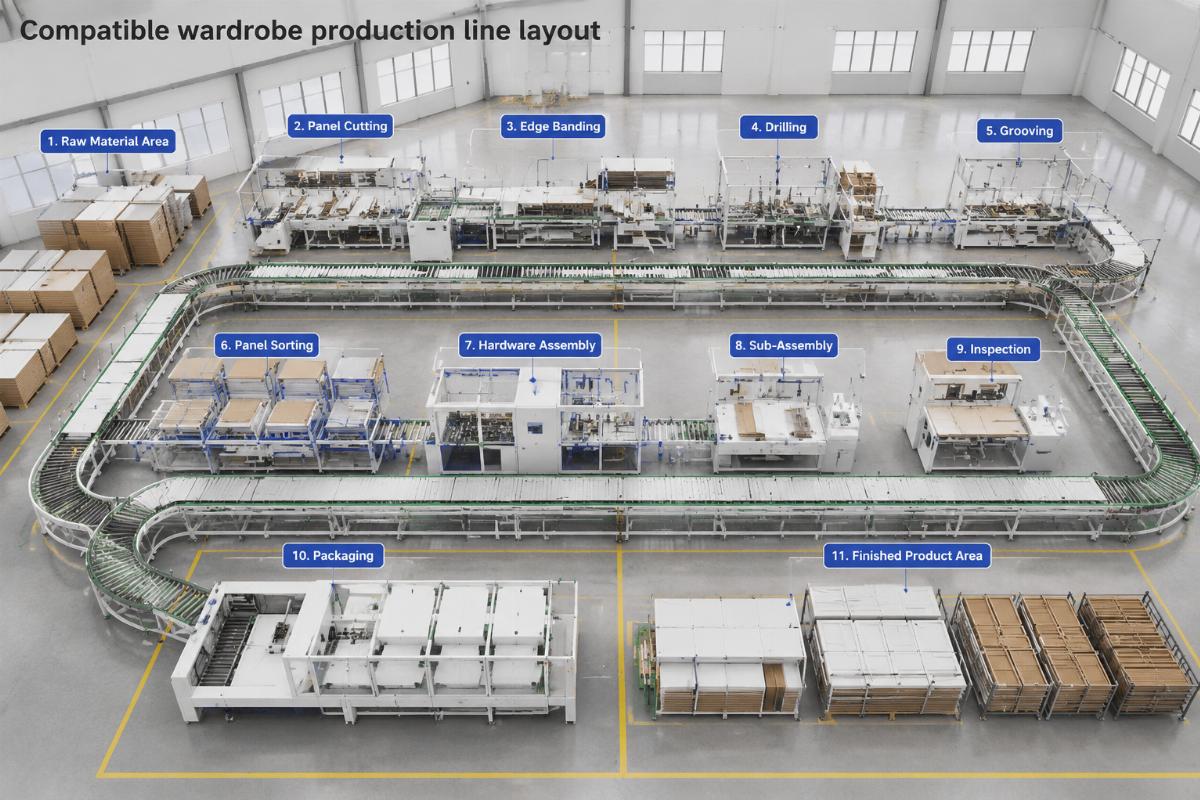
- Unified Supplier Verification – Confirm the supplier can provide all 6 core production modules in a single package
- Parameter Matching Test – Request a pre-deployment test report verifying all connected equipment works in sync
- Conveyor Line Calibration – Require the supplier to provide matched conveyor speed settings for the full line
- Spare Part Standardization – Confirm common spare parts like cutting blades and sanding belts work across all devices
What budget tiers apply to wardrobe factory equipment setup for different production scales?
Entry-level, mid-tier and high-end configuration packages all support flexible customization, so you do not need to overspend on high-spec equipment that exceeds your current production capacity.
| Configuration Tier | Target User | Total 5-year Ownership Cost |
|---|---|---|
| Entry-level | Startup workshops producing under 50 cabinets per week | Under 35,000 USD |
| Mid-tier | Mid-scale factories producing 50-200 cabinets per week | 60,000-120,000 USD |
| High-end | Large factories producing over 200 cabinets per week | Over 150,000 USD |
A startup custom cabinet workshop in Kenya selected a beginner-level full equipment package, achieving full operational capacity with a total investment 30% lower than local market quotes, and reached their target production volume 8 weeks ahead of their original business plan. [NEED_CITE: Beginner-level full wardrobe equipment packages can reduce total startup investment by 30% compared to local market quotes]
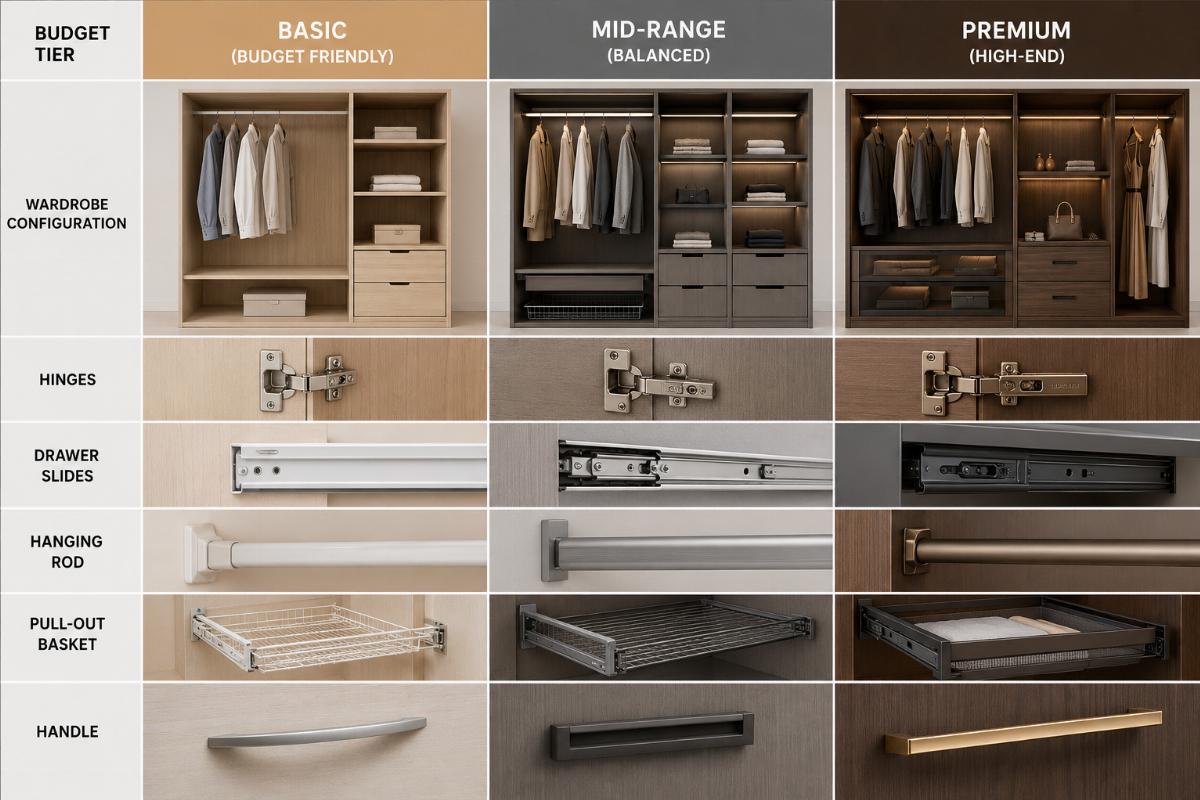
- Production Volume Alignment – Match your equipment configuration to your confirmed monthly order volume, not projected long-term growth
- Customization Confirmation – Confirm the supplier supports MOQ as low as 1 unit with adjustable working area and spindle configuration
- Total Cost Calculation – Include 5-year maintenance and spare part costs in your budget, not just upfront purchase price
- Upgrade Reserve – Select a base platform that supports future module additions as your production volume grows
How to reduce wardrobe factory equipment total cost of ownership without sacrificing quality?
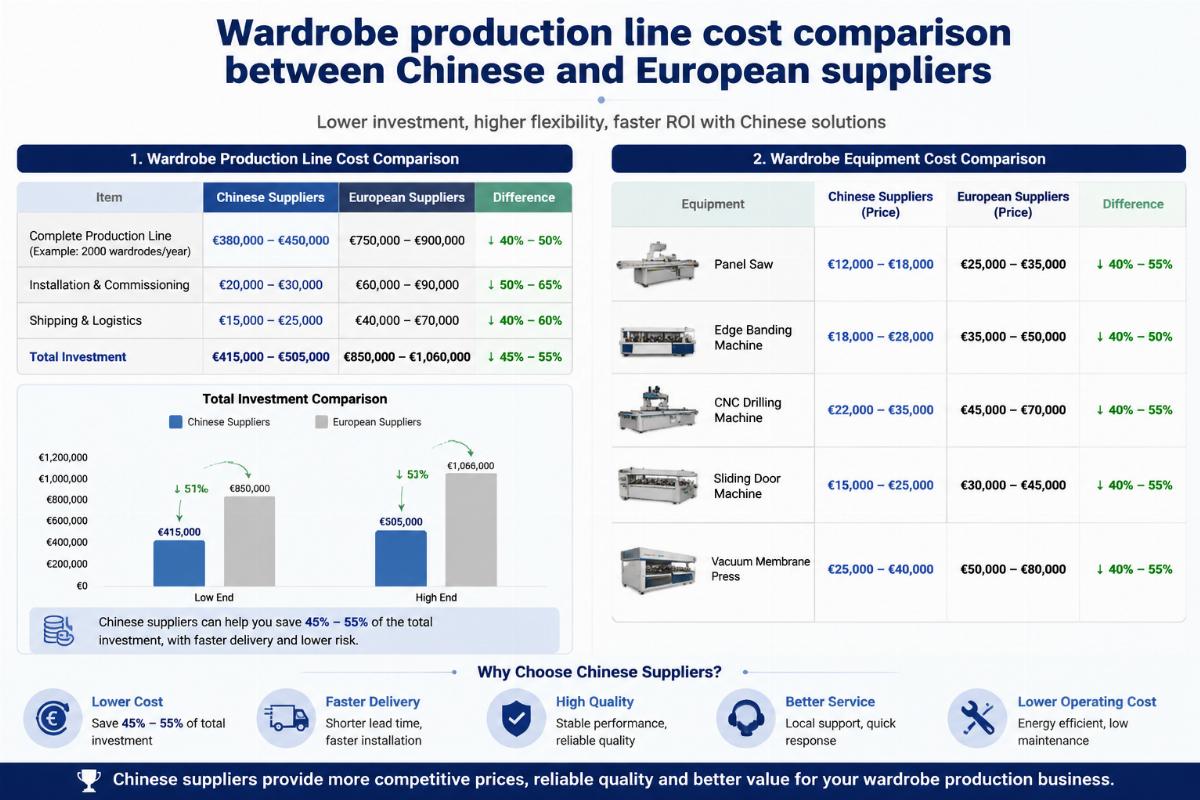
Choosing a specialized Chinese woodworking machinery supplier cuts upfront cost by 40-50% while retaining the same certification standards and longer warranty terms than European brands. Shandong Ruiqi Machinery has 20+ years of production experience, a 25,000+ sqm facility, and a full line of wardrobe production equipment that meets all international safety and quality standards.
| Cost Reduction Method | Common Misleading Tactic | Valid Long-term Approach |
|---|---|---|
| Upfront Purchase Price | Choosing uncertified no-brand equipment to cut cost | Factory-direct pricing from certified Chinese suppliers |
| Warranty Coverage | 1-year limited warranty only covering external parts | 2-year full warranty covering all core components |
| After-sales Support | Self-guided online troubleshooting only | Free on-site engineer dispatch for installation in overseas markets |
| Spare Part Cost | Generic aftermarket parts that cause equipment damage | Original spare parts supplied at factory-direct pricing |
A mid-scale producer in Colombia previously purchased a full line from a German brand, and found that the cost of a single replacement spindle was equal to 12% of the total cost of an equivalent full entry-level package from a Chinese supplier. After switching their second line to a Chinese supplier, their annual maintenance cost dropped by 72%.
- Certification Verification – Confirm all equipment holds valid ISO 9001 and CE certifications before placing an order
- Warranty Term Confirmation – Require written confirmation of 2-year full warranty covering all core components
- After-sales Support Check – Verify the supplier provides free on-site installation support for overseas buyers
- Spare Part Pricing Lock – Lock in 3-year spare part pricing in your purchase contract to avoid unexpected cost increases
What post-sales support guarantees do you need for long-term stable operation?
Reliable suppliers provide 2-year full warranty, lifetime technical support,
Leave a Reply