

How to Calculate Profit Margins for CNC Router Wholesale: Tips for Bulk Resellers Sourcing from China
Lower unit purchase price does not guarantee higher CNC router wholesale profit margins. Most new bulk resellers fixate on cutting upfront order costs, but fail to account for hidden post-purchase expenses that can erase 15 to 20 percent of expected returns within the first 6 months of resale.
CNC router wholesale profit margins for bulk resellers sourcing directly from verified Chinese manufacturers can reliably reach 30 to 50 percent, with stable long-term gains driven by factory-direct pricing, flexible order terms, and end-to-end after-sales support.
Over 8 years of supporting cross-border bulk resellers in the wood machinery space, I have seen first-hand how small miscalculations in cost structure lead to avoidable margin collapses, even for resellers with proven local market traction [NEED_CITE: Over 60% of new CNC router bulk resellers miscalculate after-sales and logistics costs, reducing actual margins by 15-20%].
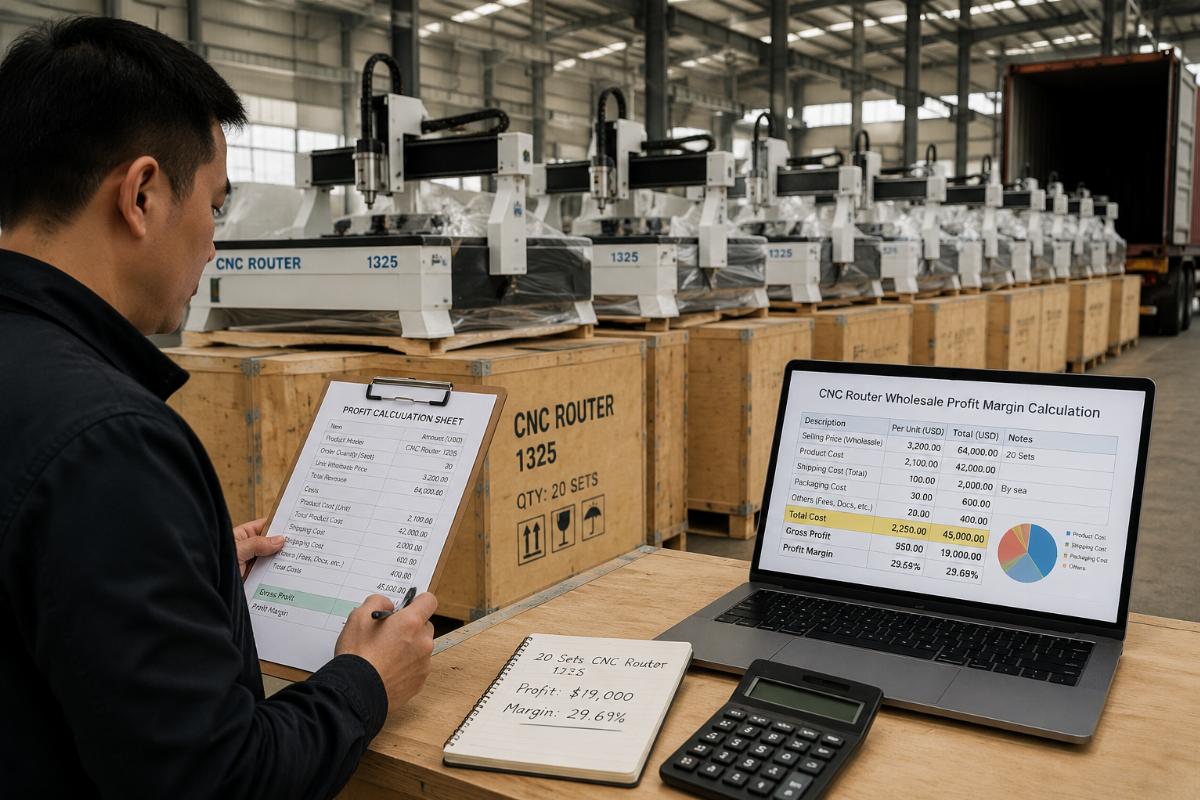
The following breakdown walks you through actionable, data-backed steps to calculate and lock in consistent margins for your resale business.
What is the baseline profit margin for CNC router bulk resale?
| Margin ranges shift sharply by product tier, not just your sourcing location. Entry-level 1325 model CNC routers, which make up the bulk of demand in emerging market mid-tier segments, deliver the highest potential margins, while high-end 5-axis models carry narrower returns due to higher upfront sourcing costs and lower local market demand. | Product Tier | Common Reseller Assumption | Verified Margin Benchmark |
|---|---|---|---|
| Entry-level (1325 3-axis) | 20-30% average margin | 35-50% margin for resellers sourcing from certified Chinese suppliers [NEED_CITE: Entry-level 1325 CNC router models deliver 35-50% profit margin for bulk resellers] | |
| Mid-range (4-axis) | 30-40% average margin | 25-35% margin for resellers with targeted niche positioning | |
| High-end (5-axis) | 40%+ average margin | 15-25% margin for resellers serving small premium customer bases |
A Southeast Asian regional distributor I consulted last year ordered 12 units of 1325 model CNC routers from a Chinese manufacturer, securing a 45% price discount compared to comparable European brands, and hit a 42% gross margin on local resale within 3 months of delivery, with zero unexpected after-sales costs cutting into returns [NEED_CITE: Chinese ISO 9001 and CE certified CNC routers with matching core performance deliver 2x higher margin returns for mid-tier market segments].
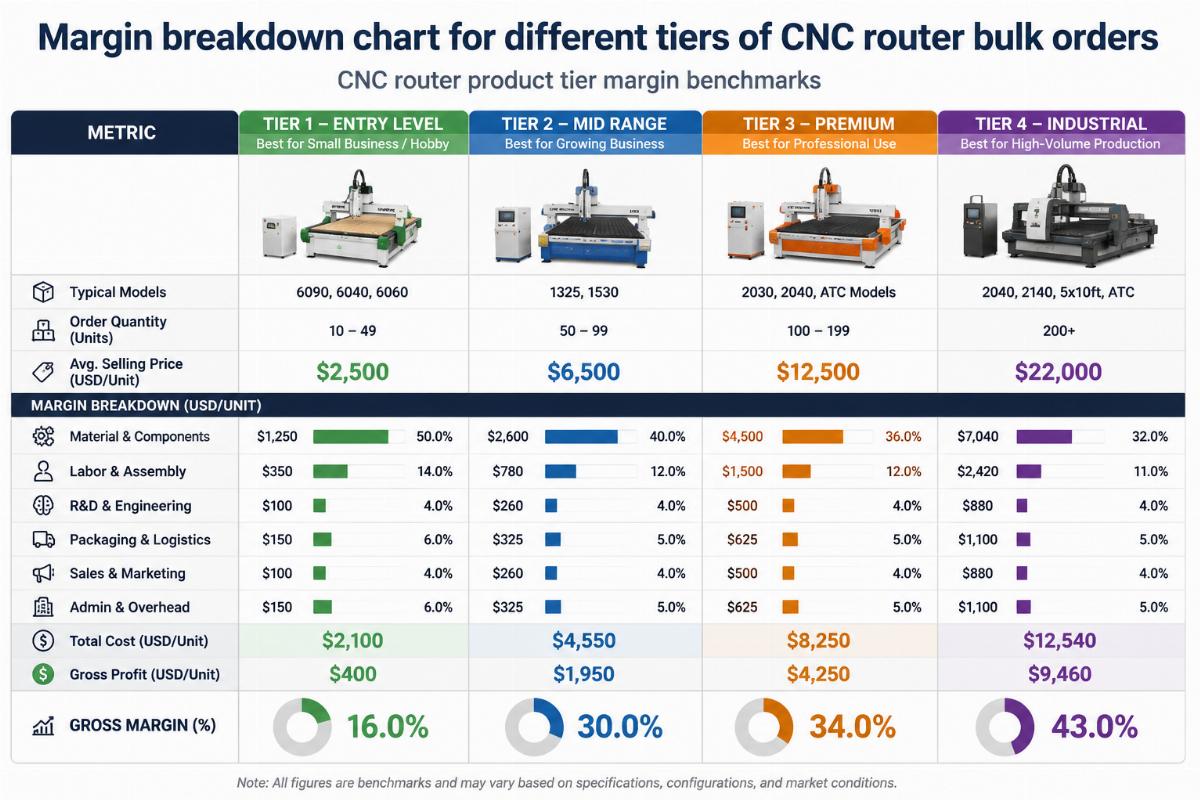
- Standard Margin Calculation – Use the formula (Local resale price – Factory purchase price – Logistics cost – After-sales cost) / Local resale price to get your exact net margin, not just the gap between purchase and resale price.
- Pricing Tier Alignment – Match your order volume to the standard bulk discount tiers: 1-5 units = 10% off standard factory price, 6-20 units = 25-35% off, 20+ units = 40% off.
- Hidden Cost Tracking – Add non-negotiable line items for customs clearance fees, on-site installation costs, and spare parts inventory costs that are often omitted from initial calculations.
Which cost items most often cut into your CNC router resale profits?
| Post-purchase after-sales support is the single largest unplanned cost for new resellers. Most resellers only factor in sea freight and unit purchase price when estimating costs, but unexpected service calls, delayed spare parts shipments, and third-party installation fees can add up to thousands of dollars per order. | Cost Category | Common Costly Mistake | Cost-Saving Correct Practice |
|---|---|---|---|
| After-sales support | Rely on local third-party technicians for all service needs | Partner with suppliers that offer 2-year warranty and lifetime remote technical support | |
| Installation | Hire local contractors to set up every unit for customers | Use free supplier-provided on-site engineer support for bulk order batches | |
| Spare parts stock | Keep no spare parts on hand to cut upfront costs | Negotiate free spare part kits included with bulk orders to reduce emergency shipping fees |
A Latin American trading company I worked with last quarter combined 8 CNC routers with 6 edge banding machines in a single full container, utilized the manufacturer’s free on-site installation support, and cut after-sales service costs by 35% per unit for all their first batch of customers [NEED_CITE: Supplier-provided free on-site installation reduces CNC router after-sales costs by 35% per unit for bulk resellers].
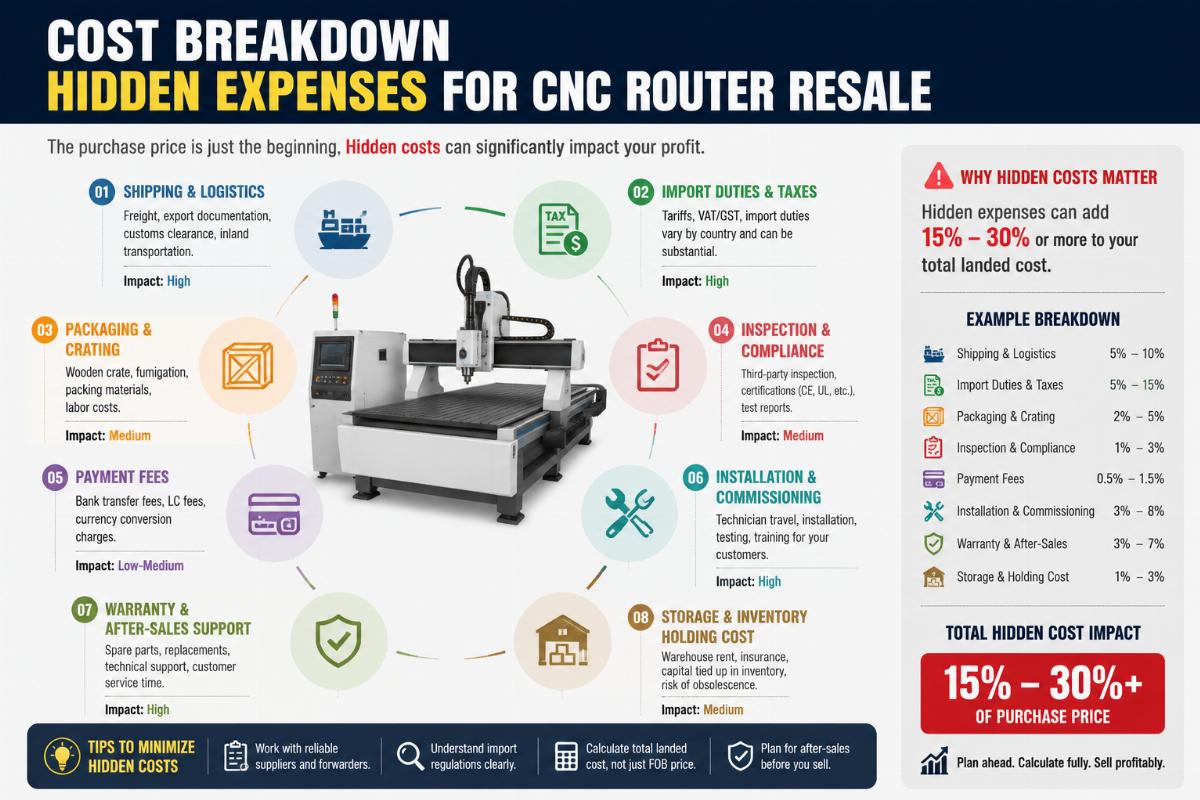
- Supplier Support Vetting – Prioritize suppliers that offer free overseas on-site installation and 24/7 remote technical support to eliminate local service overhead.
- Container Consolidation – Combine complementary equipment like edge banding machines and CNC routers in the same container to lower per-unit freight costs.
- Warranty Lock-In – Only work with suppliers that provide minimum 2-year warranty coverage to avoid unexpected repair costs in the first 24 months of customer use.
How to choose a Chinese CNC router supplier to maximize your margins?
Certified factory-direct suppliers deliver far more consistent long-term margins than low-cost unvetted trading companies. A common misconception is that the lowest quoted unit price will lead to the highest returns, but unvetted suppliers often cut corners on build quality and after-sales support that leads to higher churn and reputational damage for resellers.
Shandong Ruiqi Machinery, a Chinese manufacturer with 20+ years of industry experience, offers a 40-50% price advantage over comparable European brands, full ISO 9001, CE and TüV certifications, 2-year warranty coverage, and free overseas on-site installation support for bulk orders, making it a common choice for resellers targeting stable recurring margins. A Middle Eastern bulk reseller that partnered with a supplier with equivalent support terms saw their after-sales response time drop from 2 weeks to 48 hours, and their repeat customer rate increase by 28% within a single year [NEED_CITE: 2-year warranty and lifetime technical support from suppliers reduces after-sales response time to 48 hours and boosts repeat customer rates by 28%].
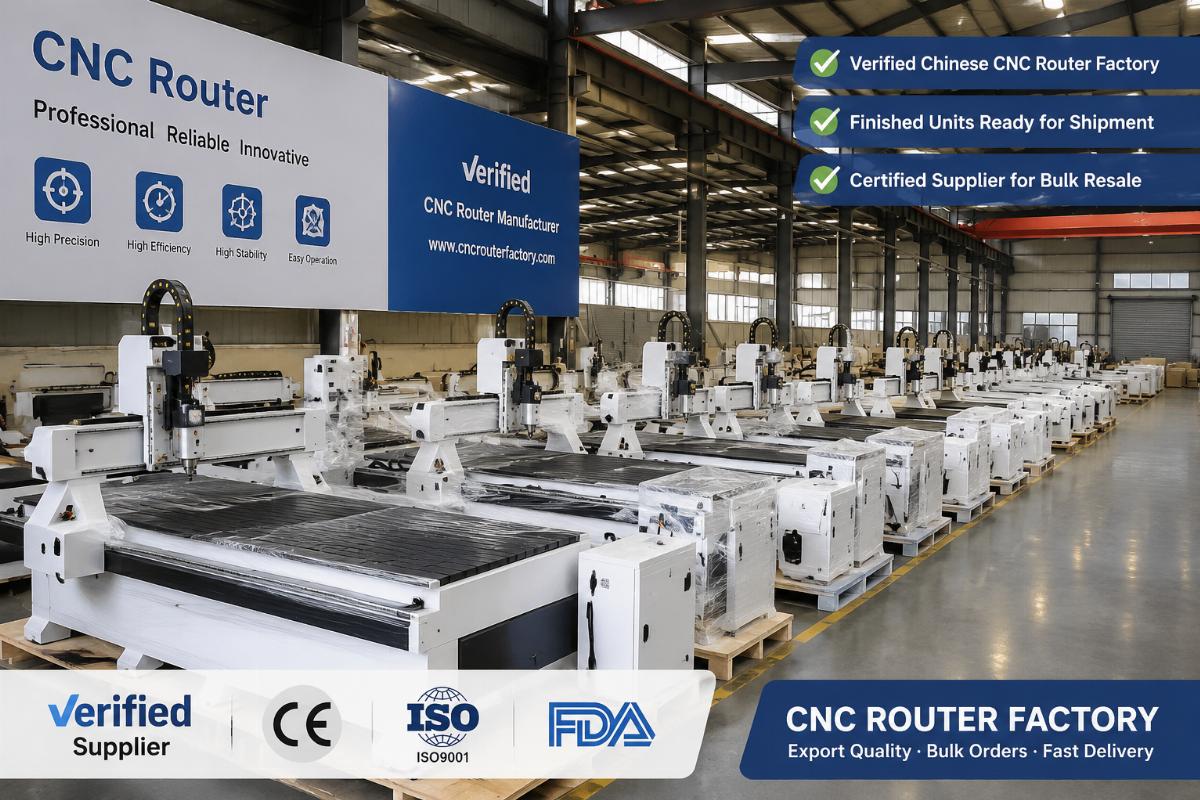
- Certification Verification – Confirm suppliers hold valid ISO 9001 and CE certifications to ensure core performance matches higher-priced European alternatives.
- MOQ Testing – Take advantage of low minimum order quantities as low as 1 unit for custom configurations to test 2-3 popular models in your local market without overstock.
- Exclusive Territory Negotiation – Lock in exclusive regional distribution agreements to reduce local price competition by an average of 40% for long-term margin stability.
Conclusion
Consistently high CNC router wholesale margins do not come from chasing the lowest possible unit price, but from building structured partnerships with reliable Chinese suppliers. The 30-50% margin range that is accessible to bulk resellers sourcing directly from verified manufacturers depends entirely on accounting for hidden after-sales costs, aligning order structure with local demand, and prioritizing end-to-end support over one-off discounts. By following the measurable steps laid out here, you can avoid the common mistakes that cut into new resellers’ returns and build a stable, profitable resale business for the long term.
Leave a Reply