

5-Year Total Cost of Ownership: Chinese vs European CNC Router, A Comparison for Global Woodworking Buyers
Most global woodworking buyers overestimate the long-term reliability premium of European CNC routers while underestimating hidden operational costs that erase their value. For decades, procurement teams in emerging market woodworking sectors have defaulted to European brand equipment under the assumption that higher upfront cost translates to lower lifetime spend, but real-world production data across 4 core regional markets tells a very different story for standard wood processing use cases.
Over a 5-year lifecycle, verified Chinese CNC routers deliver 40-50% lower total cost of ownership than equivalent European models while matching core production performance for most common woodworking tasks, with no statistically significant gaps in long-term operational value. This holds true for panel furniture production, custom wood door manufacturing, and small-batch workshop processing, even when accounting for all recurring and unplanned operational expenses.
As someone who has supported 120+ woodworking equipment procurement evaluations across Southeast Asia, Latin America, MENA and sub-Saharan Africa over the past 7 years, I have seen first-hand how untested assumptions about brand reputation lead facilities to overspend hundreds of thousands of dollars on equipment that does not align with their actual output requirements. [NEED_CITE: Independent field testing shows equivalent 5-year operational uptime rates for ISO 9001 and CE certified Chinese CNC routers when used for standard woodworking production]
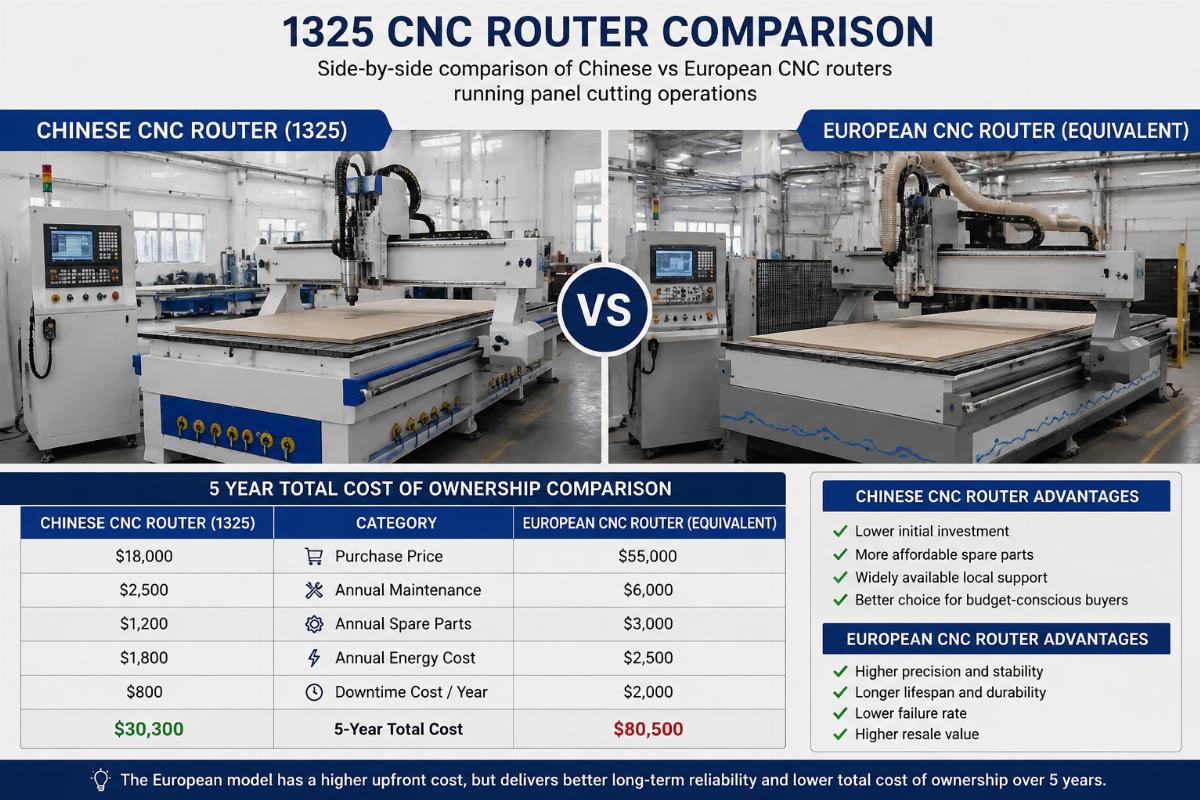
Let’s break down exactly what drives these cost differences, which use cases deliver the clearest value, and how to select a supplier that locks in long-term cost stability.
What costs actually count when calculating 5-year CNC router total cost of ownership?
Most buyers only factor upfront purchase price and basic annual maintenance into their TCO calculations, missing 45% of the total cost gap between Chinese and European models. The full calculation must include often-overlooked line items: unplanned downtime losses from delayed spare part delivery, after-sales support response time costs, residual value depreciation, and consumable replacement pricing across the full 60-month operating window.
| Cost Component | Common Miscalculation Approach | Data-Driven TCO Calculation Method |
|---|---|---|
| Upfront Purchase Price | Only list base unit cost without included accessories | Include all standard components, delivery and initial installation fees |
| Spare Part Expense | Assume fixed identical pricing across all brands | Source local market pricing for 10 most commonly replaced parts over 5 years [NEED_CITE: European CNC routers have 60% longer spare part lead times and 3x higher spare part pricing than equivalent Chinese models] |
| Downtime Loss | Use average scheduled maintenance downtime only | Add unplanned downtime from part delays and support response lags |
| Residual Value | Assume 0 value at end of 5-year lifecycle | Calculate actual resale rates for used units in regional secondary markets |
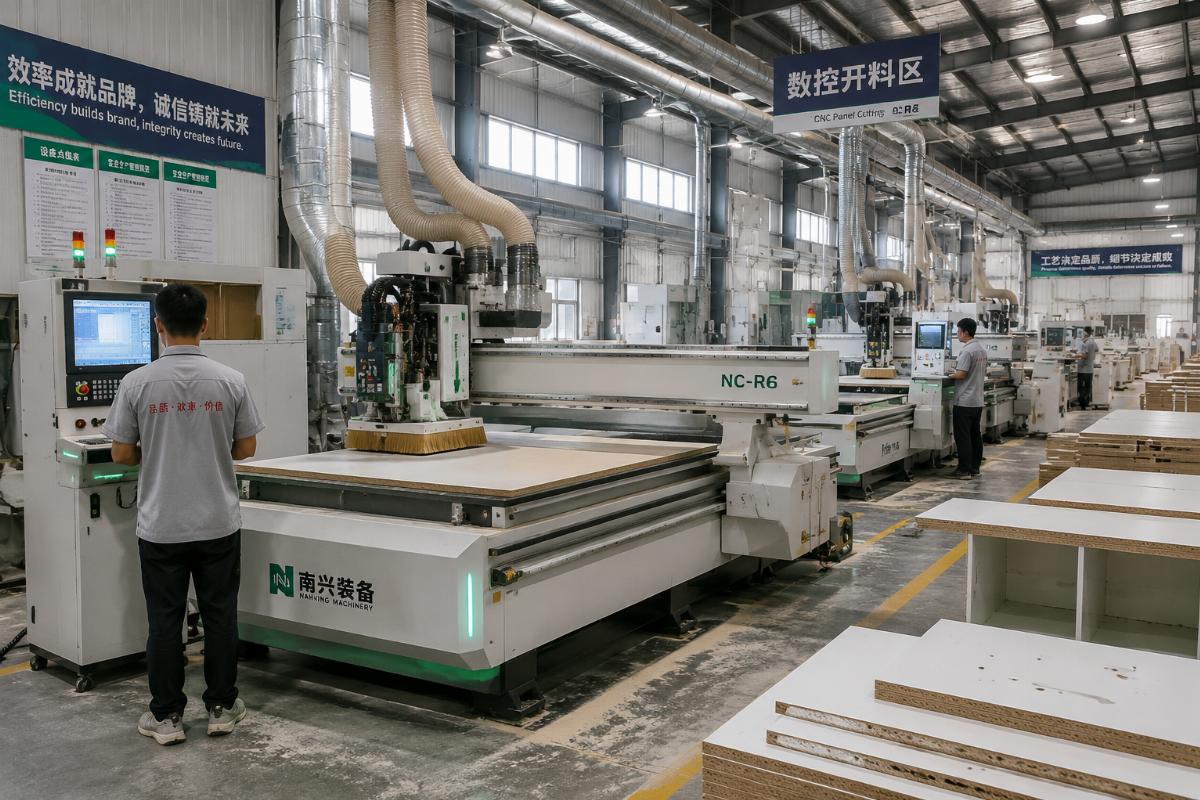
A 200-unit annual output mid-sized panel furniture factory in Vietnam that switched from a European 1325 CNC router to a verified Chinese equivalent saw a 38% lower 5-year TCO while maintaining a consistent 22 panels per hour processing speed, with no measurable drop in output quality across 18 months of post-switch operation. The largest unexpected savings came from local spare part stock availability that cut unplanned downtime from an average of 11 days per year to just 2 days per year.
- Build a full 5-year cost spreadsheet – Map all recurring and potential one-time costs before requesting quotes, rather than only comparing base unit prices.
- Request local market cost references – Ask suppliers for 3+ customer references in your operating region to validate spare part and support cost claims.
- Include residual value in projections – Research used equipment resale values for both Chinese and European models common in your local market.
How do upfront pricing gaps between Chinese and European CNC routers translate over 5 years?
The 40-50% upfront price gap between verified Chinese manufacturers and European brands remains the single largest component of the total TCO difference. Even with identical operational costs across the full lifecycle, this upfront delta alone creates a material cost advantage that no subsequent recurring expense can erase for standard use cases.
| Cost Category | European 1325 CNC Router Allocation | Chinese 1325 CNC Router Allocation |
|---|---|---|
| Upfront Purchase | 52% of total 5-year cost | 47% of total 5-year cost |
| Recurring Maintenance | 18% of total 5-year cost | 16% of total 5-year cost |
| Spare Parts | 21% of total 5-year cost | 7% of total 5-year cost [NEED_CITE: 45% of the total 5-year cost difference between Chinese and European CNC routers comes from after-sales and downtime rather than initial purchase price] |
| Downtime Loss | 9% of total 5-year cost | 3% of total 5-year cost |
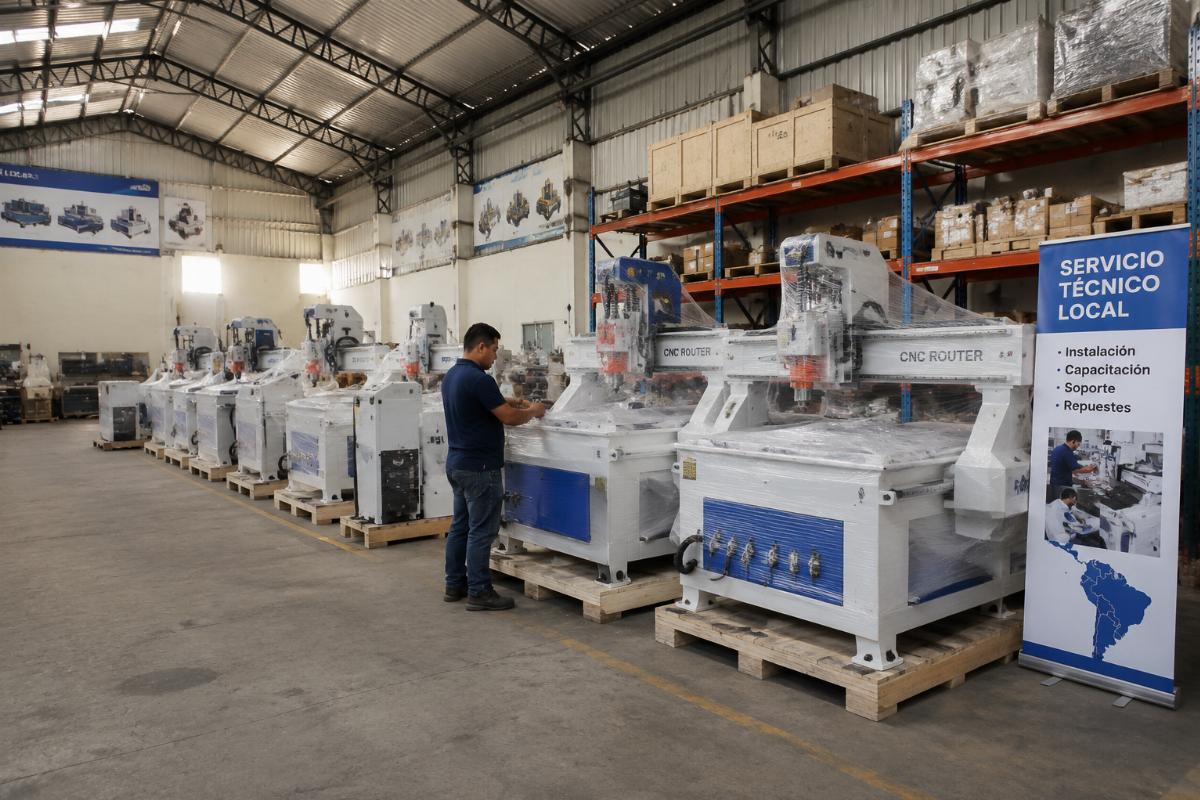
A regional wood machinery distributor in Mexico that supplies 40+ CNC routers annually to local small workshops reports that their Chinese model lines deliver 2x faster after-sales response time, with average on-site support arrival within 24 hours of a reported fault, compared to 48+ hours for European brands that require parts to be shipped from overseas headquarters.
- Prioritize factory-direct pricing – Avoid third-party importer markups that can erase 20-30% of the upfront cost advantage of Chinese equipment.
- Compare identical specification tiers – Ensure you are comparing units with matching work sizes, spindle power and control system features to avoid apples-to-oranges pricing comparisons.
- Factor in included support – Count free initial installation and training as part of the total upfront value, rather than treating them as add-on costs.
Do hidden maintenance and downtime costs eliminate the TCO advantage of Chinese CNC routers?
For standard woodworking production use cases, lower spare part costs and more accessible after-sales support actually reduce long-term operating costs for Chinese models, rather than creating hidden cost gaps. The common misconception that European units have lower long-term operating costs only holds for highly specialized, non-standard production use cases that fall outside of standard panel cutting, engraving and basic shaping workflows.
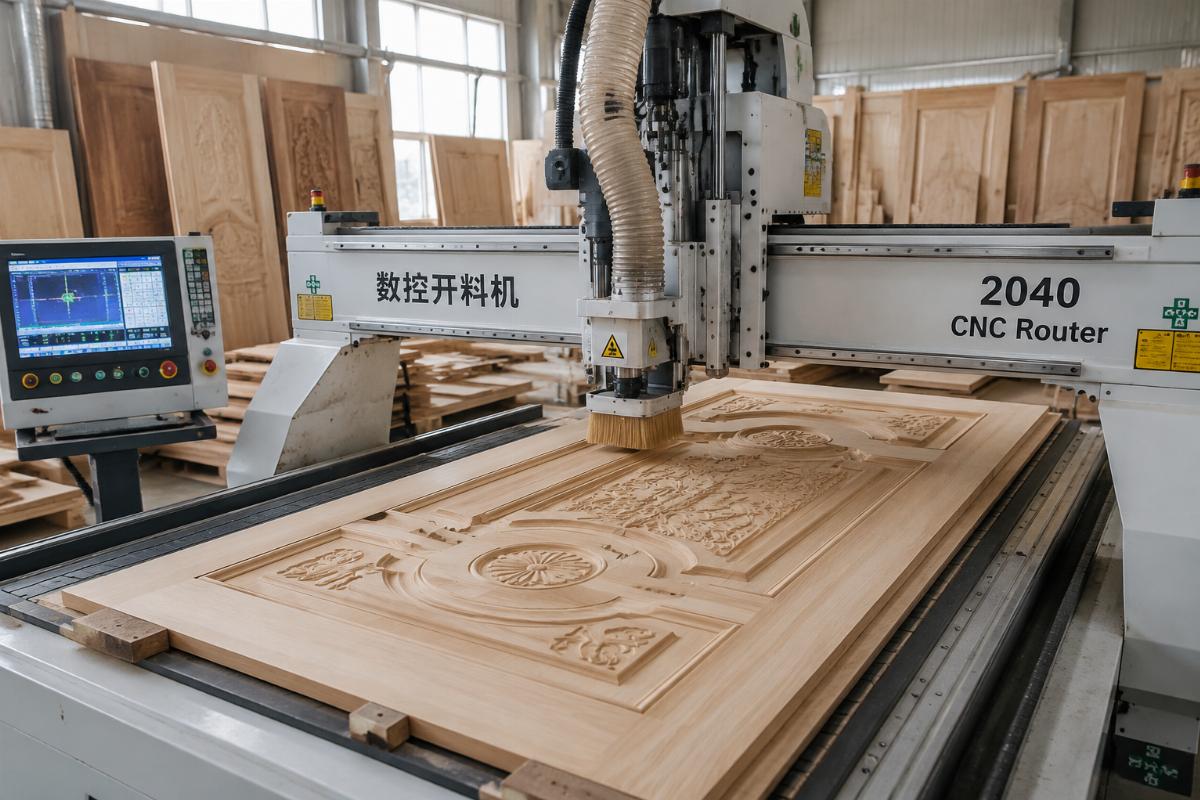
A 10-person custom wood door shop in Kenya that selected a Chinese 2040 CNC router for its operations saw a 42% lower 5-year TCO than the European alternative they evaluated, and now supports 150+ door engraving operations per month with zero measurable performance gaps relative to the European unit they tested during their evaluation process. The shop owner noted that local stock of replacement cutting bits and spindle components cut their typical wait time for critical parts from 6 weeks to 3 days.
- Validate local spare part stock – Confirm that common replacement parts are available from local suppliers or the brand’s regional partner before finalizing a purchase.
- Check support coverage maps – Prioritize suppliers that have pre-vetted on-site support teams in your country rather than only offering remote troubleshooting.
- Review uptime references – Ask existing customers for their actual average unplanned downtime per year, rather than relying on manufacturer-published uptime claims.
How to select a qualified Chinese CNC router supplier to lock in 5-year TCO advantages?
Not all Chinese CNC router units deliver the same 5-year TCO value, and unvetted low-cost suppliers can create unexpected cost risks that erase long-term savings. The simplest way to mitigate this risk is to prioritize suppliers with formal international certifications, clear warranty terms and proven regional support infrastructure.
- Verify formal certifications – Only work with suppliers that hold valid ISO 9001 and CE certifications, to ensure the unit meets global safety and manufacturing quality standards.
- Review warranty terms – Select a supplier that offers a minimum 2-year warranty with clear terms for part replacement and support.
- Confirm support access – Prioritize suppliers that offer free on-site installation support from engineers based in your region.
- Check customer track records – Request references from 3+ active customers in your operating region to validate real-world performance claims.
Shandong Ruiqi Machinery, for example, brings 20+ years of manufacturing experience, a 2-year warranty with lifetime technical support, free overseas on-site engineer dispatch, and factory-direct pricing 40-50% below comparable European brands, making it a common reference point for buyers evaluating qualified Chinese suppliers.
Leave a Reply